
 English
 русский
 Español
 عربى
عربى

Content
- 1 What Is Injection Molding and How Does It Work?
- 2 Greater Dimensional Precision and Repeatability
- 3 Shorter Cycle Times and Higher Productivity
- 4 Material Efficiency and Lower Waste
- 5 Design Flexibility for Complex Geometries
- 6 Cost Analysis and Break-Even Considerations
- 7 Real-World Applications Across Industries
- 8 Consistent Part Quality and Fewer Defects
- 9 Frequently Asked Questions
- 9.1 1. What is the biggest advantage of injection molding for rubber parts?
- 9.2 2. How much faster is injection molding than compression molding?
- 9.3 3. What is the typical tooling cost for rubber injection molding?
- 9.4 4. Can injection molding handle liquid silicone rubber?
- 9.5 5. When should I choose injection molding over compression molding?
- 10 Conclusion
A rubber parts manufacturer producing 50,000 O-rings a month with compression molding accepts a scrap rate around 8 percent. After moving one part family to injection molding, the same line holds tolerances at plus or minus 0.05 mm, cuts cycle time by roughly 40 percent, and lowers flash waste from 9 percent to about 2 percent of compound weight. The new tooling pays for itself in under a year.
Injection molding has become the preferred manufacturing route for rubber and silicone components because it combines dimensional precision, short cycle times, material efficiency, and automation readiness in one process. This article examines each advantage, compares injection molding with alternative processes such as compression and transfer molding, and explains the conditions under which it delivers the strongest return on investment.
What Is Injection Molding and How Does It Work?
If you are evaluating molding processes for a new rubber product, the first question is usually what actually happens inside an injection molding machine. In rubber injection molding, a screw or plunger plasticates the rubber compound and forces it through a nozzle into a closed, heated mold cavity at high pressure. The material fills the cavity while the mold is clamped shut, and vulcanization takes place under both pressure and temperature. After the cure period, the mold opens and the part is ejected. The screw can begin plasticating the next shot while the current part cures, which is why the process is inherently faster than compression molding.
The machine architecture can be vertical or horizontal. Vertical machines are common for insert molding and for parts where gravity assists insert positioning, while horizontal machines suit fully automated cells with robotic part handling. Both configurations are available with hydraulic or servo-driven clamping systems, and modern controls allow precise regulation of injection pressure, injection speed, and cure time for each cycle.
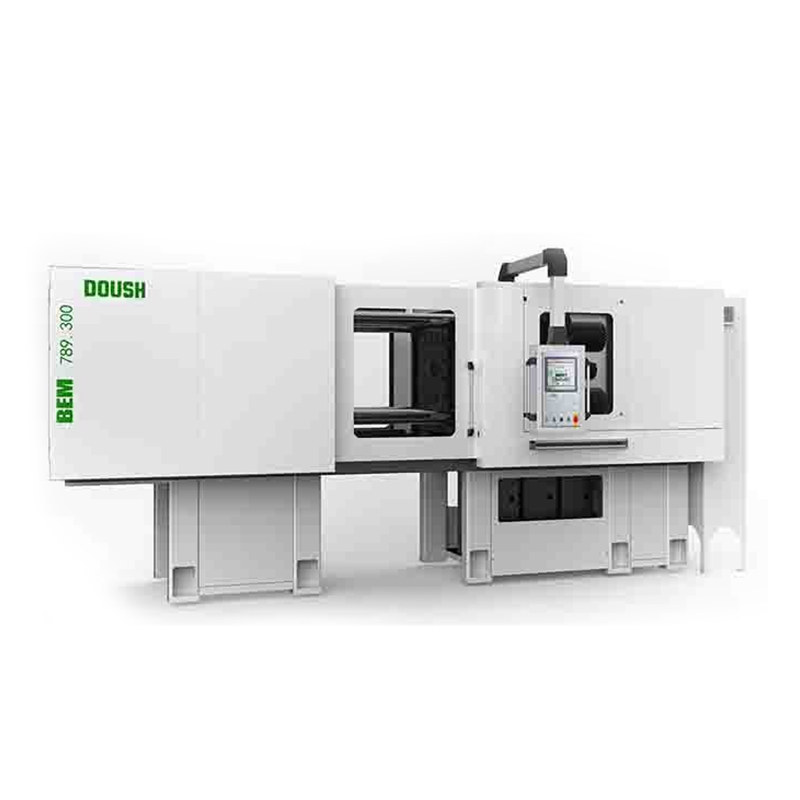 Vertical and Horizontal Rubber Injection Molding MachineThis machine supports vertical and horizontal configurations with servo-hydraulic control, precise injection metering, and accurate temperature regulation. It suits seals, shock absorbers, and complex parts with inserts, and also handles liquid silicone rubber molding effectively.View Product →
Injection molding also applies to liquid silicone rubber, where two liquid components are metered, mixed, and injected into a heated mold. LSR injection molding shares the same precision benefits and is widely used for medical, automotive, and electrical components because the absence of a solid preform reduces contamination and improves flow into intricate cavities.
| Parameter | Injection Molding | Compression Molding | Transfer Molding |
|---|---|---|---|
| Fill mechanism | Screw injection into a closed mold | Blank squeezed in an open mold | Pad transferred through a sprue system |
| Typical cycle time | 30 to 90 seconds | 120 to 240 seconds | 90 to 180 seconds |
| Flash waste | 1 to 3 percent | 5 to 10 percent | 3 to 6 percent |
| Dimensional tolerance | +/-0.05 to 0.15 mm | +/-0.15 to 0.30 mm | +/-0.10 to 0.20 mm |
| Automation level | High | Low to medium | Medium |
| Tooling cost | Highest | Lowest | Medium |
| Best suited for | High-volume precision parts | Low-volume simple parts | Medium-volume insert parts |
Greater Dimensional Precision and Repeatability
The most frequently cited advantage of injection molding is part-to-part consistency. Because the rubber compound enters the cavity as a controlled, plastified flow rather than as a preformed blank squeezed into shape, cavity filling is more uniform. Pressure distribution inside the mold is even, which means the material reaches every corner of the cavity at a similar pressure and temperature. The result is tighter dimensional tolerances and far less variation between cavities in a multi-cavity mold.
Typical tolerances for injection molded rubber parts range from plus or minus 0.05 mm to 0.15 mm depending on geometry and material, compared with plus or minus 0.15 mm to 0.30 mm for compression molding. For sealing products such as O-rings, oil seals, and gaskets, this difference can determine whether the part seals reliably in service. A 0.1 mm variation in an O-ring cross-section can change compression set behavior and leak performance.
Repeatability also matters for downstream automation. When every shot is dimensionally identical, automated handling, vision inspection, and assembly systems run without constant adjustment. Injection molding lines integrate smoothly with automatic strip cutting, deflashing, and visual inspection equipment. Consistent material preparation upstream of the molding stage further improves shot-to-shot variation, and high-precision weight control in cold-feed preforming has been shown to stabilize the entire molding process before the compound even enters the injector.
Shorter Cycle Times and Higher Productivity
Cycle time is where injection molding separates most clearly from compression molding. In compression molding, the operator loads a preformed blank, closes the press, and waits for the material to flow and cure. Material flow and cure happen sequentially, and the blank must be heated from a cold or warm state inside the mold. In injection molding, the screw plasticates and injects the material quickly, and the cavity is filled before significant curing begins. The compound is already hot and homogenous when it enters the cavity, so the mold spends less time raising the material to curing temperature.
Reported cycle time reductions range from 30 percent to 50 percent for typical sealing parts compared with compression molding. For thin-wall parts such as O-rings and gaskets, the injection phase can be as short as 2 to 5 seconds, after which curing proceeds uniformly across the entire cavity. A 120-second compression cycle often becomes a 60- to 75-second injection cycle for the same part geometry.
Labor productivity improves as well. A single operator can attend three to six injection molding machines because the process is automated: the machine injects, cures, opens, ejects, and closes without manual intervention. With robotic take-out, one operator can supervise even more machines. For a shop producing large volumes of standard seals or custom profiles, the labor cost per part drops sharply while output per square meter of factory floor increases.
Material Efficiency and Lower Waste
Material yield is a key economic driver in rubber molding. Raw rubber compounds, especially specialty materials such as AEM, fluororubber, and silicone, can be expensive. Every kilogram of flash or sprue sent to scrap directly reduces margin.
Injection molding typically produces less flash than compression molding because the mold is clamped shut before the material enters the cavity. Flash thickness and area are smaller, and in many tool designs flash is confined to a defined parting line. Reported flash waste for injection molding is commonly 1 to 3 percent of compound weight, compared with 5 to 10 percent for compression molding.
Cold runner designs further reduce waste. In a cold runner mold, the rubber inside the runner system is kept below curing temperature and can be fed into the next shot. This is particularly valuable when molding expensive compounds such as FKM, AEM, and liquid silicone, where a runner of 20 to 50 grams per cycle adds up to substantial savings over tens of thousands of cycles. Injection molding also eliminates the trimming and grinding operations often required to remove heavy flash from compression molded parts. Less secondary work means less labor, less equipment, and fewer opportunities for dimensional damage during handling. Careful review of the characteristics and properties of rubber materials before selecting a compound helps you maximize the material utilization advantage of injection molding.
Design Flexibility for Complex Geometries
Part geometry is often limited by the molding process. Compression molding favors simple, flat, or slightly contoured shapes because the blank flows outward when the press closes. Complex details such as thin walls, deep undercuts, fine serrations, or encapsulated inserts are difficult to fill consistently with compression molding.
Injection molding removes many of these limits. The compound is forced through gates and runners into the cavity at high pressure, so it can reach thin wall sections, sharp corners, and intricate features that compression molding cannot fill reliably. Parts with wall thicknesses down to 0.5 mm can be produced consistently in many compounds, enabling lighter parts and tighter packaging in the final assembly.
Insert molding is a natural fit for injection molding. Metal or plastic inserts are placed in the mold, and rubber is injected around them, creating a strong mechanical bond without a secondary assembly step. Skeleton oil seals, encapsulated connectors, and vibration mounts are common examples of insert-molded components produced this way.
For special applications, the C-frame injection machine design allows flexible mold access and is used for parts with complex inserts or for molds that must be loaded from multiple directions. Air spring sleeves, rolling lobes, and other engineered components benefit from the precise material distribution that injection molding provides.
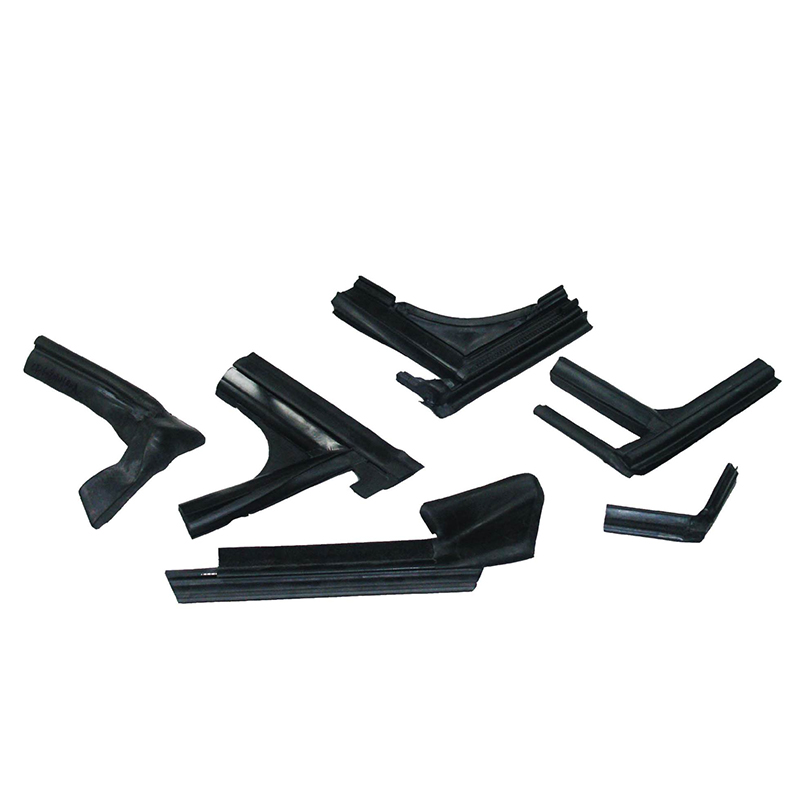 C-Frame Rubber Injection Machine for Precision PartsThe C-frame design offers flexible mold access from multiple directions, making it ideal for high-precision small products, inserts, and automotive sealing and corner components. It complements the discussion of air spring sleeves and engineered parts.View Product →
Cost Analysis and Break-Even Considerations
Tooling for injection molding costs more than tooling for compression molding. The mold requires a runner system, gates, and often more complex parting-line construction. A typical injection mold for a sealing part can cost 20 to 50 percent more than an equivalent compression mold. This raises an important question: when does injection molding become the economical choice?
The break-even point depends on part volume, material cost, flash waste, and cycle time. As a rule of thumb, injection molding becomes attractive when annual volume exceeds roughly 5,000 to 10,000 parts per mold, depending on part size and compound price. For high-value compounds, the break-even volume can be lower because material savings alone justify the tooling investment.
| Cost Component (per 1,000 parts) | Injection Molding | Compression Molding |
|---|---|---|
| Compound cost with typical flash | $2,040 | $2,200 |
| Operator labor | $125 | $1,000 |
| Tooling amortization | $250 | $150 |
| Secondary trimming and inspection | $80 | $320 |
| Total per 1,000 parts | $2,495 | $3,670 |
In this example, the injection route saves roughly 32 percent per part. Your figures will differ based on part weight, material price, local labor rates, and production volume, but the direction of the cost curve is consistent across most rubber molding scenarios: higher upfront tooling, lower recurring cost.
Real-World Applications Across Industries
Rubber injection molding is used wherever precision, volume, or material cost makes the process worthwhile. The automotive sector is the largest consumer of molded rubber parts, and most sealing components in a modern vehicle are injection molded. Suspension bushings, air springs, dust covers, boots, grommets, and hydraulic seals all benefit from the tight tolerances and high output of injection molding.
The energy industry uses injection molding for connectors, insulators, downhole sealing elements, and pipe seals. Specialized molding machines for the energy sector are designed to handle large, heavy molds and to maintain precise temperature control across big platens, which is essential for parts with thick cross-sections that must cure uniformly.
In footwear manufacturing, fully automatic rubber sole injection machines with multiple stations allow direct injection of sole compounds onto uppers, eliminating separate sole molding and adhesive bonding steps. This approach improves bond strength and reduces total production time for sports shoes, safety footwear, and casual shoes. EVA midsoles are produced on dedicated foaming injection machines, while TR and TPU soles are injected in multi-station rotary configurations.
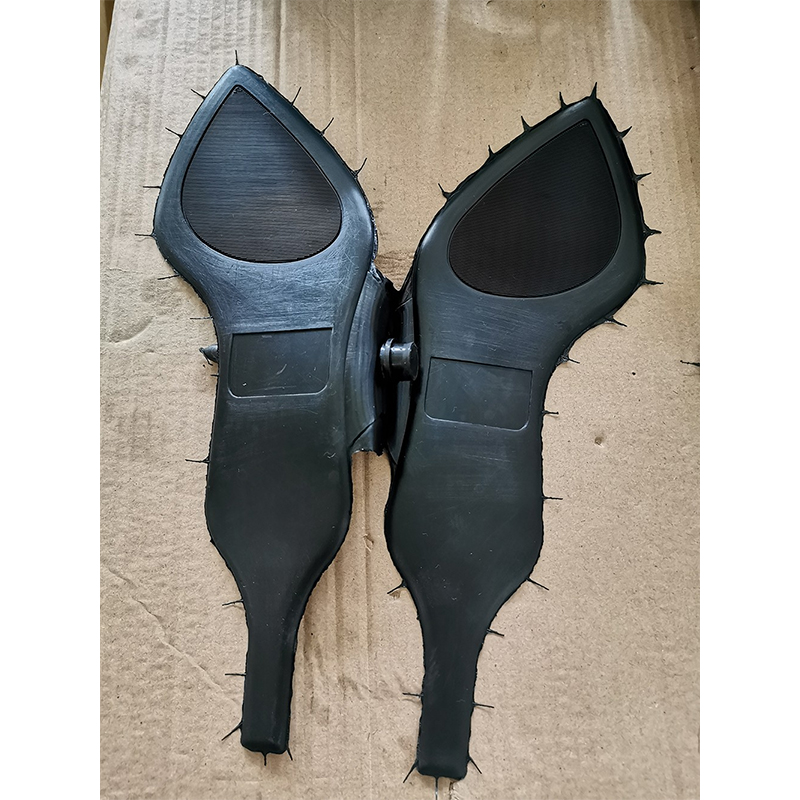 Fully Automatic Multi-Station Rubber Sole Injection MachineAvailable in three or six stations, this machine directly injects rubber soles onto uppers, reducing labor, waste, and production time. It handles thick soles, high heels, and thin-wall designs, supporting the footwear manufacturing context described.View Product →
Industrial applications include O-rings, diaphragms, valve seals, pump impellers, and vibration isolators. Many standard seal catalogs are produced exclusively by injection molding because of the tight tolerances and low unit cost. Liquid silicone rubber injection molding is also expanding rapidly, with medical devices, baby care products, and electrical connectors produced on injection machines configured with metering pumps and static mixers.
Consistent Part Quality and Fewer Defects
Beyond dimensional precision, injection molding improves internal part quality. Because the cavity fills under positive pressure, trapped air is more easily vented through designed venting channels. Porosity, a common source of rejects in compression molded parts, is significantly reduced in injection molded components.
Mechanical properties tend to be more uniform as well. The compound is fully plasticated and mixed in the screw, so filler distribution, crosslink density, and hardness are consistent throughout the part. Tensile strength and tear resistance are often slightly higher in injection molded specimens than compression molded equivalents, and the spread of results across a batch is narrower.
Fewer defects also mean less inspection burden. Vision inspection systems for O-rings and seals can run at higher line speeds when the molding process does not produce large flash or flow marks. In practice, manufacturers report reject rates falling from 5 to 10 percent with compression molding to 1 to 3 percent with injection molding for comparable parts.
Frequently Asked Questions
1. What is the biggest advantage of injection molding for rubber parts?
The biggest advantage is the combination of dimensional precision and batch-to-batch repeatability. Injection molding produces parts with tighter tolerances, typically plus or minus 0.05 to 0.15 mm, and far less variation than compression molding. For sealing products such as O-rings and oil seals, this consistency directly determines whether the part performs reliably in service.
2. How much faster is injection molding than compression molding?
For most rubber parts, injection molding reduces cycle time by 30 to 50 percent. The compound is plasticated and preheated during injection, so the mold spends less time raising the material to curing temperature. A 120-second compression cycle often becomes a 60- to 75-second injection cycle for the same geometry.
3. What is the typical tooling cost for rubber injection molding?
Injection molds typically cost 20 to 50 percent more than compression molds because of the runner system, gate design, and more complex parting-line construction. For a typical sealing part, an injection mold may range from $15,000 to $60,000 depending on cavity count, part size, and mold complexity.
4. Can injection molding handle liquid silicone rubber?
Yes. Liquid silicone rubber injection molding uses a metering and mixing unit that feeds two liquid components into the injection unit. LSR parts are produced with excellent precision for medical, electrical, and automotive applications, and the process almost completely eliminates flash when the mold is properly vented.
5. When should I choose injection molding over compression molding?
Choose injection molding when annual volume exceeds roughly 5,000 to 10,000 parts per mold, when dimensional tolerances are tight, when the compound is expensive such as FKM, AEM, or silicone, or when geometry includes thin walls, undercuts, or encapsulated inserts. For very low volumes, large simple flat parts, or compounds with very high viscosity that cannot withstand injection shear, compression molding may still be the better option.
Conclusion
Rubber injection molding wins on precision, speed, material economy, and part quality. The higher initial tooling cost is recovered through lower scrap, lower labor cost per part, and higher output per machine. For parts with tight tolerances, complex geometry, or expensive compounds, the case for injection molding is especially strong.
If you are planning a new rubber or silicone product, assess your annual volume, dimensional requirements, and material cost against the figures discussed here. In most scenarios above 5,000 to 10,000 parts per year, injection molding delivers the lowest total cost per part while improving quality and repeatability across your production line.

