
 English
 русский
 Español
 عربى
عربى

Content
- 1 What Exactly Is the Co-Extrusion Process?
- 2 Why Manufacturers Switch to Co-Extrusion
- 3 Critical Process Parameters for Successful Co-Extrusion
- 4 What Equipment Is Needed for Co-Extrusion?
- 5 How to Select Compatible Rubber Compounds
- 6 Common Co-Extrusion Defects and How to Fix Them
- 7 Where Co-Extrusion Delivers the Most Value
- 8 What to Consider Before Buying a Co-Extrusion Line
- 9 Frequently Asked Questions About Co-Extrusion
- 9.1 What is the maximum number of layers that can be co-extruded at once?
- 9.2 Can two different base rubber polymers be co-extruded together?
- 9.3 What is the normal tolerance for layer thickness in co-extrusion?
- 9.4 Does the curing method affect bond quality?
- 9.5 How can I test whether my two compounds will bond well?
- 9.6 Is co-extrusion worth the investment for a small factory?
- 10 Final Takeaway on Co-Extrusion
When a rubber profile needs two different materials in one cross-section, bonding them after extrusion creates a weak point and an extra labor step. The co extrusion process solves this by feeding multiple rubber compounds through a single die head, so they merge into one continuous profile before vulcanization. This method produces a stronger, more consistent bond than adhesive assembly and lowers total part cost by 20 to 35 percent in many applications. For manufacturers of automotive window seals, industrial hoses, and weatherstripping, co extrusion is not just a nice-to-have. It is a practical way to design composite profiles with different hardness, color, or function in a single step.
The process works because the rubber compounds are still in a molten, uncured state when they meet inside the die. They flow together and form a chemical bond during the subsequent cure, creating a unified cross-section. This article explains the mechanics of co-extrusion, the key processing parameters, the equipment required, how to choose compatible materials, and the mistakes that cause defects.
What Exactly Is the Co-Extrusion Process?
Co-extrusion is a continuous manufacturing method that uses two or more extruders to feed different rubber compounds into one common die head, where they are shaped together into a single profile. The die head is designed with separate internal channels that keep each material distinct until they meet at the exit. Once they exit the die, the combined profile moves through a curing line, typically a microwave or salt-bath system, where the rubber crosslinks and the layers bond permanently.
How It Differs from Single Extrusion
In a standard single extrusion process, one rubber compound is fed into an extruder, forced through a die, and cured. The result is a uniform profile made of one material. In co-extrusion, the extruder arrangement changes fundamentally. Each compound is prepared and plasticized in its own extruder, then conveyed to a shared die. The die maintains the shape of each layer or component until the moment they merge.
The bond between layers is not just mechanical. During vulcanization, the molecules at the interface crosslink with each other, provided the compounds are chemically compatible. This is why material selection matters more than in simple extrusion. If the two compounds have different cure rates or incompatible base polymers, the bond may fail, or you may get visible flow marks at the interface.
The Main Steps in a Co-Extrusion Line
- Compound preparation. Both materials are mixed, profiled, and warmed separately. The viscosity of each compound should be similar, or the softer one will dominate the flow inside the die.
- Feeding. Each raw compound strip is fed into its own extruder. The number of extruders at this stage matches the number of distinct materials in the final profile.
- Plasticizing. Each extruder's screw and barrel heat the rubber and develop the pressure needed to push the material through the die. The extrusion temperature is usually set according to the viscosity and scorch safety of the rubber.
- Die forming. The materials enter the common die head. The die geometry controls not only the final profile shape but also the thickness and position of each layer.
- Merging and exiting. At the die exit, the layers meet while still plastic. They merge into one profile without a visible seam at the surface.
- Curing. The profile travels through a microwave curing tunnel or a salt bath. The heat triggers crosslinking, creating a permanent chemical bond between the layers.
- Cooling and winding. After curing, the profile is cooled in a water bath or air-cooled conveyor, then coiled or cut to length.
Why Manufacturers Switch to Co-Extrusion
The principal advantages of co-extrusion are higher bond strength, lower labor cost, and tighter dimensional control. In a traditional assembly approach, you extrude two profile sections separately, then glue or vulcanize them together. But adhesive bonds degrade over time, and manual placement introduces dimensional variation. In co-extrusion, the bond is formed at the molecular level during cure, and the profile geometry is fixed by the die. This eliminates a significant percentage of the defects associated with two-part assembly.
In practice, a co-extruded automotive weatherstrip has a markedly lower failure rate compared to a mechanically bonded one. Factory data from several seal manufacturers show that the rejection rate for co-extruded profiles stays below 0.8 percent, while profiles that are bonded after extrusion often have rejection rates between 2 and 5 percent. Even a modest reduction from 3 percent to 0.8 percent on a daily output of 20,000 pieces means roughly 440 fewer defective parts per day. These savings quickly offset the higher initial investment in a co-extrusion line.
| Factor | Co-Extrusion | Two-Step Assembly |
|---|---|---|
| Bond strength | Chemical/thermal bond | Adhesive or mechanical |
| Labor per 1,000 pieces | 1.5 to 2.5 hours | 3 to 5 hours |
| Dimensional consistency | Very high | Variable |
| Typical defect rate | 0.5 to 1.2% | 2 to 5% |
| Susceptibility to moisture | Low | High |
Co-extrusion also reduces the number of production steps, which shortens work-in-progress inventories. You no longer need to store two components waiting for a bonding operation. The entire profile is completed in one continuous pass. This gives your production manager a much simpler workflow and lets you respond to custom profile orders with a faster turnaround.
Additionally, co-extrusion is efficient with material. If your design requires a hard rubber core for rigidity and a soft, weather-resistant outer skin, you only put the soft compound where it is needed. Two separate extrusions would waste the expensive material on the entire cross-section. A co-extruded window seal might use 20 to 30 percent less of the premium compound.
Critical Process Parameters for Successful Co-Extrusion
The key to a good co-extruded product is precise control of temperature, pressure, and speed at each stage. Because two or more materials interact inside the die, the process is more sensitive to variation than single extrusion. If the temperature of one barrel is even 10 degrees Celsius above the other, the softer compound will flow faster and may push the harder layer out of position. The die head needs to maintain the correct pressure gradient so that each layer exits at the same linear speed.
Understanding the Meaning of Each Parameter
Barrel temperature governs the viscosity of the rubber compound. For EPDM used in weatherstripping, a common barrel temperature range is 60 to 90 degrees Celsius. Die head temperature is usually slightly higher, from 80 to 110 degrees Celsius, so that the rubber flows smoothly through the die lips. The screw speed determines the output rate, but the line speed must be matched to the curing capacity of the microwave or salt bath. If the line is too fast, the profile will not be fully cured. If it is too slow, the compound will scorch inside the die.
| Parameter | Typical Range | Why It Matters |
|---|---|---|
| Barrel temperature | 60-100°C | Controls compound plasticity and flow rate |
| Die head temperature | 80-120°C | Reduces die pressure and improves surface finish |
| Screw speed | 20-60 RPM | Determines throughput per extruder |
| Line speed | 5-20 m/min | Must match curing tunnel length and power |
| Die pressure gradient | 40-150 bar | Keeps layer thickness uniform across profile |
From a practical standpoint, the die pressure is the most difficult parameter to keep stable. The compounds enter the die at slightly different temperatures, so their viscosity profiles differ. A high-quality co-extrusion line uses a servo-driven screw system that automatically compensates for viscosity changes. This keeps the pressure variation within plus or minus 3 bar. A variation of more than 7 bar between the two layers will create visible thickness fluctuations at the interface.
For a line produced by a reputable equipment supplier, the recommended operating window is documented in the machine manual. When you start with a known reference range and monitor your actual values, you will build a process window that suits your specific compound. If you are sourcing a new line, ask the supplier for data on the maximum allowable pressure difference between barrels. A good supplier will provide a tolerance of less than 5 percent and will offer a trial run with your compound before shipment.
What Equipment Is Needed for Co-Extrusion?
A complete co-extrusion line consists of multiple extruders, a multi-material die head, a curing unit, and a downstream cooling and handling train. The curing method has a direct effect on the profile properties, so you need to select the right option carefully. For general rubber profiles, the process often uses a microwave curing tunnel because it heats the profile evenly from the inside out. This is a clear advantage with thick profiles, as it reduces the chance of undercured centers.
If you are producing NBR/PVC insulated sheets or hoses, a salt bath curing line can also be an effective option. But microwave curing is generally preferred for co-extruded products where the outer layer is a softer compound that might be disturbed by the buoyancy of a salt bath. On a microwave line, the rubber is conveyed by a belt, so heavy profiles also do not deform.
One of the most important decisions is the number of extruders in the line. A two-layer profile generally requires two extruders, while a profile with three different materials or colors needs a third extruder. As you might expect, more extruders mean more complex control systems. It also means more precision is required in the synchronization of screw speeds.
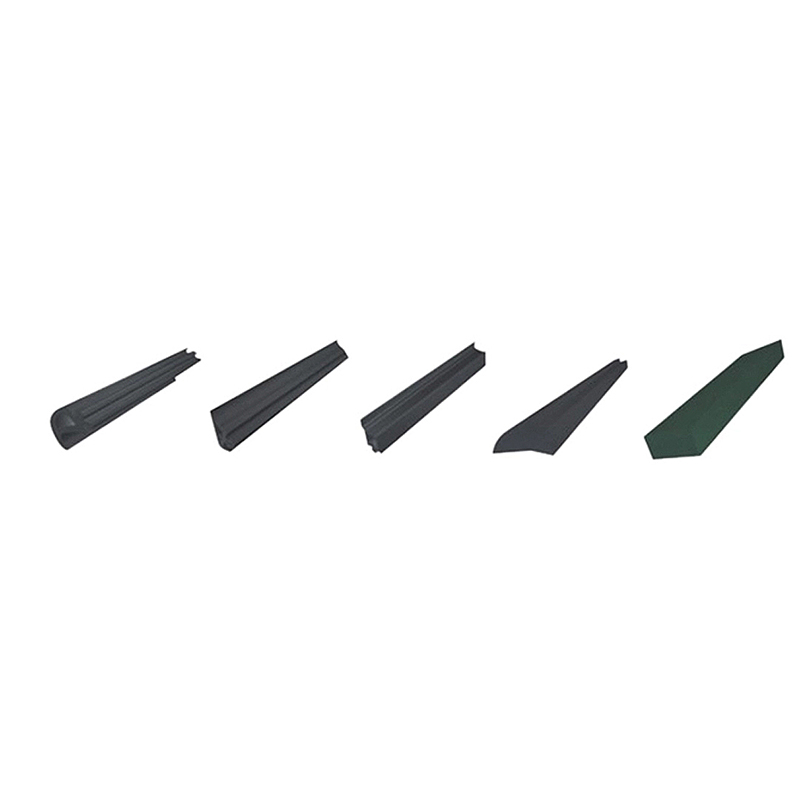 Rubber Co-extrusion and Microwave Curing Production LineThis production line integrates co-extrusion with microwave curing for composite rubber profiles. It supports multiple extruders to handle different materials or colors, with precise die head design and synchronization for consistent layer thickness.View Product →
The die head is the centerpiece of the process. It is machined to exacting tolerances with separate channels for each material. The die material should be hardened steel with a polished surface finish to prevent scorching. Many modern die heads also include a replaceable restrictor bar that lets you adjust the flow of each layer independently by modifying the flow path cross-section. Typical tolerances for the die gaps are around plus or minus 0.02 millimeters, which directly translates to layer thickness consistency.
Downstream equipment includes a cooling conveyor, a puller with a servo drive, and a cutting or winding station. The puller speed must be precisely matched to the extruder output. A mismatch will cause the profile to stretch, leading to dimensional changes after cooling. For a co-extrusion line, it is best to use a puller with an integrated encoder so that the line speed can be adjusted in real time based on the extrusion pressure.
When sourcing a co-extrusion line, consider the maximum output of the largest extruder. If you run two extruders of different sizes, the smaller one should be able to deliver a steady flow at the lower end of the output range. High-quality lines from specialized manufacturers have been tested to run continuously with less than 2 percent output variation over an eight-hour shift. That level of consistency is what allows you to hold the layer thickness within a tight tolerance.
How to Select Compatible Rubber Compounds
Compound compatibility is the single largest factor that determines whether a co-extruded profile will bond well or fail at the interface. Not all rubber compounds can be extruded together. The base polymer, the curing system, the filler type, and the viscosity at processing temperature must all be considered. If the two compounds use completely different cure systems, the interface may remain weak because the crosslinks cannot bridge between the phases.
For example, an EPDM compound and a silicone compound are not normally co-extruded together. Their curing mechanisms and thermal profiles are far too different. On the other hand, two EPDM compounds with different hardness or color often co-extrude beautifully, as long as the curing package is compatible. The best way to verify compatibility is to run a small trial with your actual compound onto a sample profile. You can then inspect the bond strength with a peel test.
Viscosity is the next factor. The viscosities of the two compounds should ideally be within 15 percent of each other at the die head temperature. If one compound is much stiffer, it will move through the die more slowly and may create a wavy interface. The rule of thumb is to keep the softer compound flowing at the same linear velocity as the harder one. The easiest way to do this is to adjust the die geometry and the temperature of the harder compound slightly upward to reduce its viscosity.
For manufacturers using a hot feed extruder to process their compound before feeding the co-extrusion line, material consistency is vital. A rubber strainer that ensures the compound is free of contamination will reduce the risk of blocked die openings and rough surfaces. You can learn more about this from how a hot feed rubber strainer improves material purity in production. A strainer removes agglomerates and small metal residues that cause the surface of the co-extruded profile to develop expensive defects.
Design Consideration for the Material Interface
In a good design, the thickness of the outer layer should be at least 0.8 millimeters. If the outer layer is thinner than this, the flow is more likely to break up, causing pinholes. For sealing profiles that need a soft, flexible lip, the top layer may be 1.5 to 3 millimeters thick. The inner hard core, often a dense EPDM, typically accounts for the main load-bearing section. You can also include a co-extruded layer that serves as a bonding agent, helping to join two otherwise incompatible rubber materials.
Common Co-Extrusion Defects and How to Fix Them
The most common defects encountered in co-extrusion are poor bonding, flow marks at the interface, dimensional instability, and surface roughness. None of these faults are unavoidable. They are all traceable to a specific parameter deviation, and with methodical process control, you can correct them quickly.
Poor Bonding Between Layers
The most serious defect is poor bonding. When the bond fails, the profile may delaminate during handling or in service. The root cause is almost always an incompatible curing system or a temperature difference that causes one layer to start curing before it meets the other. To fix this, you should ensure the two compounds have a similar scorch time. If you are using a peroxide system in one compound and a sulfur system in the other, the interface will simply not crosslink. The solution is to use a compatible cure system across all layers or to add a thin bonding layer.
Flow Marks and Interfacial Distortion
Flow marks are visible as thin, wavy lines at the interface between the layers. They are caused by turbulence as the two materials meet. This happens when the viscosity difference between the compounds is too large or when the die head temperature is uneven. A die head with a separate temperature control zone for each channel can reduce the problem, but the most effective fix is to raise the temperature of the higher-viscosity compound by 5 to 10 degrees Celsius. This brings the viscosity and flow speed closer to that of the other layer.
Dimensional Variation
If the profile width or layer thickness drifts, the cause is usually a change in screw speed or a fluctuation in line speed. This is especially true if the line is not equipped with servo-driven motors. A gear motor will have a 2 to 5 percent variation under load, while a servo motor typically holds the speed within 0.1 percent. The dimensional tolerance of the profile at the interface is very sensitive. A 2 percent variation in screw speed can easily create a thickness band variance of 0.3 millimeters. Upgrading to a servo drive is the most reliable way to bring this under control.
| Defect | Root Cause | Actions to Take |
|---|---|---|
| Delamination at interface | Incompatible cure systems | Use same cure package in both compounds |
| Flow marks | Viscosity mismatch or die temperature gradient | Warm up the stiffer compound or adjust local die temperature |
| Layer thickness drift | Motor output variation | Retrofit to servo drives or replace faulty gearboxes |
| Surface roughness | Contaminants in compound | Install a hot feed rubber strainer ahead of the extruder |
Where Co-Extrusion Delivers the Most Value
Co-extrusion is particularly valuable in three product categories: automotive weatherstripping, industrial hose and ducting, and building profile seals. These applications require an outer skin that resists aging and a harder core that retains shape or supports fasteners. They also have volume demands that justify the investment in a dedicated line.
Automotive Weatherstripping
Automotive door and window seals often have a cellular rubber part for compression and a solid part for attachment. The cellular section is usually a foam rubber while the solid section is a dense compound. Co-extruding these together in one pass replaces a costly and labor-intensive method of joining two separate profiles. The bond is also more durable. A seal that fails at the interface would cause water or wind noise, a complaint that would be very expensive to fix after the car is assembled. The quality of the co-extrusion bond is therefore a critical safety and comfort feature.
Industrial Hose and Ducting
For industrial hoses, an inner tube that is resistant to oil or fuel is often co-extruded with an outer cover that provides abrasion and UV resistance. A single-extrusion hose cannot combine these two properties. Co-extrusion allows the hose to have a chemically resistant inner surface and a mechanically tough outer surface in the same continuous product. Because each hose is made in one process, length tolerances are better and seams are avoided.
Building Profile Seals
Weatherstripping for doors and windows is another common application. A rigid PVC or hard EPDM core may be co-extruded with a soft, flexible lip. This makes a gasket that is easy to install and seals well even on irregular surfaces. The simplicity of a one-piece profile also saves installation time on site. Builders and window fabricators prefer this because the part is delivered ready to use and the seal is fully adhered to the core.
What to Consider Before Buying a Co-Extrusion Line
The most important thing to evaluate is whether the supplier can offer a complete system, including the die, the extruders, the curing unit, and the downstream equipment, with a proven track record on co-extrusion. Some equipment sources may be strong on single extrusion but lack the design capability to make high-quality co-extrusion dies. You should ask the supplier about the maximum number of layers they have successfully produced and examine samples from their test line.
Also ask for documentation on the control system. A co-extrusion line that uses two independent controllers for the two extruders is managed by separate logic. A better design is a single controller that synchronizes the two screw speeds automatically. This is a key factor in keeping the thickness of the different layers stable over an eight-hour shift. With separate controls, the line operator has to manually adjust the second extruder every time the first one drifts, which is prone to error.
One additional practical consideration is maintenance accessibility. The die head, as well as the extruder barrels, must be easy to open and clean. Compound changes are frequent in the rubber industry, and a die head that takes two hours to disassemble can eat into your available production time. A well-designed die head with a hinged or swing-open mechanism can be removed in 15 to 20 minutes. This is a detail that often gets overlooked during the purchase decision, but it makes a significant difference to overall uptime.
The supplier's after-sales service is equally important. For co-extrusion equipment, the die and control system are the two components likely to need adjustment or calibration after commissioning. A supplier with a knowledgeable service team can help you tune the process. A supplier that only ships the machine without providing startup support may leave you with many trials before you get the product correct.
Frequently Asked Questions About Co-Extrusion
Below are the most frequently asked questions from rubber product manufacturers evaluating this process.
What is the maximum number of layers that can be co-extruded at once?
In industrial practice, three layers is the standard limit for most production lines, while specialized equipment can run four or even five layers. The practical limit is usually related to die depth and the degree of control required. More layers mean a bigger die, more temperature zones, and a more expensive control system. For most weatherstripping and seal profiles, two layers are adequate.
Can two different base rubber polymers be co-extruded together?
It is possible only in very specific cases. For example, NBR/PVC blends are often extruded together with other similar materials. But in general, different polars like EPDM and silicone do not bond well. The curing chemistry is too different. If you need a silicone layer on an EPDM profile, you may need to use a mechanical interlock in the die or a bonding layer in between.
What is the normal tolerance for layer thickness in co-extrusion?
A well-controlled process can hold thickness tolerance at the interface to plus or minus 0.15 millimeters. The total profile dimensional tolerance is often specified as plus or minus 0.3 millimeters, depending on the size and use. Achieving this requires both servo-driven motors and a die that is built to tight tolerances.
Does the curing method affect bond quality?
Yes. Microwave curing generally gives a more uniform bond because the heat is generated inside the rubber. In salt bath curing, the outer layer may cure slightly faster than the inner layer, which can cause stress at the interface. For thick co-extruded profiles, microwave is often the better choice. For thin profiles, either method can work well.
How can I test whether my two compounds will bond well?
Prepare a small sample of the two compounds and run a simple co-extrusion trial on your supplier's test line. After curing, cut a strip of the profile and pull it apart with a hand pull test. The bond should show a cohesive failure in one of the materials, meaning the rubber itself tears rather than separating cleanly at the interface. If you notice a clean, glossy separation line, the bond is weak.
Is co-extrusion worth the investment for a small factory?
It depends on your order volume and the number of composite profiles you produce. If you have a high-mix, low-volume environment, the setup time for a co-extrusion line might offset your labor savings. If you have a dedicated product with volume above 200,000 meters per year, the investment makes sense. The break-even point is often around a year and a half to two years, assuming you can keep the line running with high utilization.
Final Takeaway on Co-Extrusion
Co-extrusion is the most direct way to produce rubber profiles with a combination of rigid and soft sections, different colors, or distinct surface properties in one continuous operation. The process requires a well-designed multi-extruder line, a die that provides smooth and balanced flow, and compatible compounds with matching cure systems. The reward is a significant reduction in labor cost, improved product consistency, and a bond that actually lasts.
If you are considering adding a co-extrusion line or optimizing an existing one, the first step is to review your product mix and identify which profiles would save the most from a one-step process. Then, work with a supplier who can demonstrate the process with your own compound. A line that is parameterized for your material from day one will be easier to bring into reliable production. Keep an eye on the tolerance, the ease of die maintenance, and the synchronization between extruders, since these are the three areas that determine the practical success of your co-extrusion operation.
For additional background on how rubber materials behave during extrusion, you can refer to our industry articles on characteristics and properties of rubber materials.

