
 English
 русский
 Español
 عربى
عربى

Content
- 1 How a Rubber Extruder Machine Works: Core Components and Operating Principle
- 2 Main Types of Rubber Extruder Machines
- 3 Cold-Feed vs. Hot-Feed Rubber Extruder Machines: Side-by-Side Comparison
- 4 Key Specifications to Check Before You Send an Inquiry
- 5 Common Applications and Production Line Configurations
- 6 What Happens After the Extruder? Downstream Operations for Finished Profiles
- 7 Die Swell and Shrinkage: Dimensional Challenges in Rubber Extrusion
- 8 How to Choose the Right Rubber Extruder Machine for Your Production
- 9 Common Operational Problems and Maintenance Priorities
- 10 Cost Considerations and Return on Investment
- 11 Frequently Asked Questions About Rubber Extruder Machines
- 11.1 What is the difference between a rubber extruder machine and a rubber injection molding machine?
- 11.2 Can a cold-feed rubber extruder machine handle silicone rubber?
- 11.3 How much does a rubber extruder machine cost?
- 11.4 What is die swell and how do I control it?
- 11.5 Do I need a microwave curing line or is hot air enough?
- 11.6 Which spare parts should I keep in stock for a rubber extruder machine?
A rubber extruder machine is the most efficient way to convert uncured rubber compound into continuous profiles, tubes, strips, and sheets. It transports compound along a heated barrel with a rotating screw, builds pressure, and pushes the material through a shaped die to create an endless cross-section that is cured downstream. If your plant makes weather strips, hose tubes, edge trim, wire insulation, or any long rubber product, the extruder is the heart of that production line. The practical conclusion before we go further: choose the screw type and feed style based on your compound, choose the barrel length and vacuum venting based on your product dimensions and surface requirements, and select the die and haul-off system as one integrated set.
This guide walks through the operating principle, machine types, cold-feed versus hot-feed trade-offs, the specifications that belong in a quotation, typical applications, dimensional challenges, maintenance priorities, cost factors, and the questions most buyers ask before investing.
How a Rubber Extruder Machine Works: Core Components and Operating Principle
All rubber extruder machines share the same mission: uniform transport, compaction, and pressurization of a rubber compound before it passes through a die. In most configurations the machine only shapes the material; curing happens in a downstream hot-air tunnel, microwave section, salt bath, or autoclave. Understanding the components is the first step toward writing a correct specification.
- Drive system - a motor and gearbox set the screw speed. Most rubber extruders use a variable-frequency drive, with screw speeds in the range of 20 to 60 rpm for cold-feed operation.
- Feed system - a hopper or forced-feed roller delivers strip or slab. Cold-feed machines take a continuous strip roughly 10-15 mm thick; hot-feed machines take 60-100 mm slabs from a mixing mill.
- Barrel and screw - the core conveying and mixing zone. The screw generates shear, raises the compound to its working plasticity range, and builds head pressure ahead of the die.
- Temperature control system - circulating water or oil through multiple barrel and screw zones keeps the compound temperature stable, normally within plus or minus 3 degrees Celsius of setpoint.
- Die head - the flow-shaping tool. Die design directly controls swell, surface finish, and dimensional stability of the profile.
- Control panel - monitors and adjusts screw speed, zone temperatures, head pressure, and throughput, and coordinates with the downstream haul-off and cutting equipment.
In operation, the screw first transports the compound, then compresses it to remove trapped air, then plasticizes it so that fillers and curatives are evenly distributed, and finally pushes it toward the die at stable pressure. Any variation in feed, temperature, or screw speed appears immediately as a dimensional change in the extruded profile.
Main Types of Rubber Extruder Machines
Buyers commonly compare four configurations, and each has a clear area of advantage.
Hot-Feed Rubber Extruder Machine
A hot-feed extruder receives warm compound slabs straight from a mixing mill. It uses a short barrel, typically an L/D ratio of 3:1 to 5:1, so the machine is simple and relatively inexpensive. The trade-off is labor: you must keep the mill and extruder in line and feed every batch by hand or conveyor, and the heat history of the compound is more difficult to control.
Cold-Feed Rubber Extruder Machine
A cold-feed machine takes room-temperature strip and performs plasticization inside the barrel. L/D ratios of 10:1 to 20:1 are common, with the longer barrel generating the shear required to heat the compound. Cold-feed machines are the mainstream choice when you want to decouple mixing from extrusion, reduce labor, and improve thermal history control. The screw does more work, so drive power is higher per kilogram of output compared with hot feed.
Vacuum Vented Rubber Extruder Machine
A vented barrel contains a vacuum port in the middle section that extracts trapped air and volatiles before the compound enters the compression zone. If your products require pore-free surfaces or stable electrical properties, a vacuum machine reduces porosity noticeably compared with a non-vented cold-feed extruder.
Ram or Plunger Extruder Machine
A ram extruder pushes a preheated block or preform through the die with a hydraulic piston. It has no screw, so it generates pressure with very little frictional heating. Ram machines suit highly viscous or scorch-sensitive compounds, short runs, and specialty materials where screw extrusion would overheat the rubber.
Within the single-screw family, screw design is the main differentiator: constant-pitch, variable-pitch, mixing-pin, and barrier screws each change the balance between output, mixing quality, and temperature buildup. A supplier that builds a dedicated screw extruder machine range can usually match the screw profile to a specific compound more precisely than one that treats every machine the same.
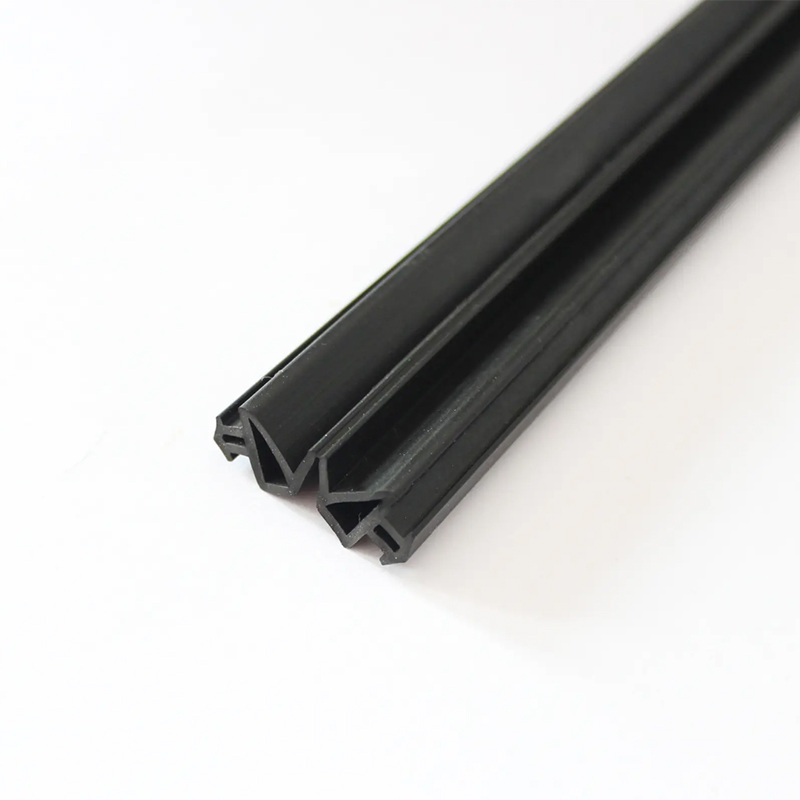 Dedicated Single-Screw Extruder for Rubber CompoundsThis automatic screw extruder matches specific screw profiles to compounds, improving output and mixing quality over generic designs. Compare screw type, L/D ratio, and feed zone flights when evaluating quotations.View Product →
When you compare quotations, ask for the screw type, L/D ratio, number of feed zone flights, and the recommended compound range for each supplier's standard machine. These details matter more than the brand of the motor or the paint finish.
Cold-Feed vs. Hot-Feed Rubber Extruder Machines: Side-by-Side Comparison
The table below summarizes what changes when you choose one feed system over the other. Use it as a discussion document with the production team, not just with the purchasing department.
| Parameter | Cold-Feed Machine | Hot-Feed Machine |
|---|---|---|
| Feed material | Room-temperature strip, 10-15 mm thick | Warm slab, 60-100 mm, direct from mixing mill |
| Typical L/D ratio | 10:1 to 20:1 | 3:1 to 5:1 |
| Plasticization location | Inside the barrel by screw shear | On the mixing mill before feeding |
| Energy per kilogram | Higher at the screw, more consistent | Higher overall plant energy, shorter screw |
| Labor requirement | Lower, strip feeding can be automated | Higher, operator manages slabs and mill |
| Temperature uniformity | Good, with multi-zone barrel control | Depends on mill batch consistency |
| Best suited for | Compounds with stable scorch safety; uniform profiles | High-viscosity compounds; simple sections; short runs |
In practice, manufacturers upgrading to a continuous rubber extrusion line most often choose cold feed because it separates the extrusion process from the mixing floor and makes quality easier to control. Hot feed remains competitive in high-viscosity tire compounds and in projects where initial capital cost is the main constraint.
Key Specifications to Check Before You Send an Inquiry
Most rubber extruder machine quotations are compared by price alone, but the details that determine success are buried in technical data. Ask every supplier to answer the following eight items in writing:
- Screw diameter - typically 40 mm, 60 mm, 75 mm, 90 mm, 120 mm, or 150 mm. This sets the upper limit of output and the maximum profile cross-section.
- L/D ratio - higher ratios give more mixing and temperature buildup but also more residence time. A long L/D is not automatically better for scorch-sensitive compounds.
- Output rate in kilograms per hour - always demand an output figure at a defined compound, screw speed, and die size, not a theoretical maximum.
- Number of temperature control zones - four to six zones on the barrel, plus separate screw cooling, is normal for cold-feed machines.
- Vacuum venting - specify whether the vent port is included and at which position along the barrel, along with the vacuum level in millibar.
- Die-head type - straight head, angled head, or cross-head for hose and wire insulation. A cross-head allows the core to pass through the center of the flow.
- Screw and barrel material - nitriding steel for general-purpose rubber, bimetallic or high-alloy lining for abrasive or corrosive compounds. This choice drives long-term maintenance cost.
- Automation interface - PLC touchscreen control, recipe storage, and data logging for connecting to haul-off, cutting, and curing controls.
One specification that buyers often overlook is the precision of screw speed control. Over multiple shifts, a variation of even 1 rpm on a 90 mm cold-feed machine can change profile dimensions enough to create scrap. Insist on a variable-frequency drive with closed-loop speed regulation; the added cost is small compared with the rework it prevents.
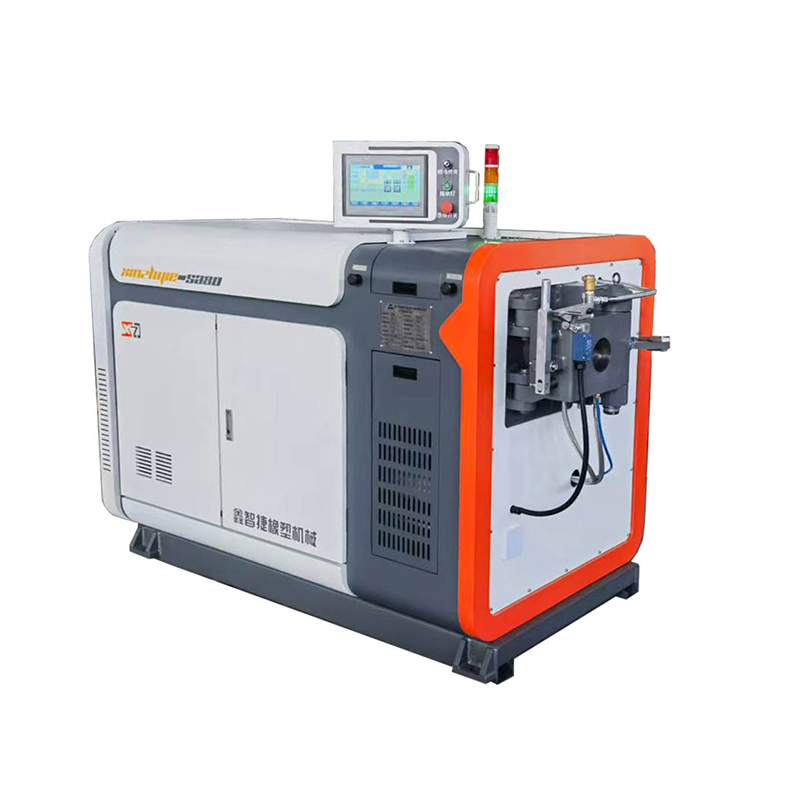 Precision Rubber Extruder with Closed-Loop Speed ControlFor demanding sponge or high-filler EPDM profiles, this extruder offers up to 300 mesh filtration and variable-frequency drive regulation. A trial with your actual compound reveals performance beyond catalog specs.View Product →
If you plan to extrude sponge profiles or high-filler EPDM, ask the supplier to demonstrate the machine with your actual compound formulation. A precision rubber extruder is built around exactly that type of challenge, and a trial run reveals far more than any catalog table.
Common Applications and Production Line Configurations
Rubber extruder machines appear in nearly every sector that produces long rubber profiles. The most frequent applications are:
- Door and window seals - EPDM solid and sponge seal profiles are produced on coextrusion lines with microwave or hot-air curing and an automatic cutting system.
- Automotive hoses and tubing - radiator hose, air intake duct, and vacuum tubing are extruded on single-screw or coextrusion machines, then cured in salt baths or autoclaves.
- Wire and cable insulation - NBR/PVC and EPDM compounds are extruded over a conductor through a cross-head die, with tight concentricity requirements.
- Edge trim and protective profiles - standard sections for furniture, automotive panels, and construction joints, either solid rubber or rubber-to-metal coextrusions.
- Insulation sheet and pipe - NBR/PVC insulation is produced on dedicated extrusion lines; the same principle applies to continuous rubber sheets from a sheet die.
- Spiral reinforced hose - a spiral hose production line combines a rubber extruder with textile or wire braiding stations for hydraulic and industrial hoses.
A complete single-extrusion microwave curing line typically includes a strip winder or feeder, the rubber extruder machine, a microwave vulcanization tunnel, a hot-air holding section, a water cooling bath, an automatic haul-off, a cutting machine, and a stacking or coiling table. Microwave curing gives fast and uniform heat penetration for EPDM sponge profiles, while a salt bath (LCM) line is preferred for dense profiles where surface finish and wall-thickness control are critical.
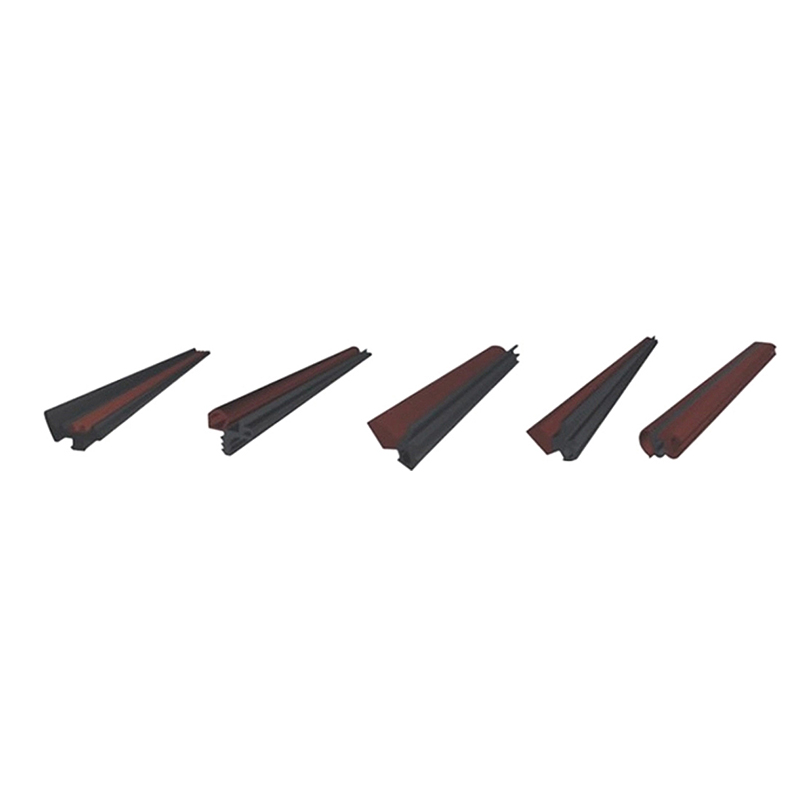 Single-Extrusion Microwave Curing Production LineThis integrated line combines extruder, microwave tunnel, cooling, and cutter for consistent dimensions and fast commissioning. Ideal for EPDM sponge and dense profiles requiring uniform vulcanization.View Product →
When you evaluate a supplier for such a line, ask whether the extruder, curing tunnel, cooling section, and cutter are engineered as one control system or supplied as separately matched units. Matched units from a single engineering source usually cut commissioning time and produce more consistent dimensions.
What Happens After the Extruder? Downstream Operations for Finished Profiles
Extrusion produces a long continuous section, but the final product often still requires several operations before it can be delivered. The most common downstream steps are:
- Cutting - in-line automatic cutters cut to length synchronously with haul-off speed, using a rotary blade, guillotine, or traveling saw.
- Punching - mounting holes or drain holes are punched in-line or off-line with rotating die punches for gaskets and straps.
- Printing and marking - ink-jet or hot-stamp printers add production codes, brand names, and specification marks before or after curing.
- Drilling and grooving - some profiles need secondary machining for assembly, usually performed off-line on CNC equipment.
- Corner molding - molded corners are joined to extruded lengths to form window seals and gaskets, using hot-plate welding or mold bonding.
- Grinding and buffing - where dimensional accuracy or surface roughness must meet a high class, the profile is ground off-line with abrasive belts.
When you specify the machine, decide which operations run in-line with the extrusion line and which run off-line. In-line operations must be synchronized to the extrudate speed, usually through a signal from the extruder drive or a measuring wheel; this synchronization is a frequent source of scrap when the interface is poorly engineered.
Die Swell and Shrinkage: Dimensional Challenges in Rubber Extrusion
Rubber compound exits the die with a larger cross-section than the die opening itself. This effect, called die swell, ranges from 10 to 40 percent depending on compound viscosity, screw speed, temperature, and die geometry. A highly filled EPDM formula may swell only 10 percent, while a soft, heavily plasticized compound can double that figure at high throughput.
After extrusion, the profile also shrinks during cooling. The result is that final product dimensions are a function of the entire line, not just the die. Production engineers therefore tune haul-off speed and die sizing together. A practical starting rule: size the die about 5 to 15 percent larger than the required final section, then adjust haul-off speed to bring the dimensions into tolerance.
For profiles with tight dimensional requirements, use a machine with accurate temperature control and smooth screw speed response. Even a 2 degree Celsius barrel temperature shift can move output dimensions; automatic temperature logging helps detect drift before it creates scrap.
How to Choose the Right Rubber Extruder Machine for Your Production
The correct selection process starts from the compound and works outward. Define the following five factors before you contact suppliers:
- Compound characteristics - Mooney viscosity, cure rate, scorch safety, filler type, and whether the formula contains plasticizers or volatile ingredients. The properties of the rubber compound directly determine the screw design and temperature control strategy. Review the main characteristics and properties of rubber materials before you fix your specification.
- Product geometry and tolerances - wall thickness, overall width, allowed swell, and dimensional tolerance. Products with tight tolerances need better temperature control and a haul-off with low speed fluctuation, not necessarily a larger extruder.
- Required output - the target kilograms per hour at practical line efficiency, normally 75 to 85 percent of theoretical maximum output.
- Curing system compatibility - microwave, hot air, salt bath, or autoclave. The extruder output must match the curing tunnel capacity; otherwise the bottleneck simply moves downstream.
- Factory utilities - available power, cooling water temperature and flow, compressed air supply, and floor height clearance for the complete line.
If you choose a general-purpose machine and later need higher output, a screw geometry change may require barrel rework or replacement, which often costs more than selecting the right screw the first time. Calculate your five-year production plan, not only this year's order volume, before deciding on screw diameter.
Common Operational Problems and Maintenance Priorities
Most extrusion quality problems trace back to a small set of root causes. The table below lists the most frequent issues, their typical causes, and the corrective actions used by experienced production teams.
| Problem | Likely Cause | Practical Fix |
|---|---|---|
| Pulsating output, uneven profile | Inconsistent strip feeding, screw slip, or temperature drift | Stabilize strip dimensions; check feed rollers; inspect screw flights; verify all zones reach setpoint |
| Surface roughness, pitting, or porosity | Trapped air, moisture in the compound, insufficient back pressure | Use a vented barrel; confirm compound moisture is within limits; increase head pressure with die restriction |
| Scorching inside the die head | Excessive temperature, long residence time, die flow imbalance | Lower head temperature; smooth the internal flow path; reduce machine stops; verify compound scorch time |
| Black specks or contamination | Degraded rubber residues in barrel or head, worn surfaces, or carryover from previous runs | Deep clean or purge with cleaning compound; inspect screw and barrel for wear and plating loss |
| Consistent undersize or oversize dimensions | Wrong haul-off speed, die sizing error, or compound temperature change | Measure the profile and recalculate drawdown; adjust die land or temperature; reset line speed |
Preventive maintenance on a rubber extruder machine should follow a fixed schedule:
- Every shift - check lubrication pressure, bearing temperature, and feed strip quality; record barrel temperatures.
- Weekly - clean the feed hopper and strip guides; inspect the vent port for compound buildup; check gearbox oil level and condition.
- Monthly - measure screw-to-barrel clearance at the feed and metering zones; sample-check temperature sensor calibration.
- Every 6 to 12 months - pull the screw for visual inspection and crack checks; replace worn flight segments; verify heater bands and thermocouple performance.
Cost Considerations and Return on Investment
The purchase price of a rubber extruder machine is only one layer of the total cost structure. A complete installation includes the extruder, the curing section, cooling and cutting equipment, tooling, and working capital for compound and spare parts. The main operating costs over a five-year period are energy at the drive and barrel heaters, operator labor, screw and barrel wear, die replacement, and scrap losses.
A cold-feed single-screw machine typically consumes 250 to 350 kWh per ton of processed rubber; a hot-feed line can use 15 to 25 percent more total plant energy when mill operation is included. These numbers translate directly into cost per meter of profile, which is the figure that matters for quoting and profitability.
To estimate return on investment, take annual production volume in tons, the gross margin improvement from producing profiles in-house compared with buying finished strips, and the total installed cost. As a simplified example: a line processing 1,500 tons per year with a margin improvement of USD 400 per ton reaches a payback below three years even after including the curing tunnel and cutter. At lower volumes, a hot-feed machine or a well-maintained used machine may be the financially rational choice.
When comparing suppliers, look beyond the machine price. A partner with broad experience across the whole rubber processing equipment range can help you avoid interface problems between mixing, extrusion, curing, and cutting, which is where most hidden costs appear.
Frequently Asked Questions About Rubber Extruder Machines
What is the difference between a rubber extruder machine and a rubber injection molding machine?
An extruder produces a continuous profile, strip, tube, or sheet with a constant cross-section. An injection molding machine injects a metered amount of compound into a closed cavity to form a discrete three-dimensional part and cures it in the mold. The two processes serve different product families; you rarely use them for the same part.
Can a cold-feed rubber extruder machine handle silicone rubber?
Yes, but the machine must be configured for silicone. Silicone compounds are soft and heat-sensitive, so suppliers use a dedicated screw geometry, lower shear zone temperatures, and often a shorter L/D ratio. Running silicone on a machine designed for EPDM frequently causes scorching at the die and poor surface quality.
How much does a rubber extruder machine cost?
The price depends mainly on screw diameter, L/D ratio, vacuum venting, drive brand, and whether you buy a bare extruder or a complete production line. The practical approach is to send suppliers your compound details and required output, then compare quotations on a functional specification rather than on machine weight or price per ton alone.
What is die swell and how do I control it?
Die swell is the expansion of the rubber profile after it leaves the die, caused by relaxation of polymer chains that were stretched inside the extruder. It is controlled by compound viscosity, screw speed, barrel temperature, die land length, and haul-off speed. Higher filler loading reduces swell; a longer die land reduces swell; a faster haul-off reduces the final cross-section.
Do I need a microwave curing line or is hot air enough?
Hot air alone works for thin-wall profiles and low-throughput lines, but thick sections suffer from slow heat conduction and can cure unevenly. Microwave curing heats the whole cross-section at once and is generally recommended for sponge profiles and for products thicker than about 6 mm. The two technologies are often combined, with microwave doing the initial heating and a hot-air tunnel equalizing the temperature.
Which spare parts should I keep in stock for a rubber extruder machine?
As a minimum, stock heater bands, thermocouples, a spare die head gasket set, feed zone seals, screw and barrel wear gauges, and the manufacturer's recommended filter screens. If the line includes a strainer head, keep spare screen packs and breaker plates available.

