 English
 русский
 Español
 عربى
عربى

Content
The Definitive Indicators of Kneading Completion
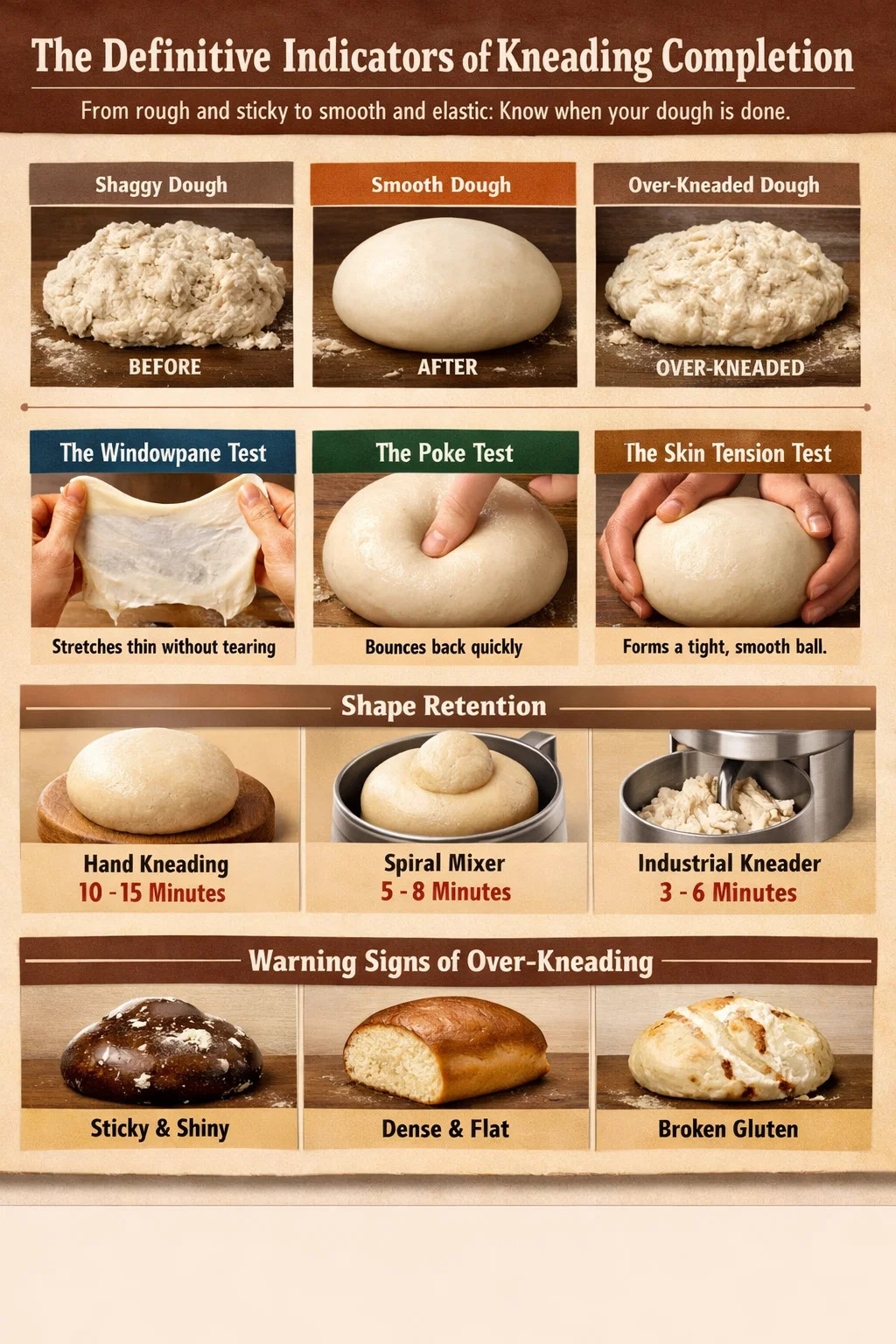
You know you are done kneading when the dough transforms from a shaggy, sticky mass into a smooth, supple, and elastic ball that holds its shape and passes the Windowpane Test. Whether you are using a high-speed industrial kneader or working by hand, the goal is the full development of the gluten network. Specifically, the dough should feel tacky but not sticky to your skin, and it should bounce back immediately when poked with a finger.
Visual and Tactile Transformation Milestones
Successful kneading is a physical process of alignment. In the beginning, flour proteins are tangled and chaotic. As the kneading machine or your palms apply shear force, these proteins link up to form long, stretchy chains of gluten.
The Surface Texture Shift
Initially, your dough will look lumpy and "torn." As the kneader works, the surface will gradually smooth out. A finished dough has a matte or slightly silken sheen. If you see visible streaks of dry flour or "scales" on the surface, the gluten has not yet formed a continuous skin.
Shape Retention and Strength
Pick up the dough or observe it in the kneading bowl. If it sags between your fingers like a liquid or puddles instantly, it lacks the structural integrity that comes from proper kneading. Finished dough should hold a round, taut shape for several minutes before slightly relaxing.
Three Essential Physical Tests
Instead of relying solely on a timer, which can be inaccurate due to humidity or flour protein content, use these physical benchmarks to verify the state of your kneaded material.
- The Windowpane Test: Pull off a golf-ball-sized piece of dough. Using your thumbs and first two fingers, gently stretch it outward from the center. If it stretches thin enough to see light through it without tearing, the gluten is fully developed.
- The Poke Test: Press a finger firmly about 1/2 inch into the dough. If the indentation fills back up almost immediately, the elastic tension is sufficient. If the hole stays there, keep using the kneader for another 2-3 minutes.
- The Skin Tension Test: Try to tuck the edges of the dough underneath to form a ball. The surface should feel tight, almost like an inflated balloon. If it tears easily during this shaping, it is under-developed.
Time and Speed Benchmarks by Equipment Type
The time required to reach the "done" state varies wildly depending on whether you are using mechanical assistance or manual labor. High-viscosity materials in a kneader reach completion much faster due to consistent torque.
| Method | Typical Duration | Effort Level | End-Point Accuracy |
|---|---|---|---|
| Hand Kneading | 10 - 15 Minutes | High | Variable |
| Spiral Kneader | 5 - 8 Minutes | Low | High |
| Sigma Blade Kneader | 3 - 6 Minutes | Low | Very High |
The Risks of Over-Kneading
While under-kneading is the most common issue for beginners, over-kneading is a serious risk when using a powerful industrial kneader. Knowing when to stop is just as vital as starting.
When dough is over-processed, the gluten bonds literally snap. The dough will go from being elastic to being strangely soft, sticky, and shiny. If you notice that the dough was once a ball but is now starting to stick to the sides of the kneader bowl again, you have likely over-kneaded. At this stage, the bread will turn out tough, flat, and dense because it can no longer trap the gases produced during fermentation.
Checklist for Professional Results
Before you turn off your kneading machine and move to the proofing stage, run through this quick mental checklist:
- Does the dough pull away cleanly from the sides of the kneader?
- Is the temperature of the dough between 24°C and 27°C (excessive heat from friction can damage yeast)?
- When you stretch it, does it resist slightly before giving way?
- Has the volume slightly increased due to air incorporation during the kneading process?
If the answer to all of these is yes, your work with the kneader is finished. You can now proceed to bulk fermentation with the confidence that your dough has the internal structure required for a perfect rise and crumb.