
 English
 русский
 Español
 عربى


Content
- 1 What the Word Vulcanised Actually Means
- 2 Why Raw Rubber Cannot Do the Job on Its Own
- 3 What Physically Changes After Vulcanisation
- 4 Uncured Versus Vulcanised Rubber Side by Side
- 5 Sulphur, Accelerators and What Each Additive Does
- 6 Activators and Process Aids You Cannot Skip
- 7 Reading a Vulcanisation Curve Like a Production Manager
- 8 Vulcanised, Cured, Crosslinked: Sorting Out the Vocabulary
- 9 Mistakes That Turn Up on the Shop Floor
- 10 What This Means for Equipment and Buying Decisions
- 11 Frequently Asked Questions About Vulcanised Rubber
- 11.1 Does vulcanised rubber always contain sulphur?
- 11.2 Can vulcanisation be undone?
- 11.3 How long does vulcanisation take?
- 11.4 Why does uncured rubber smell different from cured rubber?
- 11.5 How can I tell whether a part is fully cured?
- 11.6 Does higher sulphur content mean a stronger rubber?
- 11.7 Is vulcanised rubber the same as silicone rubber?
- 11.8 What causes a cured part to revert?
Vulcanised rubber is raw rubber that has been chemically crosslinked, usually with sulphur and heat, so its long polymer chains are tied together into a three-dimensional network. That is the whole meaning in one sentence. Everything else attached to the phrase - the sulphur, the heat, the curing presses, the smell of a factory floor - exists to produce that single structural change.
The practical consequence is easy to see. A rubber band returns to its original shape instead of sagging. A tyre tread survives thousands of kilometres of abrasion. An O-ring still seals after years inside a hot engine bay. None of those behaviours exist in the raw material. They only appear after crosslinking.
If you are sourcing compound ingredients, specifying a curing press, or trying to work out why a batch of seals went brittle, the definition matters less than what it implies for the numbers on your process sheet. That is where the rest of this article goes.
What the Word Vulcanised Actually Means
The term comes from Vulcan, the Roman god of fire, and it was applied to rubber in the 1840s when Charles Goodyear discovered that heating raw rubber with sulphur transformed it from a sticky, temperature-sensitive gum into a stable elastic solid. The name stuck even though no fire deity is involved, and even though modern production uses many crosslinking chemistries that contain no sulphur at all.
Chemically, vulcanisation is a crosslinking reaction. Raw natural rubber is a chain of isoprene units, typically tens of thousands of them, with a double bond available roughly every fifth carbon atom. During curing, sulphur reacts at some of those double bonds and forms short bridges between neighbouring chains. A typical sulphur bridge is only one to eight sulphur atoms long, while the chains themselves are enormously long. One crosslink for every few hundred carbon atoms is enough to change the material completely.
Two things are worth separating here. Vulcanisation is not a coating, and it is not simple mixing. Adding sulphur to a mill and blending it into the compound produces unvulcanised rubber that behaves almost exactly like the raw material. The change only happens when heat triggers the reaction and the network actually forms. Before that moment you have a plastic mass. After it, you have an elastic solid. There is no middle state that lasts.
It is also worth knowing that the same word covers peroxide curing, metal oxide curing, resin curing and radiation curing. Silicone rubber, EPDM and fluororubber are frequently crosslinked without any sulphur. When a supplier says a part is vulcanised, they mean the network exists, not that sulphur was used.
Why Raw Rubber Cannot Do the Job on Its Own
Raw rubber has almost no useful engineering properties. Its tensile strength typically sits somewhere between 0.5 and 2 MPa, which is roughly comparable to a stiff gel. Warm it above about 50 to 60 degrees Celsius and it softens dramatically; cool it below freezing and it stiffens and can turn brittle. Leave a strip of it under load at room temperature and it will flow permanently - the technical term is cold flow, and it is the reason unvulcanised rubber is stored as flat sheets or wrapped on rolls rather than hung.
Drop it into toluene or petrol and it dissolves. Expose it to sunlight and oxygen and it degrades quickly. None of these behaviours are defects; they are simply what an un-crosslinked polymer does. The chains slide past one another because nothing holds them in place.
This is why the compounding stage exists in the first place. Before curing, a compound contains rubber, fillers such as carbon black, plasticisers, antioxidants, and the curing system itself. The filler improves strength and hardness, but the network is what locks everything into position. Our own technical notes on the characteristics and properties of rubber materials cover how these base polymers differ before any curing system is added.
If you skip crosslinking entirely, you do not get a weaker rubber part. You get a part that will not hold its dimensions for a week.
What Physically Changes After Vulcanisation
Once the network exists, the material gains a memory. Stretch it and it returns. Compress it and it recovers. That recovery is not a surface effect; it comes from the crosslinks preventing permanent chain slippage, while the segments between crosslinks remain free to move and uncoil.
Several changes arrive together:
- Strength rises by an order of magnitude. A well-formulated natural rubber compound commonly reaches 20 to 30 MPa tensile strength and 400 to 700 percent elongation at break.
- The useful temperature window widens. Ordinary sulphur-cured natural rubber works comfortably up to roughly 70 degrees Celsius, while EPDM and silicone compounds extend well beyond that.
- Solvent resistance appears. The material no longer dissolves; it swells, and the degree of swelling becomes a practical measure of how densely crosslinked the part is.
- Compression set improves. A vulcanised seal holds its shape under load instead of flowing away from the sealing surface.
- Surface tack disappears. Cured rubber feels dry and handles cleanly on automated equipment.
Notice that hardness barely moves. Crosslinking is not primarily about stiffness; it is about recovery. You control hardness mainly through filler loading, and you control elasticity and set through the crosslink density. Confusing these two levers is one of the most common formulation errors.
Uncured Versus Vulcanised Rubber Side by Side
The table below summarises the differences that matter most during evaluation and production. Values are typical ranges drawn from standard rubber technology references such as Maurice Morton's Rubber Technology and general compounding practice; exact figures depend on polymer type, filler loading and cure system.
| Property | Uncured compound | Vulcanised rubber |
|---|---|---|
| Tensile strength | 0.5 to 2 MPa | 20 to 30 MPa |
| Elongation at break | Not measurable, material flows | 400 to 700 percent |
| Behaviour in toluene | Dissolves | Swells only |
| Compression set | Very high, permanent flow | Low, recoverable |
| Upper service temperature | Around 50 to 60 degrees Celsius | 70 to 120 degrees Celsius and above |
| Surface condition | Tacky and soft | Dry and dimensionally stable |
Read the first row carefully. A jump from around 1 MPa to over 20 MPa is not a modest improvement; it is a different class of material, achieved by adding a fraction of a percent of sulphur by weight.
Sulphur, Accelerators and What Each Additive Does
A sulphur-only cure is technically possible, but it takes hours and produces poor properties. Real compounds use a curing system of three or four components that work together.
Sulphur dosage decides the network type
Conventional systems use roughly 1.5 to 3.0 parts per hundred rubber. Semi-efficient systems drop to about 1.0 to 1.5 phr with more accelerator, and efficient systems go as low as 0.3 to 0.8 phr. Lower sulphur means shorter, more thermally stable crosslinks, which improves heat ageing but can reduce fatigue life in dynamic applications such as engine mounts.
Accelerators set the clock
Accelerators do not change the destination, only the speed. A thiazole such as MBT cures moderately fast with a short scorch delay. A sulphenamide such as CBS gives a longer scorch time and is the workhorse for thick moulded parts where flow must finish before the reaction starts. Thiurams and dithiocarbamates are extremely fast and are usually reserved for thin profiles or latex. Getting the accelerator wrong is the most common cause of premature scorch in an injection barrel.
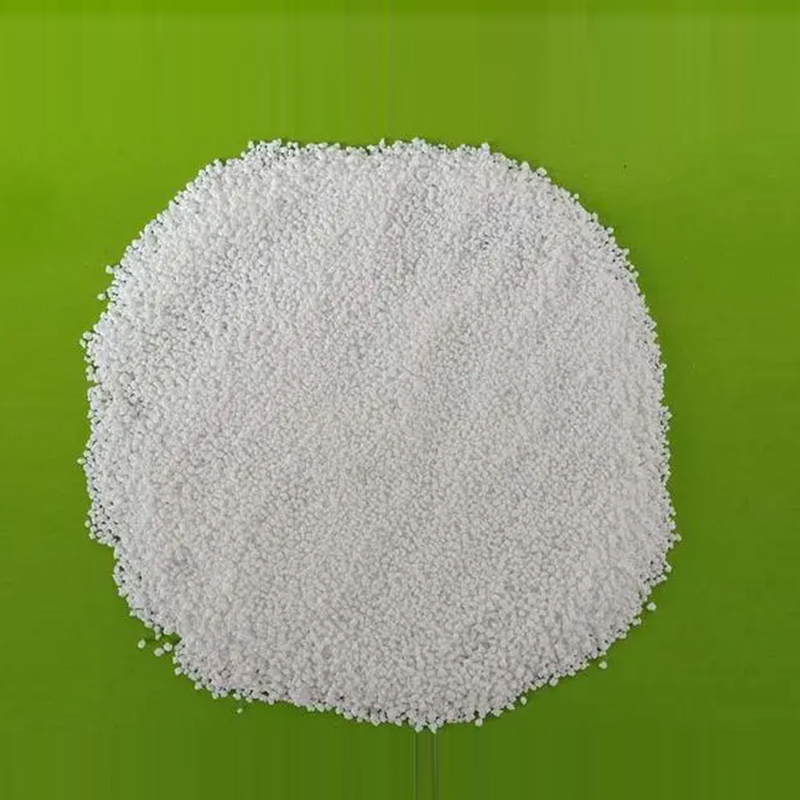 Sulfur Accelerators for Rubber VulcanizationSulfur accelerators speed up rubber vulcanization, where sulfur alone reacts slowly. They are relevant when selecting accelerator families to balance cure speed against scorch safety in rubber processing.View Product →
If you are balancing cure speed against scorch safety, the practical starting point is a chart of accelerator families with their typical scorch times at your barrel temperature, not a trial-and-error run on the production line.
Activators and Process Aids You Cannot Skip
Accelerators are surprisingly ineffective on their own. They need a metal oxide and a fatty acid to form the soluble complex that actually carries the sulphur into the rubber. That pair is called the activator system, and leaving it out is a silent way to halve your cure rate.
Zinc oxide is the standard choice, normally used at 3 to 5 phr. Below about 2 phr the cure becomes noticeably sluggish and the network quality suffers. Above 5 phr there is little further benefit, and excess zinc oxide contributes to bloom on the finished surface. Particle size matters as well; surface-treated and nano grades disperse faster in a short mixing cycle, which is often the real reason a compound cures unevenly across a batch.
Active Zinc Oxide for Rubber VulcanizationActive zinc oxide offers small particle size and high vulcanization activity. In rubber compounds it supports cure activation, and finer or surface-treated grades can disperse faster during short mixing cycles.View Product →
Stearic acid is the second half of the pair, typically at 1 to 3 phr. It solubilises the zinc so it can participate in the reaction, and it doubles as a lubricant that helps release parts from the mould. Too little and the cure plateaus early; too much and it can migrate to the surface, causing poor adhesion in co-moulded or bonded assemblies.
Stearic Acid for Rubber CompoundingStearic acid acts alongside zinc oxide in rubber vulcanization, typically at 1 to 3 phr, solubilising zinc and aiding mould release. Excess can migrate and harm adhesion in bonded assemblies.View Product →
Together, zinc oxide and stearic acid cost very little per kilogram but influence cure rate, crosslink density, surface appearance and adhesion. When a batch behaves inconsistently, checking the weight accuracy of these two ingredients is usually faster than re-examining the polymer.
Reading a Vulcanisation Curve Like a Production Manager
A moving-die rheometer test produces the curve that tells you whether a compound is ready for production. Four numbers matter most.
- Minimum torque, or ML, indicates the viscosity of the unvulcanised compound. A rising ML over successive batches points to scorch or to filler dispersion problems.
- Maximum torque, or MH, reflects crosslink density. Compare MH between batches to detect dosing errors in the curing system.
- Scorch time, written ts2, is how long the compound survives at test temperature before torque begins to climb. This is your practical limit for barrel residence time.
- Optimum cure time, written t90, is when 90 percent of the torque rise has occurred. Production cure times are normally set slightly beyond t90, not at it.
The temperature dependence is steep. As a rule of thumb, raising the cure temperature by 10 degrees Celsius roughly doubles the reaction rate, which is why a mould at 150 degrees Celsius that cures in eight minutes may finish in four at 160. That same rule explains why a barrel running slightly hot can scorch material long before the cycle ends.
Keep the curve for every compound in a retrievable file. When a complaint arrives eighteen months later, the original MH and t90 values are the fastest way to prove whether the compound changed or the process did.
Vulcanised, Cured, Crosslinked: Sorting Out the Vocabulary
In day-to-day conversation the three words are interchangeable, but they carry slightly different weights in technical documents.
- Crosslinking is the general chemical term for joining polymer chains. It applies to rubber, plastics, adhesives and gels.
- Curing is the process step. In a factory, curing means the part has spent the required time in the press or the continuous line.
- Vulcanisation is the historical and commercial name for the crosslinking of rubber, and it is used even for peroxide and radiation systems that contain no sulphur.
One caution on wording: a cured part is not automatically a correctly cured part. Under-cured rubber feels soft and exhibits high compression set, while over-cured natural rubber can revert, becoming sticky and weak. Both failures look like material faults to a customer, and both are process faults in reality.
Mistakes That Turn Up on the Shop Floor
Most vulcanisation problems are not chemistry problems. They are control problems, and they repeat across factories.
- Assuming the press is at the set temperature. A platen that reads 155 degrees on the controller can sit at 140 on the surface after a long idle period. Measure the mould cavity, not the panel.
- Ignoring thermal lag in thick parts. A 20 mm section needs far longer than a 2 mm section at the same platen temperature. Cure time should scale with the square of the thickness, not linearly.
- Weighing activators by volume. Zinc oxide and stearic acid are dosed in small amounts, and scoop-based additions vary by 20 percent or more between operators.
- Reusing trimmed flash. Cured flash cannot be re-mixed into a fresh batch; it will never crosslink again and will show up as permanent surface defects.
- Storing compounded sheet too long before cure. Even at room temperature, a scorch-prone compound drifts, and a batch left over a weekend may not flow the same way on Monday.
Each of these is cheap to fix and expensive to ignore. A weekly temperature survey and a calibrated small-chemical weighing routine eliminate most of them.
What This Means for Equipment and Buying Decisions
Once you accept that vulcanisation is a time-temperature-pressure reaction, equipment choices become easier to justify. A press with uneven platen temperature will produce parts with different cure states across the same mould. A dosing system that cannot hold small-chemical accuracy will produce batches that vary in MH. A cooling conveyor that runs too short will let thick parts continue curing off-line, which is just as damaging as under-curing.
For continuous profiles the calculation changes again. Microwave and hot-air lines cure by passing the extrudate through a heating tunnel, so line speed, profile thickness and compound reactivity have to be matched. Salt bath lines handle thick sections and complex geometries that would sag in a hot-air tunnel. Choosing between them comes down to section thickness and shape stability, not to supplier preference.
The same logic applies upstream. Preformer accuracy determines how consistent the blank weight is, and blank weight determines how consistently the cavity fills. Strainer performance determines whether foreign particles survive into the finished part. These are not separate topics from vulcanisation; they are the conditions that make a cure schedule work.
If you want a starting point for mapping a curing process onto hardware, browse the full rubber processing equipment range and match the machine category to the stage you are struggling with.
Frequently Asked Questions About Vulcanised Rubber
Does vulcanised rubber always contain sulphur?
No. Sulphur curing dominates for natural rubber, SBR and nitrile rubber, but peroxide systems are common for EPDM and silicone, and metal oxides such as zinc oxide and magnesium oxide crosslink chloroprene rubber. Radiation curing uses no chemical agent at all. The defining feature is the crosslinked network, not the presence of sulphur.
Can vulcanisation be undone?
Not in any way that restores the original raw rubber. Heating cured natural rubber long enough causes reversion - the network breaks down and the material becomes sticky and weak - but the result is degraded rubber, not usable raw material. This is why cured scrap is ground and sold as filler rather than reprocessed as compound.
How long does vulcanisation take?
It ranges from under a minute to several hours. Thin injection-moulded parts in efficient systems can cure in 30 to 60 seconds at 170 to 180 degrees Celsius. Thick compression-moulded blocks may need 30 minutes or more. Continuous extrusion lines balance tunnel length against line speed rather than running a fixed time cycle.
Why does uncured rubber smell different from cured rubber?
The odour comes largely from volatile compounding ingredients and from reaction by-products released during cure. Many accelerators break down during the reaction and generate small amounts of amines or other volatile species, which is why freshly cured parts are usually ventilated or post-cured before packing.
How can I tell whether a part is fully cured?
The reliable method is a rheometer curve on the compound plus a solvent swell test on the finished part. Field indicators include compression set, hardness drift after ageing, and surface tack. A part that feels slightly soft and takes a permanent set after 24 hours under compression is usually under-cured, not under-filled.
Does higher sulphur content mean a stronger rubber?
Only up to a point, and not in the way most people expect. Increasing sulphur raises crosslink density, which raises modulus and reduces elongation. Push it far enough and the material becomes brittle, with poor fatigue resistance. For dynamic parts, a semi-efficient system with lower sulphur and higher accelerator often outlasts a conventional high-sulphur compound.
Is vulcanised rubber the same as silicone rubber?
No. Silicone rubber is a different polymer family, built on a silicon-oxygen backbone instead of a carbon chain, and it is normally crosslinked with peroxide or platinum-catalysed addition rather than sulphur. Silicone is also vulcanised in the broad sense, but its temperature range and chemical behaviour are entirely different.
What causes a cured part to revert?
Reversion happens mainly in natural rubber when it is held at cure temperature too long or cured at excessive temperature. Polysulphidic crosslinks break and rearrange into cyclic structures that do not contribute to the network, so the material softens. Switching to a semi-efficient or efficient system, or lowering the cure temperature with a longer cycle, is the standard remedy.
To sum it up: vulcanised rubber means rubber whose polymer chains have been chemically joined into a network. That network is what converts a soft, sticky, temperature-sensitive gum into a material that carries load, seals pressure and recovers its shape.
Everything practical follows from that. The sulphur dosage sets the network type. The accelerator sets the speed. Zinc oxide and stearic acid decide whether the reaction runs efficiently at all. The press, the tunnel, the cooling line and the preformer decide whether every part in the batch gets the same treatment. Get those four things aligned and the material does exactly what the definition promises.

