
 English
 русский
 Español
 عربى
عربى
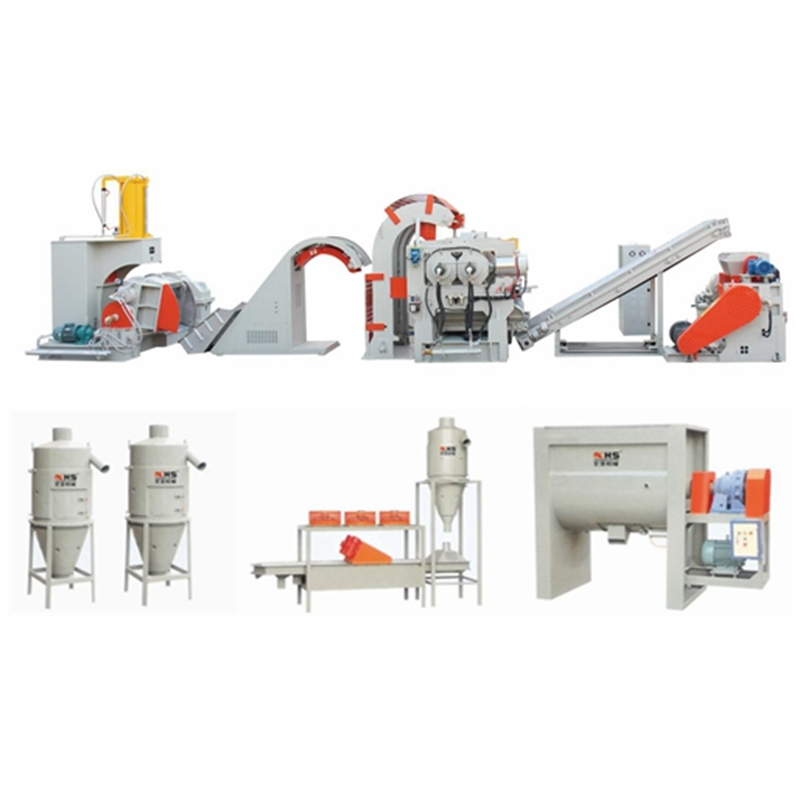
OTT RubberTech is a professional solution provider of rubber process formula, material, machinery with Mixer, Rubber Mixer, Mixing Mill, Precision Performer, Vulcanizing Press, Calender, batch-off Cooling unit, rubber Extruder, and other support plastic machines.
Features and Performance
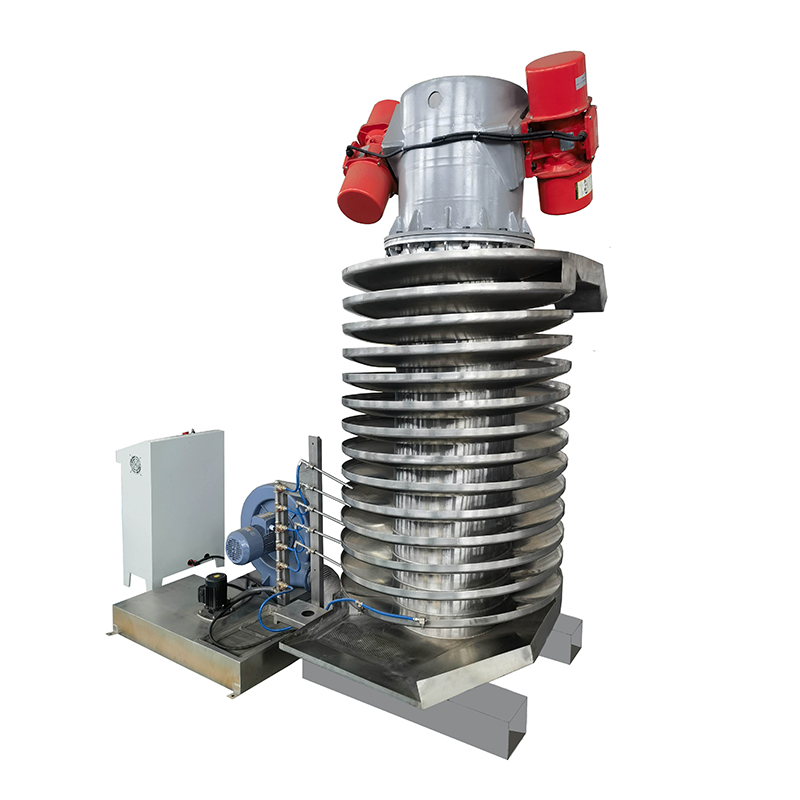
The performance of a vibratory cooling system is defined by its ability to transport parts without damage while achieving a high rate of heat dissipation. The trays are typically made of mirror-polished stainless steel to prevent rubber adhesion and to facilitate easy cleaning between batches.
| Feature | Technical Advantage |
|---|---|
| Vibratory Drive | Dual-motor eccentric drive for smooth motion |
| Tray Material | Food-grade or medical-grade stainless steel |
| Air Distribution | Integrated plenum for uniform airflow |
| Variable Frequency | Adjustable vibration speed for different part sizes |
| Modular Design | Can be stacked to save floor space |
| Noise Dampening | Specialized mounts to reduce factory noise |
These conveyors are often designed in a multi-deck or spiral configuration to provide a long cooling path within a small footprint. The vibration frequency can be adjusted via a frequency inverter, allowing the operator to match the transport speed to the production rate of the upstream machine. The lack of belts or chains in the product zone makes these systems extremely hygienic and easy to maintain, as there are no areas where rubber dust or lubricant can accumulate and contaminate the product.
Usage Tips and Techniques
To optimize cooling, the airflow should be directed against the direction of the product travel (counter-flow cooling). This ensures that the coldest air hits the parts just before they exit the conveyor. Operators should also adjust the vibration intensity so that the parts are "dancing" slightly on the tray; if the vibration is too low, the parts may stick, and if it is too high, they may bounce off the conveyor.
| Operational Focus | Optimization Technique |
|---|---|
| Part Distribution | Adjust vibration to ensure a single layer of parts |
| Cooling Air | Verify that all air nozzles are unobstructed |
| Tray Slope | Slightly decline the tray to assist heavy parts |
| Cleaning | Wipe down trays with a lint-free cloth between colors |
| Static Control | Use ionizing air bars if parts are sticking due to static |
When cooling very small or lightweight pellets, the air velocity must be carefully controlled to avoid blowing the product out of the tray. Utilizing a perforated tray surface can allow air to hit the parts from both the top and bottom, significantly increasing the cooling speed. For sticky compounds, a light mist of anti-tack solution can be applied at the start of the conveyor, with the vibration helping to distribute the coating evenly around each individual part.
Maintenance Skills
Maintenance for vibratory conveyors is relatively simple compared to belt-driven systems, but it is critical for performance. The most important task is the inspection of the vibratory motors and the spring mounts. If the springs become worn or broken, the vibration will become uneven, leading to "dead spots" where parts accumulate and stick. The motors should be checked for excessive heat and vibration, which can indicate bearing failure.
| Maintenance Area | Procedure | Frequency |
|---|---|---|
| Spring Mounts | Inspect for cracks or loss of tension | Monthly |
| Vibratory Motors | Check mounting bolts and bearing noise | Weekly |
| Air Filters | Clean or replace to maintain airflow | Monthly |
| Tray Surface | Inspect for scratches or rubber residue | Daily |
| Electrical Cables | Check for fatigue due to constant vibration | Quarterly |
Because the machine is constantly vibrating, all fasteners should be checked for tightness regularly. Loose bolts can lead to structural damage and increased noise levels. The electrical cables leading to the motors must be high-flex types designed for continuous motion; these should be inspected for wear or cracking of the outer jacket. Keeping the air plenum clean is also essential, as any dust or debris blown onto the warm rubber parts will result in surface contamination and potential quality rejections.
Application Scenarios
Vibratory cooling systems are used extensively in the production of O-rings, pellets, and small automotive seals. They are the ideal solution for any process that produces discrete parts that must be cooled quickly and kept separate. Their compact design makes them easy to integrate into existing production cells where space is limited.
| Industry Sector | Typical Application |
|---|---|
| O-Ring Manufacturing | Cooling and separating blanks after preforming |
| Rubber Compounding | Cooling pellets after underwater or strand cutting |
| Automotive Parts | Transporting small seals to inspection stations |
| Pharmaceutical | Cooling rubber stoppers after molding |
| Toy Manufacturing | Cooling small rubber components and balls |
In the manufacture of pharmaceutical stoppers, the stainless steel construction and easy-to-clean design meet the strict hygiene requirements of the industry. For rubber compounding plants, these conveyors are used to cool masterbatch pellets, ensuring they are dry and free-flowing for automatic weighing systems. The ability to stack multiple trays vertically allows manufacturers to achieve up to 30 meters of cooling path in a floor space of only 5 meters, making it a highly efficient solution for modern factories.

