
 English
 русский
 Español
 عربى
عربى

Content
- 1 What Is an Elastomer Press? A Direct Answer
- 2 How an Elastomer Press Works: The Molding Cycle in Five Steps
- 3 Main Types of Elastomer Presses Compared
- 4 Key Specifications to Check Before You Buy an Elastomer Press
- 5 Typical Temperature and Pressure Windows for Common Elastomers
- 6 Common Applications Across Rubber Industries
- 7 Safety Considerations When Operating an Elastomer Press
- 8 Maintenance Routines That Keep an Elastomer Press Reliable
- 9 Sourcing an Elastomer Press: What to Ask Before You Commit
- 10 Frequently Asked Questions About Elastomer Presses
What Is an Elastomer Press? A Direct Answer
An elastomer press is a molding machine that shapes and cures uncured rubber or silicone compounds into finished parts by applying controlled heat and clamping force through heated platens. In a rubber product factory, it is the machine that turns a weighed blank of raw compound into an O-ring, an oil seal, an air-spring bellow, or a shoe sole with the required dimensions and hardness. Everything else on the machine, including frame type, platen size, vacuum chamber, and controller, exists to make that conversion more repeatable, faster, and safer.
The terms "elastomer press," "vulcanizing press," and "rubber compression molding press" are often used for the same equipment. The difference is one of emphasis: an elastomer press is named by material, while a vulcanizing press is named by the crosslinking process it drives. Both describe the hydraulic or toggle-driven machines found in seal, gasket, automotive, footwear, and silicone goods plants. When a supplier asks about tonnage, platen dimensions, and vacuum capability, they are really asking how you plan to turn a rubber compound into a dimensionally stable part at a predictable cost.
How an Elastomer Press Works: The Molding Cycle in Five Steps
Every molding cycle follows the same sequence: load the compound, close the press, cure under heat and pressure, open, and remove the part. The practical differences between presses show up in how accurately each step is controlled.
- Prepare the blank. The compound is mixed and formed into a preform with a controlled volume so the cavity fills evenly.
- Load the blank. The blank is placed into the mold cavity on the lower platen, either manually or with a loading frame.
- Close and clamp. The hydraulic cylinder closes the mold and holds the set tonnage until curing finishes.
- Transfer heat. Heated platens push heat into the cavity; the compound flows, fills the mold, and crosslinks.
- Open and demold. The press opens, the operator or an ejector removes the part, and flash is trimmed.
Why blank consistency matters before the press closes
Part quality is decided before the platens touch. An oversized blank raises cavity pressure and produces heavy flash; an undersized blank leaves short shots and voids. Many seal and gasket makers solve this at the preforming stage, using the high-precision weight control in cold-feed precision preformers to hold blank weight within a tight band.
Where the cycle time actually goes
For most molded rubber parts, the cure dwell time dominates the cycle. Heat must travel from the platen surface through the mold steel and into the thickest cross-section of the part. Thin gaskets cure in a few minutes; thick blocks or heavy sealing rings can require ten minutes or more. Shortening the cure time is usually a matter of mold design and compound choice, not just raising the platen temperature.
Why vacuum helps in specific moldings
Trapped air between the blank and the cavity surface creates surface blisters and unfilled corners. Vacuum elastomer presses close the chamber around the mold and evacuate it before full clamping, so air is pulled out before the rubber seals the vent. Silicone, sponge rubber, and parts with sharp ribs benefit the most.
Main Types of Elastomer Presses Compared
The right press type depends on part geometry, production volume, and how much tooling cost you can absorb. The table below compares the five configurations most factories evaluate.
| Press type | How pressure is applied | Typical products | Cycle traits | Tooling cost |
|---|---|---|---|---|
| Compression molding | Hydraulic or toggle clamp closes the mold directly | O-rings, gaskets, seals, rubber feet | Simple cycle; moderate speed | Low to medium |
| Transfer molding | Plunger pushes the compound from a pot into closed cavities | Parts with metal inserts, multi-cavity seals | Better cavity fill for complex molds | Medium |
| Vacuum vulcanizing press | Vacuum chamber plus hydraulic clamp | Silicone parts, sponge rubber, precision seals | Removes trapped air; fewer rejects | Medium to high |
| Vertical rubber injection | Screw or plunger injects rubber into the closed mold | High-volume seals, valve parts, connectors | Fast cycle; high automation | High |
| Horizontal rubber injection | Horizontal injection unit feeds the parting line | Cored parts, large seals, hose ends | Compact line layout; automatic demolding | High |
Compression molding presses are the entry-level and most flexible choice. Transfer presses suit parts with metal inserts because the rubber is pushed into closed cavities. Injection presses give the shortest cycle times and the highest material efficiency for long runs. If you are upgrading from open-plate curing to controlled vacuum molding, a vacuum hot pressing machine is the most direct step: it adds the vacuum chamber without forcing you to redesign molds for injection gates.
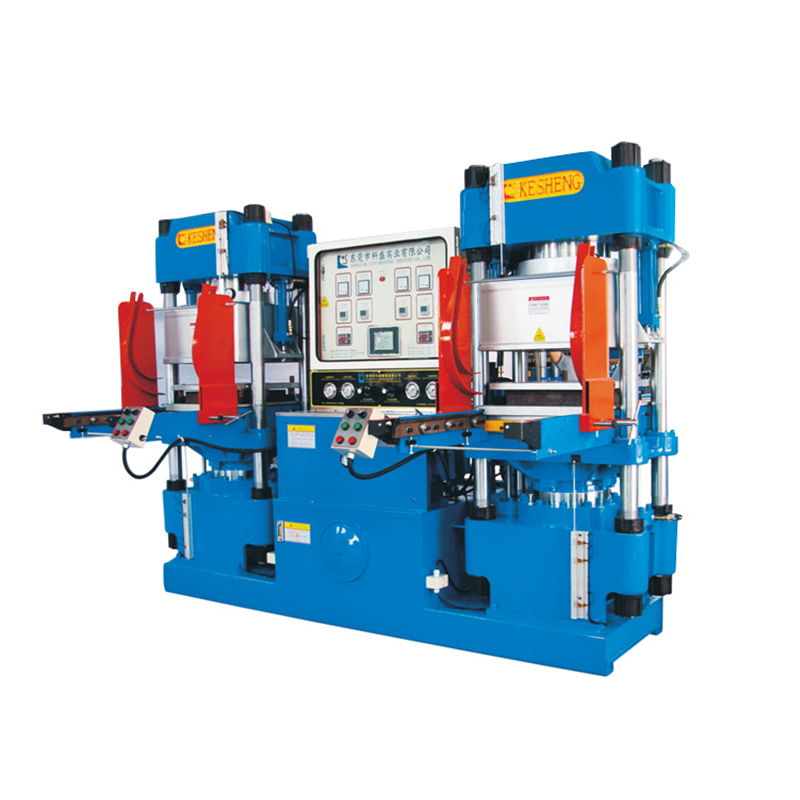 Custom Vacuum hot-pressing machine Manufacturers, SuppliersThis machine is a vulcanizing machine for various rubber and plastic products. It has the functions of timing mold locking, automatic pre...View Product →
Key Specifications to Check Before You Buy an Elastomer Press
Tonnage and platen size
Tonnage is not about the weight of the machine; it is the clamping force available to keep the mold closed against the internal pressure of the flowing rubber. A practical estimate: required ton-force equals projected part area in square millimeters times cavity pressure in MPa, divided by 9,807. For a 300 by 300 mm part area with a 10 MPa cavity pressure, that is 900,000 N, or roughly 90 to 100 tons. Typical cavity pressures sit between 10 and 30 MPa depending on the compound and part geometry.
Platen heating and temperature uniformity
Electric cartridge heating is the most common and easiest to control. Steam and thermal oil platens recover heat faster on very large molds. What matters more than the heat source is uniformity: a good platen holds within 3 to 5 °C of the setpoint across its usable surface. Higher variation produces parts with uneven hardness at the edges.
Vacuum capability
A vacuum chamber adds cost and maintenance, but it pays back when you mold silicone, sponge rubber, or parts with deep ribs and inserts. Without vacuum, those parts need longer loading times and generous venting, and rejects from trapped air remain a constant source of scrap.
Control system and data recording
Modern presses use a PLC with a touchscreen and recipe storage. Each recipe stores cure time, temperature setpoints, pressure profile, and degassing steps. For production traceability, look for machines that record actual temperature and pressure curves rather than only setpoints.
- What is the temperature uniformity across the platen at full working temperature?
- What are the minimum and maximum daylight openings for tool loading?
- Does the controller store multiple recipes with independent cure timers?
- What safety functions come as standard, including two-hand controls, guards, and interlocks?
- Is the machine test-run before delivery with your mold size simulated?
For higher output, many seal and connector producers move to injection. A vertical and horizontal rubber injection machine combines the clamping unit with an injection unit, so material is measured by the machine instead of by hand-loaded blanks; cycle times drop and shot weight consistency improves.
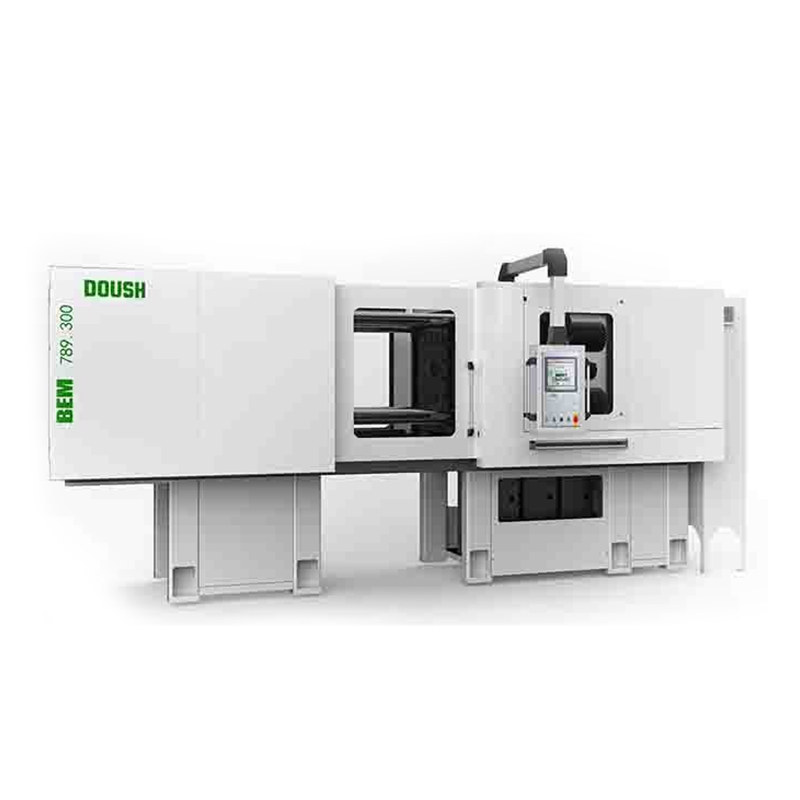 Custom Vertical/horizontal rubber injection machine Manufacturers, SuppliersIt is a technology for the production of rubber-molded products. It is mainly used in the production of rubber molded products, such as e...View Product →
Typical Temperature and Pressure Windows for Common Elastomers
Cure schedules vary with compound formulation, part thickness, and the curing system used by the compounder. The values below describe the windows most often seen in production.
| Elastomer | Typical curing temperature | Typical cavity pressure | Notes |
|---|---|---|---|
| NBR (nitrile rubber) | 140-180 °C | 10-30 MPa | Cures fast; avoid long over-cure at the top of the range |
| EPDM | 150-180 °C | 10-30 MPa | Wide cure plateau; common for automotive sealing parts |
| FKM (fluororubber) | 160-200 °C | 10-25 MPa | Longer cure time; used for high-temperature service |
| VMQ (silicone) | 120-170 °C | 5-15 MPa | Low viscosity; vacuum venting reduces trapped air |
| HNBR | 150-190 °C | 10-25 MPa | Needs tight process control for consistent hardness |
These ranges are general production experience, not a substitute for the compound supplier's datasheet. If you are comparing base materials for a new product, the characteristics and properties of rubber materials will help you match cure behavior and service temperature to the application.
Common Applications Across Rubber Industries
An elastomer press is rarely a single-purpose machine. The same 200-ton press can run small gaskets in the morning and large diaphragms in the afternoon, as long as the molds fit the platens and the recipe is stored.
- Sealing parts: O-rings, gaskets, oil seals, dust covers, valve seals
- Automotive and transport: air springs, suspension bushings, anti-vibration mounts
- Fluid handling: diaphragms, valve seats, pump seals, hose fittings
- Footwear: rubber soles, heels, and other molded outsole components
- Electrical and electronics: grommets, cable boots, connectors, spark plug boots
- Silicone goods: keypads, medical stoppers, gaskets for food-contact equipment
Footwear plants usually run a dedicated line rather than a general-purpose press. A fully automatic rubber sole press moulding machine is built with larger platens, faster opening and closing, and controls matched to sole molds, so it produces outsoles with shorter cycle times than a standard compression press.
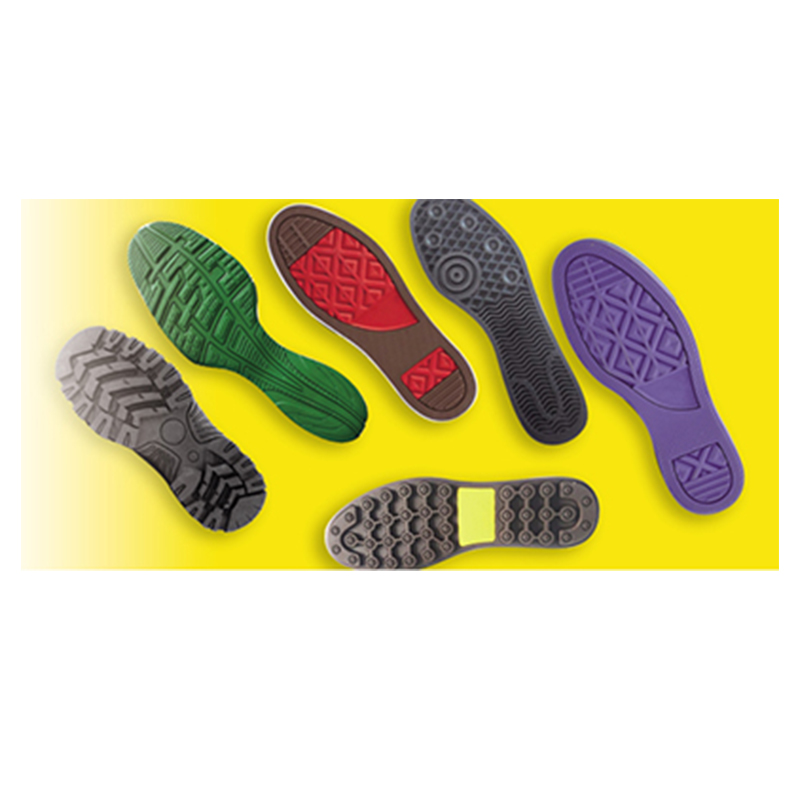 Custom Fully automatic rubber soles press moulding machine Manufacturers, SuppliFully Automatic Rubber Sole Hot Press Forming Machine Product Description1. The automatic sliding mold and mold turning structure can red...View Product →
Safety Considerations When Operating an Elastomer Press
Platen surfaces run between 150 and 200 °C, and clamping forces reach tens to hundreds of tons. Safety equipment on a press is not an optional extra; it is what allows operators to work through a full shift without incidents.
- Two-hand anti-tie-down controls keep the operator's hands outside the mold area during closing.
- A fixed guard or light curtain protects the mold zone from entry while the press is cycling.
- Thermal insulation or guards around the platens prevent burns from surfaces above 150 °C.
- Local exhaust ventilation removes curing fumes from the working area.
- Lockout and tagout procedures must cover mold changes, cleaning, and hydraulic maintenance.
- Mold lifting aids prevent manual handling injuries when tools weigh tens of kilograms.
The same discipline must extend to auxiliary equipment around the press cell. The safe operation practices for rubber cutting machines cover many of the same hazards found at prep stations and trimming lines, where small lapses cause most of the day-to-day injuries.
Maintenance Routines That Keep an Elastomer Press Reliable
A hydraulic press can serve for decades. Most unplanned downtime comes from hydraulic oil contamination, failed heater cartridges, or alignment drift that was caught late. A fixed schedule is the cheapest insurance.
| Frequency | Check | What to look for |
|---|---|---|
| Daily | Hydraulic oil level and platen surfaces | Leaks; rubber residue, scratches, or blisters on platen faces |
| Daily | Safety devices | Two-hand controls, guards, and interlocks working correctly |
| Weekly | Heater cables and thermocouples | Loose terminals; temperature readings drifting from the setpoint |
| Monthly | Platen flatness and parallelism | Uneven parts mean the platens are no longer aligned |
| Quarterly | Hydraulic oil and filter | Discolored or smelly oil; particles in the filter |
| Annually | Full inspection by a service engineer | Piston seals, frame bolts, valve block, and electrical panel |
Keep spare cartridge heaters, thermocouples, and seal kits on hand. These components wear fastest, and the cost of a spare is far below the cost of an unscheduled line stop.
Sourcing an Elastomer Press: What to Ask Before You Commit
The lowest quoted price is rarely the lowest cost. A useful comparison covers the technical specification, the test results attached to the machine, spare parts availability, commissioning support, and the speed of the quotation itself.
The practical checklist is short: a written technical specification, test-run data, a spare parts list, availability of installation support, and a defined quotation timeline.
Machine builders who serialize and test each unit before packaging can show you actual pressure and temperature readings rather than catalog values. Response speed is also a signal: a supplier that quotes within three working days has a defined product range and stocks parts, while a supplier that needs weeks likely has neither. OTT RubberTech, for example, states a fast quotation of three working days and test-runs every product before packaging.
Do not stop at the press itself. Blank preparation and mixing determine a large share of molding quality. A stable preformer upstream, clean compound handling, and controlled storage reduce the defects that look like press faults. Many factories improve part consistency by upgrading mixing room equipment and preforming lines before they replace the press.
Frequently Asked Questions About Elastomer Presses
What is the difference between an elastomer press and a vulcanizing press?
There is no practical difference. An elastomer press describes the machine by the material it molds; a vulcanizing press describes the same machine by the curing process it performs. Suppliers use the names interchangeably, so compare specifications rather than terminology.
How do I estimate the press tonnage I need?
Multiply the projected part area in square millimeters by the cavity pressure in MPa to get the clamping force in newtons, then divide by 9,807 to convert to tons. Add a safety margin of 10 to 20 percent for cold material, thick flash grooves, or cavity imbalance.
When should I choose a vacuum elastomer press?
Choose vacuum when you mold silicone, sponge rubber, or parts with deep ribs, thin walls, and metal inserts. Vacuum reduces trapped-air rejects and shortens the loading-to-clamping sequence. For simple flat gaskets with good vents, a standard press is enough.
How long does a typical curing cycle take?
Thin NBR gaskets can cure in two to three minutes at 170 to 180 °C. Thick blocks, large seals, and FKM parts often require ten minutes or more at lower temperatures. Heat penetration depends on wall thickness squared, so thicker parts need disproportionately longer dwell times.
Can the same press handle different rubber compounds?
Yes, with two conditions: the mold must be cleaned between runs to avoid contamination, and the press must be able to reach the temperature window of each compound. A recipe-capable controller makes the changeover a matter of selecting a saved program instead of manually resetting timers.

