
 English
 русский
 Español
 عربى
عربى

Content
- 1 Compression Rubber Molding Is the Standard Process Behind Joint-Free Rubber Track Molding Machines
- 2 How a Joint-Free Rubber Track Molding Machine Actually Works
- 3 Mold Engineering Details That Separate Precision Presses From Basic Ones
- 4 Joint-Free Molding Compared With Spliced and Overlap Track Manufacturing
- 5 Rubber Compound Selection Determines Track Performance More Than the Machine Does
- 6 Process Parameters That Determine Final Track Quality
- 7 Common Defects in Molded Rubber Tracks and What Causes Them
- 8 Quality Testing Methods Used to Verify Finished Track Batches
- 9 Maintenance Practices That Extend Molding Machine Service Life
- 10 What to Evaluate When Sourcing a Joint-Free Rubber Track Molding Machine
- 11 Recent Developments in Rubber Track Molding Technology
- 12 Automation and Production Line Integration
- 13 Cost Factors to Weigh Beyond the Machine's Purchase Price
- 14 Energy Use and Operating Efficiency Considerations
- 15 Frequently Asked Questions
- 15.1 What does joint-free actually mean on a rubber track?
- 15.2 Is a joint-free track always stronger than a spliced track?
- 15.3 How long does one molding cycle take?
- 15.4 What causes a rubber track to crack near the core links after only light use?
- 15.5 What hardness range is normal for a construction rubber track?
- 15.6 Can a damaged section of a joint-free track be repaired instead of replaced?
- 15.7 Why do some agricultural tracks still use a splice instead of joint-free molding?
- 15.8 What is the difference between a vertical clamp press and a rotary drum press?
- 15.9 How is rubber-to-steel adhesion achieved inside the track?
- 15.10 What sampling tests do manufacturers run on finished tracks?
- 15.11 Does mold heating method affect track quality?
Compression Rubber Molding Is the Standard Process Behind Joint-Free Rubber Track Molding Machines
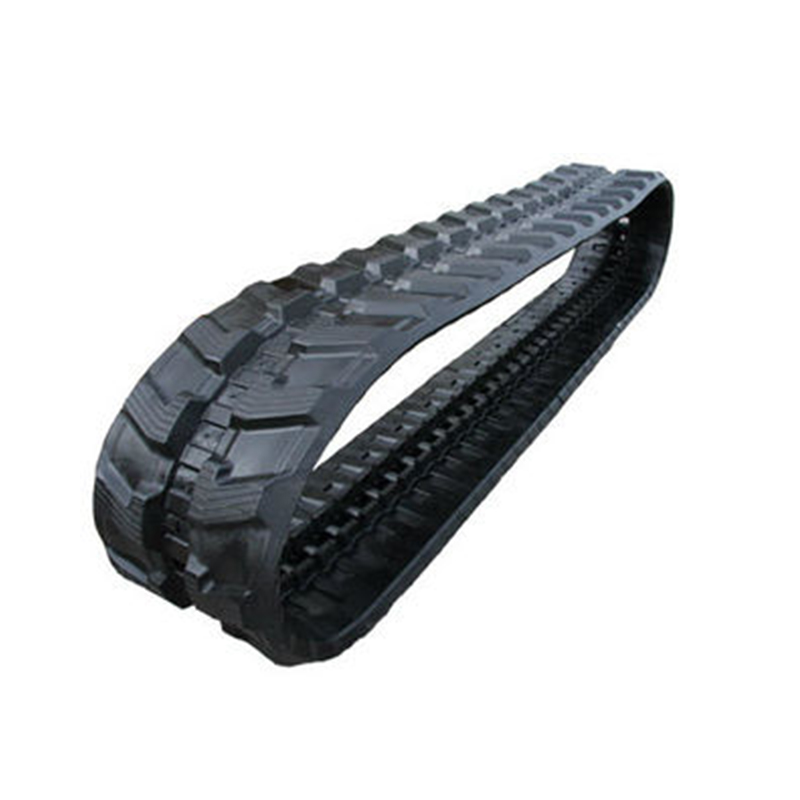
Compression rubber molding is the manufacturing method used to press raw rubber compound, steel cord or cable reinforcement, and embedded metal links into a single continuous, seamless rubber track under heat and pressure inside a closed steel mold. A joint-free rubber track molding machine performs this process in one continuous curing cycle, which eliminates the cold joint or splice line that traditionally weakens a rubber track at one point around its circumference. The result is a track with uniform tensile strength across its entire loop, rather than a track that is only as strong as its weakest splice.
This process is used across construction machinery, agricultural equipment, mini excavators, skid steers, combine harvesters, and snow groomers. Buyers researching this equipment are typically comparing molding press tonnage, mold cavity design, curing chamber temperature control, and the difference between spliced and joint-free track output. This article works through each of those decision points with concrete numbers, so a procurement team or workshop owner can evaluate a machine or a finished track on its actual technical merits.
Compression molding sits alongside injection molding and transfer molding as one of the three main rubber forming processes used in industrial manufacturing, but it is the dominant method for large-format continuous-loop products like rubber tracks because the compound stays in place inside an open cavity rather than being forced through narrow injection channels. For a product as large and heavily reinforced as a rubber track, pushing the compound through injection gates around embedded steel cord would be impractical, which is why virtually every rubber track producer worldwide, from small regional workshops to large export-focused factories, relies on compression presses for this specific product category.
How a Joint-Free Rubber Track Molding Machine Actually Works
The process begins with a pre-assembled skeleton: cold-drawn steel cord cable, formed into a continuous loop, combined with embedded steel core links or lugs spaced at the pitch required by the drive sprocket. This skeleton is placed inside a segmented steel mold that carries the full circumferential shape of the finished track in one piece, rather than in two halves that get joined afterward.
Raw rubber compound, typically a natural rubber and styrene-butadiene rubber blend for general purpose tracks or a higher-grade compound for cold climate or high-wear applications, is loaded into the mold cavity. The press then closes under hydraulic force, and the mold is heated by steam, electric platens, or thermal oil channels running through the mold body. Curing temperature for most rubber track compounds sits between 150°C and 165°C, with cycle times ranging from 25 to 55 minutes depending on track thickness and cross-section size. Because the entire loop cures in one continuous mold, there is no secondary bonding step and no seam.
Press Tonnage and Mold Clamping Force
Press tonnage is sized to the track's cross-sectional area and width. A machine producing tracks for mini excavators in the 230mm to 300mm width range typically runs on a 1,200-ton to 2,000-ton press, while machines producing tracks for larger construction or agricultural equipment in the 450mm to 900mm width range require 3,500-ton to 6,000-ton presses to hold the mold closed against internal rubber pressure during cure.
Vulcanization Chamber Control
Modern machines use PID temperature controllers with multiple thermocouple zones around the mold circumference, because uneven heating across a large circular mold is one of the most common causes of inconsistent cure and premature track cracking near the drive lugs.
Vertical Clamp Presses Versus Rotary Drum Presses
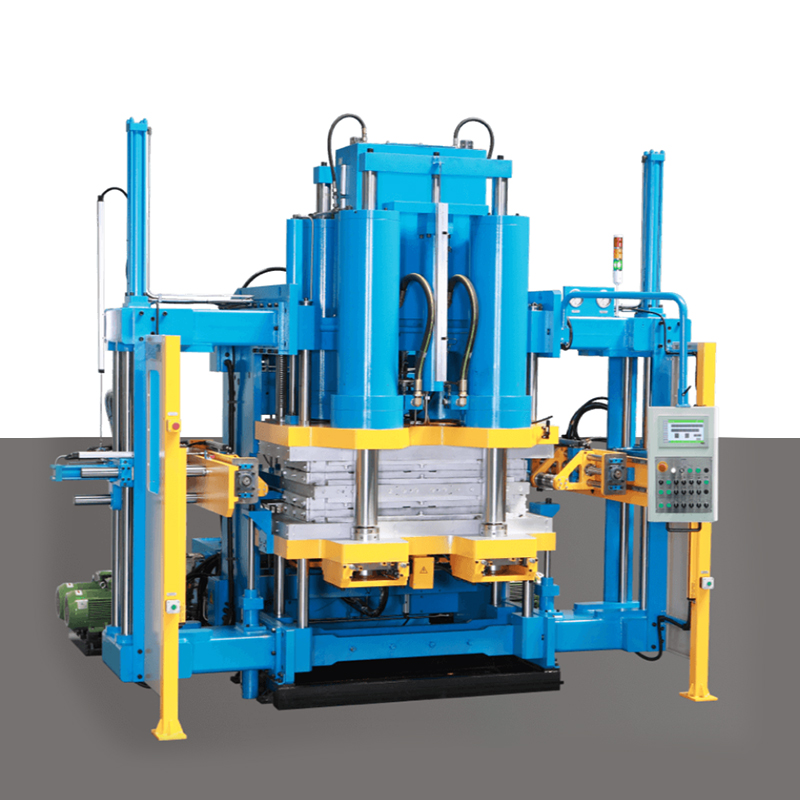
Two structural layouts dominate joint-free rubber track molding equipment. A vertical clamp press holds the segmented mold in a flat horizontal plane and closes it with a top-mounted hydraulic ram, which is the more common layout for narrower mini excavator and skid steer track sizes because it keeps the machine footprint compact. A rotary drum press instead wraps the mold around a large horizontal drum, which some manufacturers favor for wider agricultural track production because it distributes clamping force more evenly across a longer mold circumference. Neither layout is inherently superior; the choice generally comes down to the width range a factory plans to specialize in and the floor space available on the shop floor.
Skeleton Pre-Assembly Accuracy
Before the skeleton ever reaches the mold, the steel cord cable is wound onto a forming drum at a set tension and diameter, and the core links are positioned onto the cable at fixed intervals using a jig or automated placement fixture. Any drift in this pre-assembly stage carries directly into the finished track, because the mold cannot correct for a skeleton that was wound with inconsistent tension or misaligned link spacing. Factories that run this step manually tend to see wider batch-to-batch variation than those using a mechanized winding and placement line.
Typical Technical Specifications by Track Width Class
The table below summarizes common configuration ranges seen across joint-free rubber track molding machines currently in production use. These figures come from published equipment specification sheets and factory commissioning data collected across construction and agricultural rubber track manufacturers.
| Track Width Class | Press Tonnage | Cure Time | Mold Diameter Range |
|---|---|---|---|
| 180mm - 300mm (mini excavator) | 1,200 - 2,000 tons | 25 - 35 minutes | 1.4m - 2.0m |
| 300mm - 450mm (skid steer / small dozer) | 2,200 - 3,500 tons | 35 - 45 minutes | 2.0m - 2.8m |
| 450mm - 900mm (agricultural / large construction) | 3,500 - 6,000 tons | 45 - 55 minutes | 2.8m - 3.6m |
Mold Engineering Details That Separate Precision Presses From Basic Ones
The mold itself is the single most expensive and most technically demanding component of a joint-free rubber track molding machine, and its design choices show up directly in the finished track's dimensional accuracy and long-term durability.
Segmented Cavity Design
Because a joint-free mold must open wide enough to remove a fully cured, rigid rubber loop, the cavity is typically built from multiple hinged or sliding steel segments rather than a single solid ring. The precision of the fit between these segments determines whether flash lines form on the finished track surface, and poorly machined segment joints are one of the most common visual defects buyers notice on inspection.
Cooling Channel Placement
While the mold spends most of its cycle heating the compound, a controlled cooling phase before the mold opens reduces the internal stress that can otherwise cause the track to warp slightly as it relaxes outside the mold. Presses with dedicated cooling channels built into the mold body, separate from the heating channels, tend to produce more dimensionally consistent tracks batch after batch than presses that simply let the mold air-cool on its own schedule.
Mold Steel Selection and Wear Life
Mold cavities are generally machined from hardened tool steel, since the surface sees repeated thermal cycling and contact with abrasive filler particles in the rubber compound over thousands of cycles. A well-specified mold can typically run for several years of continuous production before the cavity surface wears enough to affect track dimensions, while an undersized or softer steel grade can show measurable wear within a much shorter production run, leading to gradual dimensional drift that is easy to miss without regular gauge checks.
Joint-Free Molding Compared With Spliced and Overlap Track Manufacturing
Three manufacturing approaches dominate rubber track production. Understanding the difference matters because it directly affects service life and warranty claims.
- Joint-free (endless) molding: The entire loop is cured as one piece in a single mold. There is no splice, so tensile strength is uniform around the full circumference.
- Splice-cured molding: A straight length of track is molded flat, then the two ends are joined and cured together in a separate splicing press. This is common for very wide agricultural tracks where mold diameter would otherwise be impractical.
- Cold-bonded overlap repair: Used only for field repair of a damaged track, not for original production, and is not intended as a permanent full-strength solution.
| Method | Tensile Uniformity | Typical Use Case |
|---|---|---|
| Joint-free molding | Uniform, no weak point | Mini excavators, skid steers, harvesters |
| Splice-cured | Slightly reduced at splice | Very wide agricultural tracks |
| Cold-bonded overlap | Not intended as full strength | Emergency field repair only |
Rubber Compound Selection Determines Track Performance More Than the Machine Does
A well-built joint-free molding machine can only produce a track as good as the compound loaded into it. Compound formulation is chosen against the operating environment, not just the equipment type.
Natural Rubber and SBR Blends for General Use
General-purpose construction and agricultural tracks typically use a natural rubber blend for tear resistance combined with styrene-butadiene rubber for abrasion resistance and cost control. This blend performs reliably across a moderate temperature range and is the most common compound specified for standard duty-cycle equipment.
Cold-Resistant Compounds
Snow groomers, forestry equipment operating in northern climates, and winter construction sites require compounds with a lower glass transition temperature so the rubber stays flexible rather than turning brittle. Cold-resistant track compounds are typically rated to remain flexible down to -40°C, compared to standard compounds that become brittle below roughly -20°C.
High-Wear and Cut-Resistant Compounds
Demolition equipment and tracks running over crushed rock or scrap material benefit from a higher-hardness compound with added cut and chip resistance, usually in the 65 to 75 Shore A hardness range, compared to 60 to 68 Shore A for general purpose track.
Filler, Antioxidant, and Curing Agent Ratios
Beyond the base polymer blend, three additional ingredient categories shape how a compound performs once it leaves the mold. Carbon black filler loading affects both hardness and abrasion resistance, with higher loading generally improving wear life at some cost to flexibility in cold conditions. Antioxidant and antiozonant packages slow down the surface cracking that rubber naturally develops from prolonged sun and ozone exposure, which matters most for equipment that sits outdoors between duty cycles. Sulfur-based curing agent ratios control crosslink density, and a compound with too little curing agent stays soft and tears easily, while too much can make the rubber brittle and prone to cracking under repeated flexing around the sprocket.
Rubber-to-Metal Adhesion Systems
A track is only as reliable as the bond between the rubber and the embedded steel cord and core links. Most manufacturers apply a brass-plating treatment to the steel cord surface before it is embedded, because brass forms a chemical bond with sulfur-cured rubber during vulcanization that a bare or improperly treated steel surface cannot achieve. Adhesion failure at this interface is one of the more serious defects a track can develop, since it allows the reinforcement to shift internally even while the outer rubber surface still looks intact.
Process Parameters That Determine Final Track Quality
Several variables inside the molding cycle have an outsized effect on whether a finished track meets specification. Workshop operators evaluating a machine, or buyers auditing a supplier, should ask about each of these directly.
- Cure uniformity across the mold: Temperature variance greater than 5°C between zones on a large circular mold commonly leads to under-cured sections that wear faster.
- Steel cord tension during layup, which must stay consistent around the entire loop to prevent the track from tracking crooked on the sprocket after installation.
- Mold venting design, since trapped air pockets during compression create internal voids that are invisible until the track is in service and begins to blister.
- Post-cure cooling rate, because rapid uncontrolled cooling can introduce internal stress that shows up later as premature cracking around the embedded core links.
- Core link and lug pitch accuracy, which must match the drive sprocket tooth spacing within a tight tolerance to avoid abnormal wear at the drive interface.
Common Defects in Molded Rubber Tracks and What Causes Them
Recognizing defect patterns helps a buyer distinguish a well-run production line from a poorly controlled one during a factory audit or sample inspection.
Surface Blistering
Small raised bubbles on the track surface after a short period of use usually trace back to trapped air or moisture in the rubber compound during compression, or insufficient mold venting.
Core Link Exposure
When embedded steel core links become visible through the rubber prematurely, the most common causes are insufficient rubber cover thickness over the link during mold design, or excessive compound shrinkage from an incorrect cure temperature profile.
Uneven Wear Across Track Width
This is more often a mold alignment or sprocket-pitch mismatch issue than a compound issue, and it points back to tooling accuracy rather than the rubber formulation itself.
Internal Delamination
Separation between rubber layers deep inside the track cross-section, rather than at the surface, typically stems from moisture contamination in the raw compound before molding or an interrupted cure cycle where pressure or temperature dropped mid-cycle. This defect is the hardest to catch during visual inspection because the track can look completely normal from the outside while carrying a weak internal layer that only reveals itself under working load.
Quality Testing Methods Used to Verify Finished Track Batches
Reputable rubber track producers run a sampling program on finished tracks rather than relying only on visual inspection, since several of the defects described above are not visible from the outside.
| Test | What It Verifies | Typical Sampling Basis |
|---|---|---|
| Tensile strength / elongation | Overall compound strength and stretch before failure | Per compound batch |
| Rubber-to-metal adhesion (peel test) | Bond strength between rubber and steel cord or core links | Per production run |
| Shore A hardness | Compound hardness against target specification | Every mold cycle group |
| Dynamic flex fatigue | Resistance to cracking under repeated bending around the sprocket | Periodic design validation |
| Dimensional gauge check | Pitch, width, and thickness against drawing tolerance | Every finished unit |
Dimensional gauge checks are worth particular attention because a track can pass every material test and still fail in the field if the core link pitch does not match the customer's sprocket, which is the single most common cause of a warranty return that has nothing to do with rubber quality at all.
Maintenance Practices That Extend Molding Machine Service Life
A rubber track molding machine runs at sustained high pressure and temperature for tens of thousands of cycles over its working life, so preventive maintenance schedules matter as much as initial machine quality.
| Component | Check Interval | Common Failure Sign |
|---|---|---|
| Hydraulic seals | Every 3 months | Slow pressure drop during hold phase |
| Heating platens / thermal oil lines | Every 6 months | Uneven zone temperature readings |
| Mold surface and vents | Every production run | Surface blistering on finished tracks |
| Clamping cylinder alignment | Annually | Flash lines on one side of the track only |
What to Evaluate When Sourcing a Joint-Free Rubber Track Molding Machine
Buyers comparing machines or evaluating a rubber track supplier's production capability should look past the headline tonnage figure and ask about the full production system.
- Mold change-over time, since a facility that can quickly swap molds for different track widths runs a more flexible and cost-efficient production line.
- Whether temperature control is zone-based with individual thermocouples, rather than a single sensor for the entire mold.
- In-house steel cord and core link assembly capability, since outsourced skeleton assembly introduces an added variable in tension and pitch accuracy.
- Batch testing practice, including whether finished tracks are pulled for tensile and adhesion testing on a sampling basis before shipment.
- Track record producing the specific width class needed, since a press sized for mini excavator tracks is not simply scaled down from an agricultural press design.
Recent Developments in Rubber Track Molding Technology
Production lines have moved toward tighter process digitization over the past two years. Servo-driven hydraulic presses are increasingly replacing fixed-speed pump systems, giving finer control over clamp speed and reducing energy consumption during the long hold phase of the cure cycle. Multi-zone thermal oil heating has become more common than direct steam heating in newer installations because it holds tighter temperature tolerance across large mold diameters, which directly reduces the under-cure defects described earlier in this article.
On the compound side, manufacturers supplying cold-climate markets have continued refining low-temperature flexible formulations to meet demand from snow removal and forestry operators, while cut-resistant compound development has tracked closely with demand from demolition and scrap-handling equipment operators who run tracks over abrasive debris daily.
Recipe traceability has also become a bigger operational focus, with more factories logging batch-level compound data, cure temperature curves, and press cycle records against each finished track's serial number, so that if a field failure is reported, the production team can pull the exact cure record for that specific unit rather than relying on general process averages.
Automation and Production Line Integration
Rubber track factories that run high production volumes have increasingly connected their molding presses into a broader automated line rather than operating each press as a standalone station.
Automated Compound Feeding
Rather than manually cutting and weighing rubber slugs for each mold cycle, higher-volume lines use extruder-fed preforming stations that shape a pre-measured length of warm compound to match the mold cavity before it is loaded, which improves loading consistency and cuts operator handling time between cycles.
Robotic Mold Loading and Unloading
Because a fully cured track can weigh well over 100 kilograms for larger agricultural sizes, robotic or powered assist arms for loading the raw skeleton and unloading the finished track reduce both cycle time variability and operator strain compared to fully manual handling.
Centralized Process Monitoring
Networked press controllers that log temperature curves, clamp pressure, and cycle duration to a central system let a plant manager review every cycle against target parameters after the fact, rather than depending on an operator to catch a deviation in real time. This kind of process visibility is one of the more meaningful differences between an older-generation standalone press and a modern production line, even when the base tonnage specification looks similar on paper.
Cost Factors to Weigh Beyond the Machine's Purchase Price
The headline price of a molding press is only one part of the total cost picture for a workshop planning to add or expand rubber track production.
- Mold tooling cost, since each track width and pitch configuration typically requires its own dedicated mold, and a factory serving multiple equipment models needs a mold library rather than a single mold.
- Energy consumption during the heating and hold phase, which scales with mold size and cycle time and is one of the larger recurring operating costs on a continuously running line.
- Skeleton pre-assembly labor or equipment, since steel cord winding and core link placement is a separate production step from the molding cycle itself.
- Compound mixing capacity, because a molding press is only as productive as the internal mixer or Banbury mixer feeding it raw compound at a matching rate.
- Scrap and rework rate, which is a direct function of the process control quality discussed earlier in this article and has a larger effect on unit economics than most buyers initially expect.
Energy Use and Operating Efficiency Considerations
Heating a large steel mold to curing temperature and holding it there for up to an hour per cycle represents a substantial and continuous energy draw, so the heating method chosen for a press has a measurable effect on operating cost over the machine's lifetime.
Thermal oil heating systems generally hold temperature more efficiently across large mold surfaces than direct electric resistance heating, because the circulating oil distributes heat more evenly and loses less energy to ambient air compared to exposed electric platens. Steam heating remains common in facilities that already operate a boiler for other production needs, since the incremental cost of routing steam to an additional press is lower than installing a separate thermal oil system from scratch. Regardless of heating method, mold insulation quality around the outer housing meaningfully affects how much energy is lost to the surrounding shop floor rather than going into curing the rubber, and insulation upgrades are one of the more straightforward retrofits available on older presses.
Frequently Asked Questions
What does joint-free actually mean on a rubber track?
It means the track is cured as one continuous loop in a single mold, with no splice or cold-bonded seam anywhere around its circumference.
Is a joint-free track always stronger than a spliced track?
For the same compound and reinforcement, a joint-free track has uniform tensile strength around the full loop, while a spliced track carries a localized point that is typically the first area to show stress if the splice was not executed correctly. Very wide agricultural tracks are still commonly splice-cured because of mold size practicality.
How long does one molding cycle take?
Cycle time depends on track thickness and width, generally ranging from 25 minutes for smaller mini excavator tracks up to around 55 minutes for wide agricultural tracks.
What causes a rubber track to crack near the core links after only light use?
This is most often traced to insufficient rubber cover thickness over the core link during mold design, an uneven cure temperature across the mold, or rapid uncontrolled cooling after the press opens.
What hardness range is normal for a construction rubber track?
General purpose tracks typically fall in the 60 to 68 Shore A range, while higher-wear applications like demolition may specify compounds in the 65 to 75 Shore A range.
Can a damaged section of a joint-free track be repaired instead of replaced?
Minor surface damage can sometimes be addressed with a cold-bonded field repair, but this is a temporary measure and does not restore the track to its original molded strength, so it should not be relied on for heavy-duty continuous operation.
Why do some agricultural tracks still use a splice instead of joint-free molding?
Very wide agricultural tracks would require an extremely large mold diameter to produce as a single joint-free loop, so some manufacturers instead mold a straight section and splice the ends, accepting a small localized strength reduction in exchange for practical mold sizing.
What is the difference between a vertical clamp press and a rotary drum press?
A vertical clamp press closes a flat horizontal mold with a top-mounted ram and is common for narrower track sizes, while a rotary drum press wraps the mold around a horizontal drum and is often favored for wider agricultural track production because it spreads clamping force more evenly across a longer mold.
How is rubber-to-steel adhesion achieved inside the track?
Steel cord and core links are typically brass-plated before molding, because the brass surface forms a chemical bond with the sulfur-cured rubber during vulcanization that untreated steel cannot achieve on its own.
What sampling tests do manufacturers run on finished tracks?
Common tests include tensile strength and elongation, rubber-to-metal peel adhesion, Shore A hardness, dynamic flex fatigue, and dimensional gauge checks against the drawing tolerance, with dimensional checks typically run on every finished unit rather than on a sampling basis.
Does mold heating method affect track quality?
It affects consistency more than it affects the finished compound itself. Thermal oil systems tend to hold more even temperature across a large mold than direct electric platens, which reduces the risk of the localized under-cure defects described earlier in this article.

