
 English
 русский
 Español
 عربى
عربى

Content
- 1 Silicone Rubber Extruder Supplier: The Direct Answer for Buyers
- 2 Inside a Rubber Extrusion Production Line: From Feed to Finished Profile
- 3 What Separates a Silicone Extrusion Production Line From a Standard Rubber Line
- 4 Screw and Barrel Configuration Deep Dive
- 5 Curing Methods Used After Extrusion
- 6 Common Profile Types and Where They Are Used
- 7 Line Speed and Output Planning
- 8 Common Extrusion Defects and Where They Come From
- 9 Maintenance and Changeover Considerations
- 10 Evaluating a Silicon Rubber Extruder Supplier Before Ordering
- 11 Where OTT RubberTech Fits Into a Buyer's Sourcing Plan
- 12 Frequently Asked Questions
- 12.1 What is the difference between a rubber extrusion production line and a silicone extrusion production line?
- 12.2 How fast does a typical silicone extrusion line run?
- 12.3 Can one line run both rubber and silicone compounds?
- 12.4 What causes most rejected parts on a new extrusion line?
- 12.5 Does profile complexity affect tooling lead time?
- 12.6 Why does the curing tunnel length matter as much as the extruder speed?
- 12.7 Is a vented barrel necessary for every silicone line?
- 12.8 How often should die tooling be inspected for wear?
Silicone Rubber Extruder Supplier: The Direct Answer for Buyers
A reliable silicon rubber extruder supplier is one that can match screw geometry, curing method, and profile tooling to the actual compound a buyer intends to run, rather than selling a single fixed configuration for every order. Silicone compounds behave differently from natural or synthetic rubber during extrusion: they have lower green strength before vulcanization, they are far more sensitive to shear heat, and they usually require a dedicated curing tunnel instead of the open steam or hot-air setups used for general purpose rubber. Buyers who understand this distinction before contacting a supplier tend to avoid the two most common sourcing mistakes: ordering a standard rubber line and discovering it cannot hold profile tolerance on silicone, or over-specifying an expensive line for a simple cord or tubing profile that never needed it.
There is also a planning dimension that gets missed in early sourcing conversations. A production line is not a single machine purchase; it is a chain of feeding, plasticizing, shaping, curing, and cooling stages that all need to run at a matched speed. If the curing tunnel is undersized relative to the extruder output, the line either has to slow down to the tunnel's pace or the profile leaves the tunnel under-cured. This is one of the most common reasons a newly commissioned line underperforms its rated output in the first few months.
The rest of this guide walks through how a rubber extrusion production line and a silicone extrusion production line differ mechanically, what to check before placing an order, how output and maintenance planning works day to day, and where common defects come from during daily production.
Inside a Rubber Extrusion Production Line: From Feed to Finished Profile
A conventional rubber extrusion production line moves material through four stages: feeding, plasticizing and pumping through the screw and barrel, shaping at the die head, and curing or cooling downstream. Strip or pelletized compound enters through a hopper, either fed manually in small shops or pulled automatically from a strip feeder in higher-volume plants. Inside the barrel, the screw compresses and warms the compound through mechanical shear and barrel heating, building enough pressure to push it through the die without trapping air.
Feed System
Strip feeders pull pre-warmed compound from a mill or a cold-fed strip stock at a controlled rate, keeping barrel pressure stable. Ram-fed and manual feeding suit lower volumes or frequent profile changeovers, since the operator can react to visual cues in the compound faster than an automated feeder can.
Screw and Barrel
The screw compresses and pumps the compound toward the die. Rubber extrusion screws commonly use an L/D ratio between 10:1 and 15:1, shorter than the 20:1 to 30:1 ratios typical of thermoplastic extrusion, because rubber compounds are already largely plasticized before they reach the extruder and mainly need to be pumped and slightly warmed rather than melted from a solid pellet state.
Die Head and Downstream Handling
The die head shapes the cross-section and is usually adjustable for minor dimensional tuning without a full tooling change. Downstream, the profile is either supported on a conveyor into a curing tunnel or, for cord and tubing, allowed to travel through open air into a cooling trough.
Line speed on a mid-size rubber extrusion setup typically runs in the range of 3 to 15 meters per minute depending on profile cross-section and wall thickness, with output commonly falling between 80 and 300 kilograms per hour for a single-screw line in the 90 mm to 120 mm barrel diameter class. Thicker profiles and gasket sections run slower to allow heat to penetrate evenly; thin-wall tubing and cord can run faster since less mass needs to reach cure temperature.
- Feed system: strip feeder or manual ram feed, sized to keep barrel pressure stable
- Screw and barrel: compresses and pumps the compound, usually L/D ratio between 10:1 and 15:1 for rubber
- Die head: shapes the cross-section, often adjustable for minor dimensional tuning
- Curing and cooling: hot air tunnel, salt bath, steam vulcanizer, or microwave/UHF unit
What Separates a Silicone Extrusion Production Line From a Standard Rubber Line
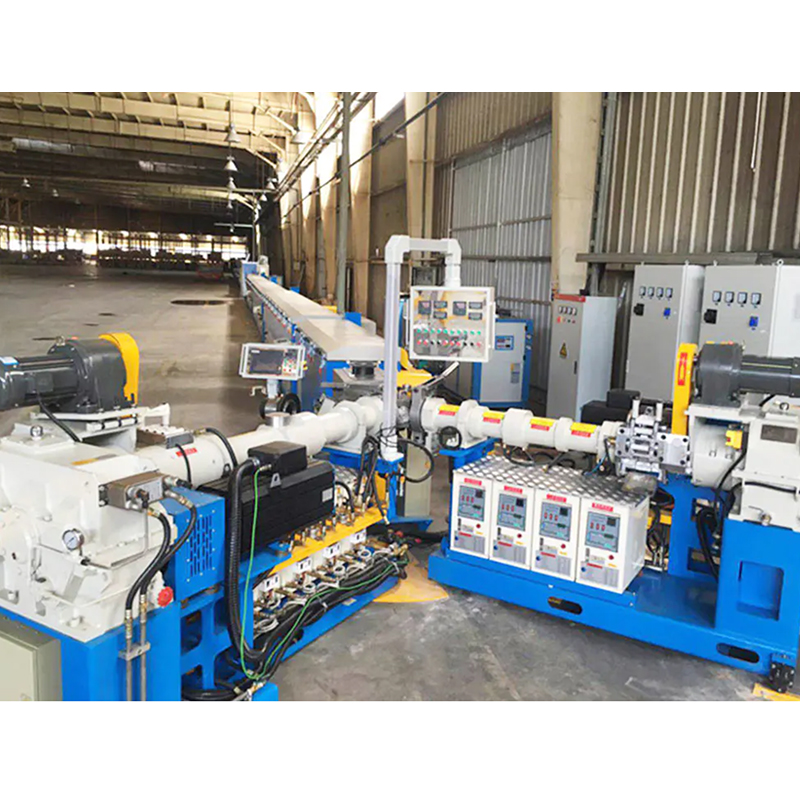
A silicone extrusion production line shares the same basic layout as a rubber line but changes three things: screw compression ratio, barrel temperature control, and the curing method. Silicone gum stock is softer and more shear-sensitive than most synthetic rubbers, so screws for silicone typically use a lower compression ratio, often close to 1.2:1 to 1.5:1, compared with 2:1 or higher on lines built for nitrile or EPDM. Running silicone through a screw designed for harder rubber compounds tends to overheat the material before it reaches the die, causing pre-scorch and surface tearing.
Barrel and die temperature control also needs to be tighter on silicone lines. Because silicone gum has almost no green strength before curing, a profile that leaves the die even slightly under-supported will sag or distort before it enters the curing tunnel. This is why silicone lines are frequently paired with a supporting conveyor or powder-coated slide directly at the die exit, something that is optional on many standard rubber lines running stiffer compounds.
Temperature Zoning
Most silicone extrusion barrels are split into two or three independently controlled heating zones, plus a separately controlled die head zone. Keeping the die slightly cooler than the barrel discharge zone reduces the risk of premature scorch right at the point where the profile has the least mechanical support.
Compression Ratio by Material Type
| Compound Family | Typical Compression Ratio | Shear Sensitivity |
|---|---|---|
| Silicone (HCR/HTV) | 1.2:1 – 1.5:1 | High |
| EPDM | 1.6:1 – 2:1 | Medium |
| NBR / Nitrile | 1.8:1 – 2.2:1 | Medium-Low |
Screw and Barrel Configuration Deep Dive
Beyond compression ratio, three additional screw and barrel details influence how consistently a line performs once it is running full shifts rather than short test batches.
Vent Design
Silicone gum stock can carry trapped air from the mixing stage. A vented barrel design, with a vacuum port partway along the barrel length, pulls this air out before it reaches the die, reducing porosity in the finished profile. Non-vented barrels can still run silicone successfully, but they depend more heavily on careful upstream de-airing during compound preparation.
Screw Cooling
Some silicone screws include an internal cooling channel to pull heat out of the root of the screw, which helps prevent scorch building up gradually over a long production run even when barrel zone temperatures look stable on the display.
Barrel Wear and Liner Material
Because silicone compounds often include reinforcing silica fillers, barrel liners on dedicated silicone lines are frequently a harder alloy or a bimetallic liner to resist abrasive wear over time, extending the interval between barrel reboring or liner replacement.
These are the details worth raising directly with a supplier during technical discussion, since they affect long-run consistency far more than headline speed figures.
Curing Methods Used After Extrusion
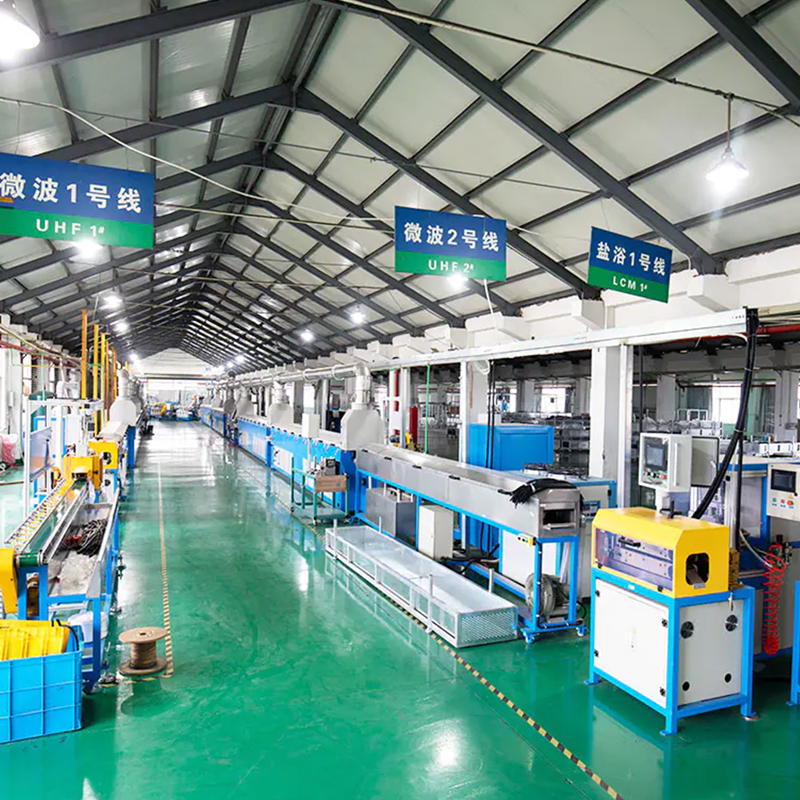
Once a profile leaves the die, it still needs to be cured before it becomes a usable part. The curing method chosen affects both line speed and the final surface finish of the product, and it is one of the biggest cost differences between a basic rubber extrusion production line and a fully equipped silicone extrusion production line.
Hot Air Vulcanization (HAV) Tunnel
The most common method for both rubber and silicone profiles. Hot air, typically between 200°C and 350°C, circulates around the profile as it travels through an enclosed tunnel on a conveyor or free-floating in the airstream for thin sections. It is relatively low cost and works well for solid profiles and cord.
Ultra-High Frequency (UHF/Microwave) Curing
Often paired with a hot air tunnel for silicone sponge and thicker sections, since microwave energy heats the profile from the inside out rather than relying on surface conduction. This shortens cure time considerably on thick-wall parts and reduces the risk of an under-cured core with a fully cured skin.
Salt Bath (LCM) Curing
A molten salt bath transfers heat very efficiently and is common for dense solid profiles that need fast cure without sponge or foaming. It is less common on silicone lines because residue removal after the bath adds an extra washing step.
Steam Vulcanization
Pressurized steam vulcanizers are still used for certain solid rubber profiles, particularly where a very smooth, glossy surface finish is required. They are less common on continuous extrusion lines today since batch loading limits throughput compared with a continuous tunnel.
| Method | Best Suited For | Relative Speed |
|---|---|---|
| Hot Air Tunnel | Solid profiles, cord, general purpose | Moderate |
| UHF/Microwave | Thick sections, sponge, silicone | Fast core cure |
| Salt Bath | Dense solid rubber profiles | Fast surface cure |
| Steam Vulcanizer | High-gloss solid profiles | Batch-limited |
Common Profile Types and Where They Are Used
Extrusion tooling can produce a wide range of cross-sections from the same base rubber extrusion production line, and the profile type is often what determines whether a silicone-specific setup is actually required.
- Solid cord and O-ring stock, used for seals and gaskets cut to length after extrusion
- Sponge and foam profiles, used where compression set and cushioning matter more than density
- Tubing and hollow profiles, used in medical, food-grade, and cable protection applications
- Sealing strips with a bulb or fin geometry, common in door and window seals and enclosure gaskets
- Co-extruded profiles combining a rigid carrier with a soft sealing lip in one pass
Food-grade and medical tubing applications lean heavily toward silicone because of its stability across a wide temperature range and its resistance to compression set, which is why buyers sourcing these products usually ask specifically about a silicone extrusion production line rather than a general purpose rubber setup. Automotive weatherstripping and household appliance sealing strips, by contrast, more often use EPDM or a rubber-silicone hybrid depending on the temperature exposure the seal will face in service.
Line Speed and Output Planning
Buyers evaluating a rubber extrusion production line or silicone extrusion production line for the first time often size the order around the extruder alone, without checking whether the curing tunnel length and conveyor speed can actually keep pace at the target output. A useful way to check this before ordering is to work backward from required cure time.
Working Backward From Cure Time
If a profile needs roughly four minutes of dwell time in a hot air tunnel to reach full cure, and the tunnel is six meters long, the maximum sustainable line speed is limited to about 1.5 meters per minute regardless of how fast the extruder itself can pump material. Pushing the line faster than this either under-cures the profile or forces a shorter, hotter cure cycle that increases the risk of surface defects.
Batch Planning and Changeover Time
Frequent profile changeovers add non-productive time between runs for die swaps, purge material, and temperature re-stabilization. Buyers running many small-batch profile types benefit from a die quick-change system and a barrel design that reaches new target temperatures quickly, since this time adds up significantly over a full production month.
- Match tunnel dwell time to the extruder's rated output before finalizing an order
- Budget purge and changeover time separately from run time when planning capacity
- Confirm whether quoted output figures assume continuous running or include normal stoppages
Common Extrusion Defects and Where They Come From
Most quality complaints on extruded rubber and silicone profiles trace back to one of a handful of root causes, and knowing them helps a buyer ask sharper questions during supplier evaluation.
| Defect | Typical Cause | Common Fix |
|---|---|---|
| Surface tearing | Excess shear heat or scorched compound | Lower screw speed, check barrel cooling |
| Dimensional drift | Unstable die temperature or feed pressure | Stabilize die heating zones, check feed rate |
| Porosity or blistering | Trapped air or moisture in the compound | Vent the barrel, dry raw material before feeding |
| Under-cured core | Insufficient dwell time in the cure tunnel | Slow the line or add microwave pre-cure stage |
| Sagging profile at die exit | Low green strength, unsupported die exit | Add support conveyor directly at die face |
| Uneven wall thickness | Worn die land or inconsistent feed pressure | Inspect die land wear, stabilize feed system |
Maintenance and Changeover Considerations
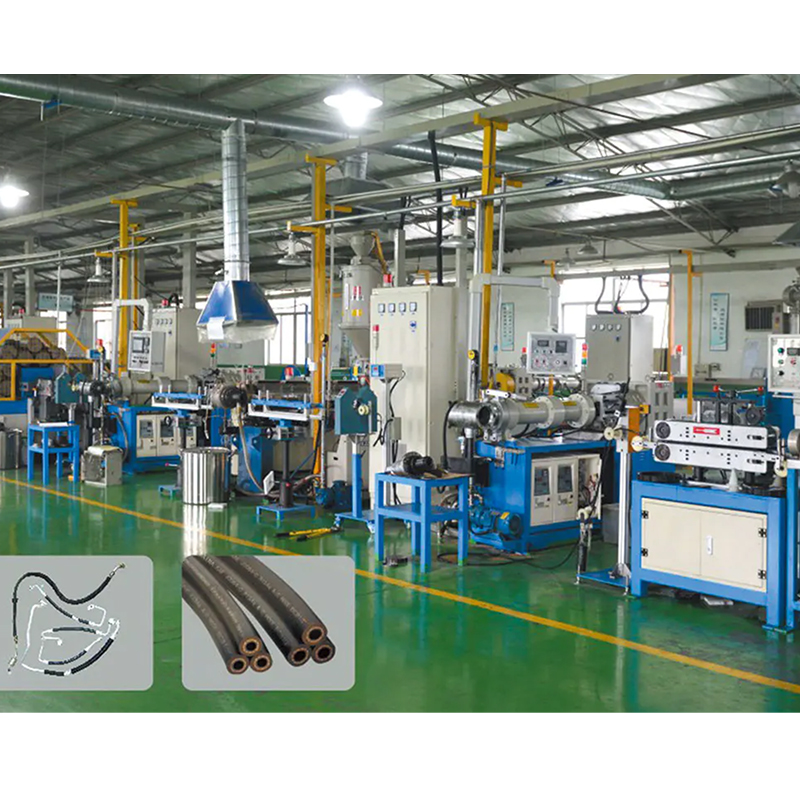
Day-to-day maintenance planning affects total cost of ownership on any rubber extrusion production line or silicone extrusion production line more than the initial purchase price does over a multi-year period.
Screw and Barrel Inspection
Screw flight wear and barrel bore wear both increase clearance over time, which lets compound slip backward instead of moving forward efficiently. A gradual drop in output at the same screw speed setting is often the first sign that clearance has increased enough to warrant inspection.
Die Cleaning Between Runs
Residue buildup in the die land narrows the flow channel gradually, which shows up first as a slow dimensional drift rather than a sudden failure. Scheduled die cleaning between profile changeovers catches this before it affects a full production run.
Curing Tunnel Calibration
Hot air tunnels and microwave units both benefit from periodic temperature mapping along their length, since a single fixed setpoint reading does not always reflect actual temperature at every point the profile passes through.
Evaluating a Silicon Rubber Extruder Supplier Before Ordering
Before committing to a silicon rubber extruder supplier, it helps to ask for specifics rather than general capability claims. A supplier that can answer detailed process questions clearly is usually the one that actually runs these lines day to day rather than reselling a catalog machine.
- Ask which screw compression ratio is used for silicone versus general rubber, and why
- Ask what curing method is included as standard and what upgrades are optional
- Ask for expected output rate at your target profile size, not just a generic top speed figure
- Ask how die tooling is priced and how long tooling lead time typically runs
- Ask what support is available for line commissioning after the equipment arrives
- Ask how barrel liner material and vent design are handled for abrasive, filled compounds
A supplier that hesitates on the screw and curing questions, or gives the same generic answer regardless of the compound being run, is a signal to keep comparing options before placing a deposit.
Where OTT RubberTech Fits Into a Buyer's Sourcing Plan
OTT RubberTech International Trading (Shanghai) Co., Ltd. is based in Shanghai and works across rubber process machinery, including mixers, mixing mills, vulcanizing presses, calenders, and rubber and silicone extrusion production lines. Buyers comparing quotes for a rubber extrusion production line or a silicone extrusion production line often find it useful to request the same screw, curing, and output details listed above directly from the supplier's technical team, so that quotations from different sources can be compared on equal footing rather than by price alone. For buyers who also need upstream equipment such as mixing or batch-off cooling to feed the extrusion line, sourcing both from one supplier can simplify commissioning since the equipment is designed to run together from the start.
Frequently Asked Questions
What is the difference between a rubber extrusion production line and a silicone extrusion production line?
The core machine layout is similar, but a silicone line typically uses a lower screw compression ratio, tighter temperature control at the die, and a dedicated curing tunnel suited to silicone's lower green strength before vulcanization.
How fast does a typical silicone extrusion line run?
Line speed depends heavily on profile size, but 3 to 12 meters per minute is a common working range for solid cord and sealing strip profiles on a mid-size line.
Can one line run both rubber and silicone compounds?
Some lines are built with an interchangeable screw and adjustable barrel heating so they can switch between compound families, though dedicated screws for each material family generally give more consistent output.
What causes most rejected parts on a new extrusion line?
Dimensional drift from unstable die temperature and under-cured cores from insufficient tunnel dwell time are the two most frequent early issues on a newly commissioned line.
Does profile complexity affect tooling lead time?
Yes. A simple round cord die is usually quicker to produce than a multi-cavity co-extrusion die or a profile with thin fins and undercuts, since more trial adjustment is typically needed to hold tolerance on complex shapes.
Why does the curing tunnel length matter as much as the extruder speed?
If dwell time in the tunnel is shorter than the compound needs to reach full cure, the line has to slow down regardless of how fast the extruder can pump material, so tunnel length and extruder output need to be sized together.
Is a vented barrel necessary for every silicone line?
Not always, but it reduces porosity risk on compounds that carry trapped air from mixing, so it is worth checking whether the raw material supply chain already de-airs the compound well before extrusion.
How often should die tooling be inspected for wear?
There is no fixed universal interval since it depends on run volume and compound abrasiveness, but a gradual dimensional drift on an otherwise stable line is usually the first practical signal that die land wear should be checked.

