
 English
 русский
 Español
 عربى


Content
- 1 What Thermoplastic Rubber Actually Is
- 2 The Seven Commercial Families at a Glance
- 3 Thermoplastic Rubber Versus Vulcanized Rubber
- 4 Processing: From Pellets to Finished Part
- 5 Compounding: What Is Actually Inside the Drum
- 6 Equipment Decisions That Quietly Set Your Yield
- 7 Where Thermoplastic Rubber Earns Its Place
- 8 The Numbers Worth Locking Into a Specification
- 9 Troubleshooting the Problems That Actually Show Up
- 10 Frequently Asked Questions About Thermoplastic Rubber
- 10.1 Is thermoplastic rubber the same thing as TPE?
- 10.2 Can thermoplastic rubber replace EPDM or silicone in a seal?
- 10.3 How much regrind can be reused without hurting the part?
- 10.4 Why does my part become oily or sticky over time?
- 10.5 Can thermoplastic rubber reach Shore D hardness?
- 10.6 Is thermoplastic rubber recyclable?
- 10.7 Do I need new tooling to move from PVC to thermoplastic rubber?
- 10.8 What drives the cost per part most?
- 11 The Takeaway
A production engineer swaps an EPDM gasket for a thermoplastic rubber compound to take cure time out of the press cycle. The part demolds in about forty seconds instead of several minutes, scrap drops, and everyone is pleased, until the same gasket takes a permanent set after three weeks clamped under a flange at 80 C. Nothing about that result is mysterious. The material behaved exactly the way a physically crosslinked elastomer behaves when it is pushed past the temperature and compression load it was formulated for.
The short answer comes first: thermoplastic rubber is a melt-processable elastomer that delivers rubber-like flex without a vulcanization step. It earns its place in parts that are molded fast, reground in-house, and used below roughly 90 to 120 C depending on the family. It is the wrong material for a part that sits under permanent compression at elevated temperature for years, or that needs the oil resistance of nitrile or the heat resistance of silicone. The generic word TPR does not decide that outcome, the specific grade does.
What follows covers how the families differ, what the numbers on a datasheet really mean, where compounding and equipment decisions quietly set your yield, and which values belong in a purchase specification so a soft-touch grip and a sealing ring are never ordered with the same one-line description.
What Thermoplastic Rubber Actually Is
Thermoplastic rubber belongs to a class of materials whose polymer chains are tied together by physical domains rather than covalent crosslinks. Heat the material above the softening point of the hard phase and it flows like a plastic. Cool it and the hard domains lock the soft midblocks in place, so the finished part stretches and recovers like vulcanized rubber. Because those crosslinks are physical, the cycle reverses every time the material is heated.
That reversibility explains almost everything else. It is why a TPR part can be injection molded in a single step with no curing press, why sprues, runners and rejected parts can be granulated and fed back into the machine, and also why the same part creeps when it is held hot under load for months. A sulfur-cured EPDM network cannot un-crosslink at 90 C. A styrenic TPR network can soften, relax and drift.
Terminology creates more arguments than chemistry does. TPR, TPE and TPV appear interchangeably on purchase orders, and that habit causes real disputes at goods-in inspection. In footwear and consumer goods, TPR usually means a styrenic block copolymer compound built on SEBS or SBS, extended with white mineral oil and filled with calcium carbonate. TPE in medical tubing, tool grips and consumer electronics frequently means a similar SEBS compound with tighter control of extractables and color. TPV is a different animal entirely: a dynamically vulcanized EPDM and polypropylene alloy in which the rubber phase is crosslinked inside the thermoplastic matrix during compounding.
Four building blocks determine what a TPR compound will do in service:
- Hard phase: polystyrene or equivalent domains that act as reversible crosslinks and hold the network together at service temperature.
- Soft phase: an ethylene-butylene, butadiene or ester midblock that stretches and snaps back when the load is removed.
- Extender oil: often 30 to 60 percent by weight in a soft SEBS grade. More oil means lower hardness, lower tensile strength and a tackier surface.
- Filler and additives: calcium carbonate, talc or silica for cost and hardness control, plus antioxidants, slip agents and pigments.
When a supplier quotes "TPR" without naming the base polymer, the hardness, and the service temperature, you are holding a price, not a specification. That gap is where most of the expensive surprises live, because two compounds with identical 60 Shore A hardness can differ by 40 C in usable temperature and by a factor of three in compression set.
The Seven Commercial Families at a Glance
The word TPR covers at least seven commercial families, and they are not interchangeable substitutes for one another. The table below summarizes the bands most often quoted on supplier datasheets. Treat the figures as starting points for a discussion, not as pass or fail limits, since oil content, filler loading and grade selection shift every number.
| Family | Typical hardness | Continuous service range | Where it normally goes |
|---|---|---|---|
| TPS (SEBS or SBS base) | Shore A 20-90 | Up to about 70-90 C | Shoe components, grips, toys, soft-touch overmolding |
| TPV (dynamically vulcanized) | Shore A 55-90 | Up to about 120-135 C | Weatherseals, appliance gaskets, under-hood parts |
| TPO (polyolefin blend) | Shore A 60-90 | About 90-100 C | Exterior trim, bumper fascia, TPO skins |
| TPU (polyurethane) | Shore A 70-95, up to Shore D 70 | About 80-110 C | Wheels, hoses, cable jacketing, abrasion-critical parts |
| TPC-ET (copolyester) | Shore D 30-70 | Up to about 120 C | Bellows, snap-fit parts, constant-load springs |
| TPA (polyether block amide) | Shore D 25-70 | About -40 to 90 C | Sports gear, thin flexing membranes, cold-weather parts |
| MPR (melt processable rubber) | Shore A 60-90 | Around 100 C | Seals and gaskets needing better oil resistance than SEBS |
The practical takeaway from that table is narrow and useful. If the part sees continuous heat above roughly 100 C, styrenic TPR is already out of the conversation and you are choosing between TPV, TPC-ET, TPU and vulcanized rubber. If the part is a soft grip that never exceeds 60 C, a low-hardness SEBS compound will beat every alternative on cost and cycle time.
Thermoplastic Rubber Versus Vulcanized Rubber
Most sourcing decisions come down to this single question, so it deserves a direct comparison rather than a list of adjectives. The differences below are the ones that show up in quotations, tooling budgets and warranty claims.
| Factor | Thermoplastic rubber | Vulcanized rubber (NR, SBR, EPDM) |
|---|---|---|
| Network type | Physical domains, reversible | Covalent crosslinks, permanent |
| Process route | Injection, extrusion or blow molding in one step | Mixing, preforming, molding, then a timed cure |
| Cycle time | Seconds to a couple of minutes | Minutes to hours including cure |
| Scrap handling | Regrind commonly reused at 20-30 percent | Cured scrap is largely waste |
| Compression set | Higher creep under sustained hot load | Better long-term set resistance |
| Heat aging | Family dependent, often a 90-120 C ceiling | EPDM and silicone reach considerably higher |
| Surface feel | Adjustable from silky to tacky through formulation | Typically matte and dry, less tunable |
A useful way to frame it: vulcanized rubber wins on permanence, thermoplastic rubber wins on speed and material efficiency. A sealing ring that must hold torque for five years at 110 C belongs in the first column. A shoe midsole, a power-tool overmold or a cable strain relief that ships in millions belongs in the second, because the economics of a thirty-second cycle and reusable scrap outweigh a compression set advantage the part will never use.
Processing: From Pellets to Finished Part
Thermoplastic rubber runs on the same machines as polypropylene and ABS, which is one of its quiet advantages. It also inherits their sensitivities: moisture, shear history and mold temperature all leave marks on the finished part.
Injection molding
A soft SEBS grade typically runs with a melt temperature around 160 to 200 C and a mold temperature of 15 to 35 C, with shrinkage in the 1.2 to 2.2 percent range. A TPV wants a hotter barrel, roughly 190 to 230 C, and a warmer mold of 30 to 60 C to develop its surface. TPU is the exception that punishes shortcuts: it needs drying at about 80 to 100 C for two to four hours before it goes anywhere near a barrel, and it runs at 190 to 220 C with shrinkage closer to 0.4 to 1.2 percent.
Extrusion
Profiles, hoses and sheeting are extruded with a compression ratio suited to a low-viscosity melt, and die swell is larger than most people expect on soft grades. Cooling length matters more than screw speed on a soft compound, because a profile pulled too fast through the water bath will ovalize or drag. Downstream equipment such as a cooling conveyor, a cutting machine or a dedicated hose line determines whether the run is stable at production speed.
Overmolding onto a rigid substrate
Bonding to polypropylene is routine with a properly matched SEBS grade; bonding to ABS, PC or nylon needs a grade formulated for that substrate and, often, a warmer mold. The common failure is a chemically acceptable pair run at the wrong mold temperature, producing a part that peels at the edge during assembly rather than at the lab bench.
A workable sequence when starting a new TPR part:
- Confirm the service temperature, the load case and whether the part sits under permanent compression.
- Fix hardness and specific gravity, then check shrinkage against the actual tool, not the datasheet alone.
- Dry the material if the grade requires it, and record the drying time rather than trusting memory.
- Set mold temperature before chasing cycle time, since surface quality and bond strength follow mold temperature.
- Introduce regrind gradually and measure hardness again after each change.
Regrind deserves a sentence of its own. Reusing 20 to 30 percent clean, uncontaminated sprue material is normal practice, but each pass through the barrel shortens the polymer chains a little. Repeatedly recycling the same material at high ratios is a reliable route to lost tensile strength, silver streaks and a hardness reading that no longer matches the certificate that came with the bag.
Compounding: What Is Actually Inside the Drum
A thermoplastic rubber compound is rarely a single polymer. It is a formulated system, and the formulation is where hardness, feel and durability are decided long before the material reaches a press.
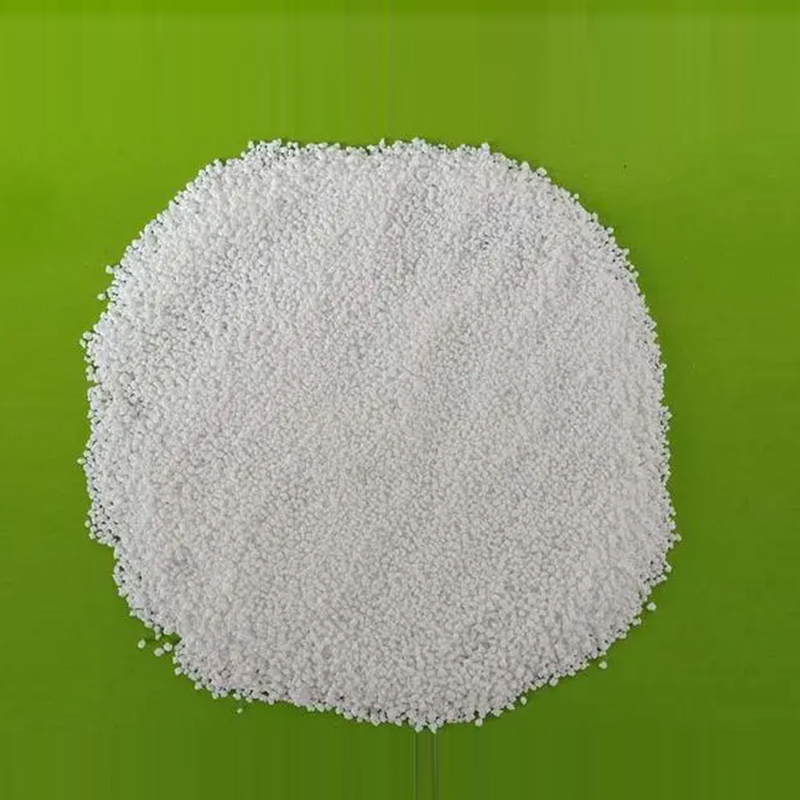 Active zinc oxideActive zinc oxide is an activated zinc oxide with the characteristics of small particle size, large specific surface area, high vulcanization activity, non-toxicity, n...View Product →
For a soft styrenic grade, the recipe usually starts with an SEBS base polymer, white mineral oil at 30 to 60 percent by weight, calcium carbonate or talc as filler, an antioxidant package at roughly 0.2 to 0.5 percent, plus pigment and process aids. As a rule of thumb used widely in compounding, adding 10 phr more oil shifts hardness down by roughly 4 to 5 Shore A points. Treat that as a starting point for a trial, not as a law, because filler type and polymer grade move the number too.
Heat-resistant grades are built differently. A TPV is produced by dynamic vulcanization, where the EPDM phase is crosslinked inside the polypropylene matrix while the blend is still being mixed. That step consumes activators and cure components such as zinc oxide, stearic acid and accelerators, and conductive grades add carbon black instead of relying on a soft filler. Dosing accuracy on these small ingredients is not a housekeeping detail: a batching tolerance of around plus or minus 0.5 percent on the cure package is what separates a repeatable TPV from a batch that cures unevenly and shows inconsistent hardness across a run.
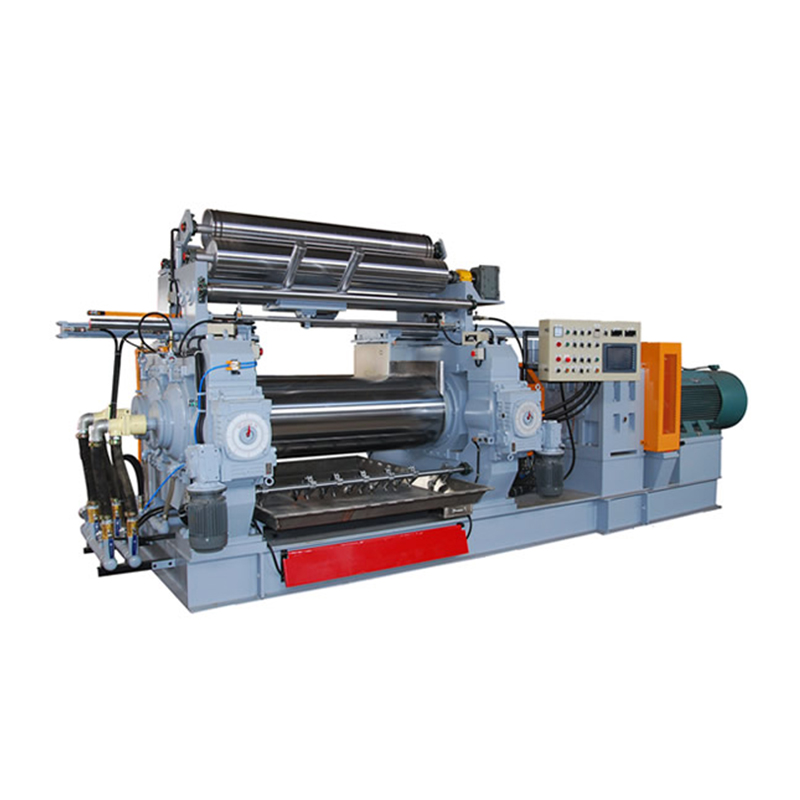 Mixing millThe rubber material is pulled into the roller gap at different linear speeds under friction between the two opposite rotating rollers. The barrel material is subjected...View Product →
Mixing itself follows two broad routes. A continuous route blends polymer, oil and filler in a twin-screw or kneader setup with gravimetric feeding, which suits high volumes of a stable recipe. A batch route uses an internal mixer or a pressurized kneader followed by a two-roll mill for sheeting and cooling. The batch route is more forgiving when you are developing a new hardness band or testing a different filler, because a single batch is cheap to scrap compared with resetting an entire continuous line.
Equipment Decisions That Quietly Set Your Yield
Most TPR quality complaints traced back to the machine room are actually equipment selection problems. A compound that creeps, sticks or shows weld lines is often being run through hardware designed for a different melt viscosity.
- Upstream: an internal mixer or pressurized kneader for the masterbatch, followed by a mixing mill for sheeting and a cooling machine to bring the sheet down before it is stacked.
- Metering: a high-precision batching system for oils and powders, because hardness drift between batches is usually a weighing problem wearing a chemistry costume.
- Shaping: a cold feed preformer or a hydraulic preformer for blank weight consistency, a screw extruder for profiles, and a vertical or horizontal injection machine for molded parts.
- Downstream: a cooling conveyor, a cutting machine built to hold length tolerance on a soft, stretchy profile, and deflashing or trimming equipment where the flash is thin and oily.
- Verification: hardness testing, tensile and elongation measurement, compression set in an oven, and melt flow checks that catch a shift in the grade before a full shift of parts is produced.
Buying the compound and the machine from separate suppliers is workable, but it moves the burden of compatibility onto your process team. Working with a partner that covers formulation, additives and machinery in one place shortens that loop considerably, which is the operating model behind suppliers such as OTT RubberTech International Trading (Shanghai), where rubber compounds, process aids and processing lines are matched against the same application brief.
Where Thermoplastic Rubber Earns Its Place
Footwear is the largest single application and the clearest demonstration of the economics. A TPR or EVA sole unit is foamed, injected or press molded in a cycle measured in tens of seconds, with sprue material fed straight back into the granulator. On a running shoe line, that combination of short cycles and reusable scrap is what makes a dual-density midsole affordable in the first place.
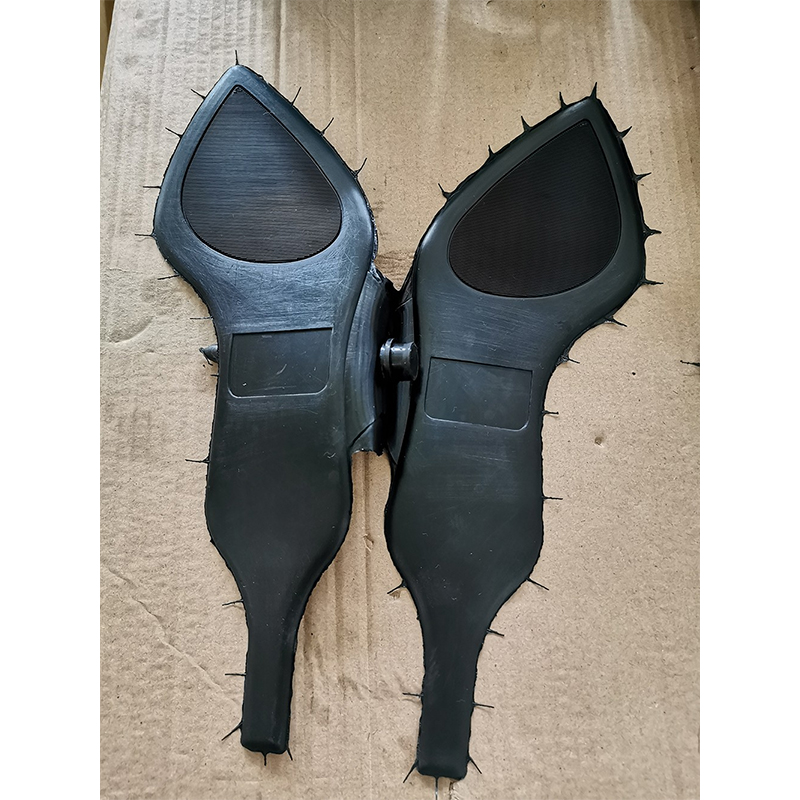 Fully automatic rubber sole injection machine(3 station/6 station)The machine is specially designed for rubber sole, compact structure, fully automated production, short vulcanization time, protect the mold, reduced labor costs, grea...View Product →
Beyond footwear, the material shows up wherever a soft, grippy, color-matched surface has to be molded onto something harder: power tool grips, garden equipment handles, toothbrush handles, pen barrels and wearable straps. Automotive weatherseals and glass run channels lean on TPV because it tolerates engine bay heat and UV exposure better than a plain SEBS blend. Cable and wire jacketing takes TPU where abrasion resistance matters. Sports equipment, including tennis ball components and protective padding, uses rubber-adjacent compounds where feel and rebound matter more than chemical resistance. Extruded profiles for building seals and appliance gaskets round out the list.
The limits are equally well defined. Sustained compression above roughly 90 C, aggressive hydrocarbon exposure, or a requirement for very low compression set over a decade of service all push the decision back toward a vulcanized elastomer. Recognizing that boundary early saves an expensive tooling change later.
The Numbers Worth Locking Into a Specification
A purchase order that says only "TPR, 60 Shore A, black" leaves every important variable open. These are the values worth writing down and agreeing on before the first production batch.
- Hardness: state the scale and the tolerance. Shore A plus or minus 3 points is a workable window for most molded parts; tighter than that invites arguments over measurement technique.
- Specific gravity: plus or minus 0.02 protects you against filler loading swings that change part weight and cost per piece.
- Tensile strength and elongation at break: useful mainly as a batch consistency check rather than a design input.
- Compression set: specify the test condition and the limit. For sealing parts, 22 hours at 70 C with a target below 30 percent is a common requirement, and it is the single number that most often disqualifies a soft SEBS grade.
- Melt flow: consistency matters more than the absolute figure, because a drifting flow rate points to oil content variation.
- Color and surface: a color difference target and a written statement on tack or oil bleed prevent a lot of arguments at final inspection.
If you want a grounding in how elastomer properties translate into process settings, the notes on characteristics and properties of rubber materials are a useful companion to the values above.
Troubleshooting the Problems That Actually Show Up
The same handful of defects appear across footwear, grips and extruded profiles. The table below links each one to the cause that is most often confirmed on the floor.
| Symptom | Likely cause | Practical fix |
|---|---|---|
| Sticky, oily surface after weeks in storage | Oil content above what the polymer can hold, or an aged antioxidant package | Lower the oil loading, raise the hard-phase content, and verify the antioxidant level with the compounder |
| Peeling overmold edge | Mold temperature too low or a grade not matched to the substrate | Raise mold temperature, reposition the gate, or request a grade formulated for the specific substrate |
| Hardness drifting between batches | Oil or filler weighed outside tolerance | Move dosing to a gravimetric batching system and audit scales monthly |
| Silver streaks or bubbles in the part | Moisture, most often on a TPU or a filled compound stored in a humid room | Dry the material to the grade specification and keep the hopper covered |
| Weld lines or weak flow fronts | Low melt temperature or thin walls in a soft grade | Raise melt temperature cautiously and increase gate size rather than injection pressure alone |
| Permanent set under a flange | Continuous compression above the family ceiling | Move to a TPV or TPC-ET grade, or return to a vulcanized elastomer for that position |
Frequently Asked Questions About Thermoplastic Rubber
Is thermoplastic rubber the same thing as TPE?
Functionally, yes in most commercial usage. TPE is the broader family name, and TPR is the label that stuck in footwear, toys and consumer goods. The confusion matters when a specification also has to cover TPV, TPU or copolyester grades, because those sit under the TPE umbrella too but behave very differently at high temperature and under sustained load.
Can thermoplastic rubber replace EPDM or silicone in a seal?
Sometimes, and the deciding factor is nearly always continuous service temperature plus compression set. A TPV weatherseal can replace EPDM in many automotive positions. A soft SEBS compound in a flange gasket that stays hot and clamped will relax and leak. If the seal must hold torque for years at 110 C or above, silicone or a properly cured EPDM remains the safer engineering choice.
How much regrind can be reused without hurting the part?
Reusing 20 to 30 percent clean sprue material is standard practice for most molded grades. The risk is cumulative degradation: each pass through the barrel reduces molecular weight, which shows up first as lower tensile strength and later as flow marks and hardness drift. Measure hardness on the blended material rather than assuming it is unchanged.
Why does my part become oily or sticky over time?
Nearly always because the oil loading exceeds what the polymer network can retain, especially in a very soft grade kept in a warm warehouse. It can also indicate an antioxidant package that has been consumed. Reducing oil content, moving up a few Shore A points, or switching to a grade with a higher hard-phase content usually resolves it.
Can thermoplastic rubber reach Shore D hardness?
Yes, but usually in the TPU, copolyester or polyamide families rather than the styrenic ones. Styrenic TPR comfortably covers roughly Shore A 20 to 90. If a design calls for Shore D 40 or higher with elastic recovery, you are choosing between TPU, TPC-ET and TPA, each with its own drying requirements and shrinkage behavior.
Is thermoplastic rubber recyclable?
In-plant recycling is straightforward and is one of the main economic arguments for the material, since sprues and rejects are granulated and returned to the machine. Post-consumer recycling is harder because soft-touch parts are frequently bonded or overmolded onto other polymers, and separating those layers is what limits recovery rather than the TPR itself.
Do I need new tooling to move from PVC to thermoplastic rubber?
Often the existing tool can be adapted, but shrinkage differences of half a percent to a full percent will change critical dimensions, and gates sized for a rigid PVC melt may starve a soft TPR. Plan for a trial shot and a dimensional report before committing to a full production run.
What drives the cost per part most?
Cycle time and scrap rate, not the price per kilogram. A grade costing slightly more per kilogram that runs fifteen percent faster and accepts thirty percent regrind without complaint usually produces a cheaper part than a bargain compound that has to be run slowly and rejected at inspection.
The Takeaway
Thermoplastic rubber is a fast, reusable, formable elastomer with a well-marked temperature and compression boundary. Choose it for parts that are molded in volume, reground in-house and used below roughly 90 to 120 C, and choose a vulcanized elastomer where permanent set over years of hot service is the deciding requirement. Name the family, the hardness with a tolerance, the specific gravity window and the compression set limit in every specification, and match the machine to the melt rather than the other way round. Most of the costly surprises in this material come from a one-line purchase order, not from the polymer itself.

