
 English
 русский
 Español
 عربى
عربى

Content
- 1 What Is Rubber Calendering?
- 2 How Rubber Calendering Works, Step by Step
- 3 Main Calender Roll Arrangements You Should Know
- 4 Key Process Parameters That Control Calendered Sheet Quality
- 5 Materials and Compound Design for Calendering
- 6 Where Calendered Rubber Is Used
- 7 Common Calendering Defects and How to Fix Them
- 8 Calendering vs. Extrusion vs. Molding: Choosing the Right Forming Method
- 9 Safety and Maintenance on a Calendering Line
- 10 Building a Complete Calendering Work Cell
- 11 Rubber Calendering FAQ
- 11.1 What thickness tolerance can a rubber calender hold?
- 11.2 Which rubber types can be calendered?
- 11.3 What is the difference between frictioning and skim coating?
- 11.4 Why does the compound stick to the calender rolls?
- 11.5 How should a buyer choose between an L-type and a Z-type calender?
- 11.6 Is a batch-off cooling unit necessary after every calender?
What Is Rubber Calendering?
Rubber calendering is the mechanical process that presses a heated, compounded rubber mass through a set of hardened steel rollers to form a continuous sheet, film, or fabric coating with a controlled thickness and a smooth surface. It is the fastest practical way to produce wide, uniform rubber sheets in high volume, and it directly determines the gauge consistency, surface finish, and dimensional stability of products such as conveyor belt plies, roofing membranes, sealing sheets, and coated fabrics.
According to the Wikipedia article "Calender", a calender is a series of hard pressure rollers used to finish a sheet of material such as paper, textiles, rubber, or plastics. In rubber processing, the calender takes a warm compound from the mixing department and converts it into a flat strip, usually in the range of 0.1 mm to 10 mm, which is later cut, built, or vulcanized in downstream stages. Because the sheet is formed under rolling pressure rather than by die extrusion, calendering delivers wider sheets and tighter thickness control than most alternative forming methods.
The practical benefits explain why calenders remain a core machine in rubber factories: uniform thickness within typical commercial tolerances of ±0.05 mm to ±0.15 mm, dense and smooth surfaces, high output per shift, and multi-layer construction in a single pass. In short, if the job demands a wide, thin, and consistent rubber layer, calendering is usually the right forming method.
How Rubber Calendering Works, Step by Step
Before a calender can run well, the process needs consistent compound and disciplined control. The whole sequence can be grouped into three phases: preparation, forming passes, and cooling and take-off. Each phase has a direct effect on whether the final sheet holds its thickness and stays free of defects.
Phase 1 — Compound Preparation
The calender cannot correct a bad compound. The batch must reach the nip with uniform filler distribution, stable Mooney viscosity, and a plasticizer level chosen for smooth flow. In practice, an internal mixer or kneader prepares the masterbatch, then a two-roll open mill conditions it into a soft, air-free strip. Many sheet lines use a precision two-roll mixing mill as the final feed preparation step, and the main functions and roles of mixer upstream equipment explain why the upstream block matters so much for stable calender operation.
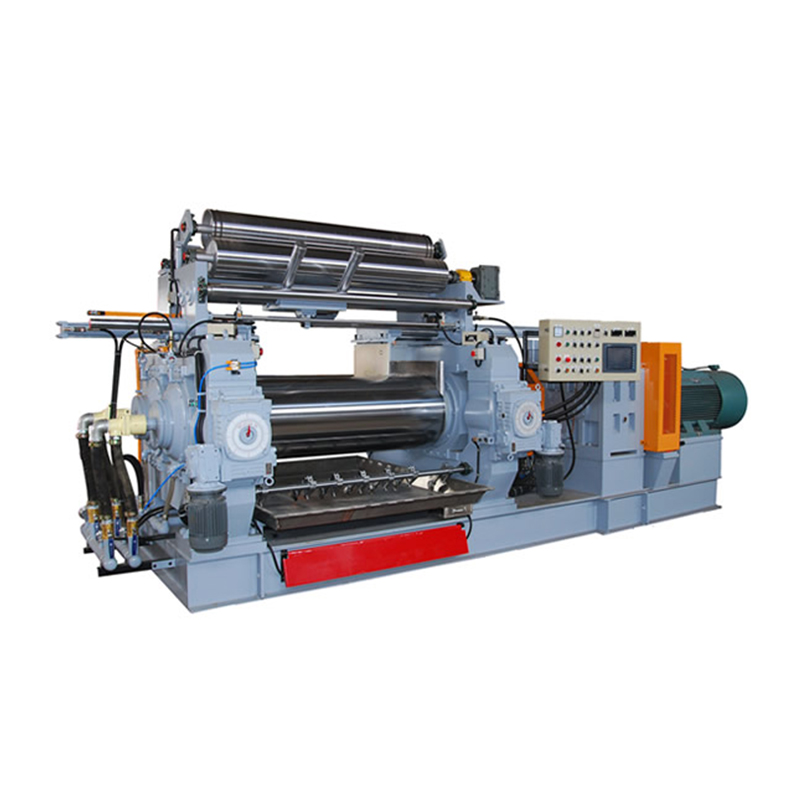 Custom Mixing mill Manufacturers, SuppliersThe rubber material is pulled into the roller gap at different linear speeds under friction between the two opposite rotating rollers. Th...View Product →
Phase 2 — Forming Passes
Once the strip enters the calender, the rolls pull it through the nip, where high pressure flattens the compound into a sheet. For simple sheeting, one or two passes usually suffice. For fabric reinforcement, the machine performs either frictioning, which presses rubber into the spaces between textile yarns, or skim coating, which lays a uniform rubber layer on the fabric surface. The final thickness is set by the nip opening, not by the feed rate, so operators must check the gap constantly while the roll speed and temperature control how the compound flows.
Phase 3 — Cooling and Take-off
As soon as the sheet leaves the calender, it is hot, tacky, and easily distorted. A rubber cooling machine (batch-off unit) dips or sprays the sheet in a release agent, carries it through cooling conveyors, and stacks it in neat piles. Skipping proper cooling causes sticking, stretching marks, and uneven shrinkage in the finished sheet.
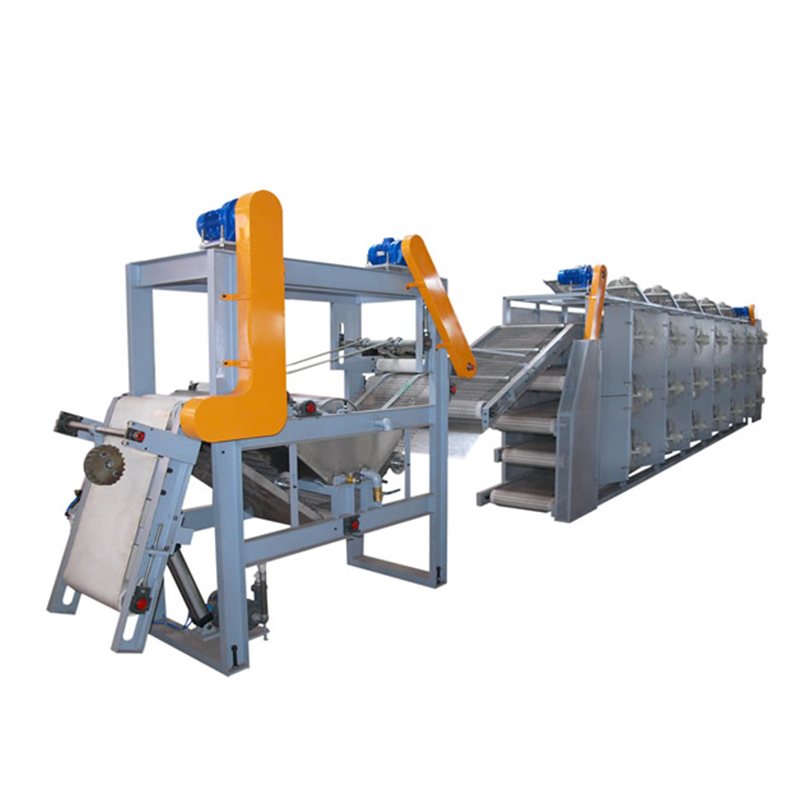 Rubber Cooling Machine, Manufacturers, Batch-Off Machine SuppliersOTT RubberTech International Trading Co., Ltd is a China rubber cooling machine manufacturer and batch-off machine suppliers, Our company...View Product →
Main Calender Roll Arrangements You Should Know
The roll arrangement defines what a calender can do and how accurately it can hold gauge. Four configurations dominate the rubber industry: I-type, L-type, Z-type, and inverted-L or S-type. Each has a different roll path, which changes how easily the sheet can be threaded, how much tension it experiences, and how much the rolls deflect under load.
| Arrangement | Number of Rolls | Typical Uses | Main Advantage |
|---|---|---|---|
| I-type | 2 | Simple sheeting and light frictioning | Lowest cost, easiest to operate |
| L-type | 3 | General sheeting, frictioning, and skim coating | Good accuracy for medium production widths |
| Z-type | 4 | High-speed sheeting and fabric coating | Diagonal roll layout reduces roll deflection and improves gauge control |
| Inverted-L (S-type) | 4 | Precision frictioning with high fabric tension | Stable web path and less sheet distortion |
Key Process Parameters That Control Calendered Sheet Quality
Five variables decide most of the output quality on a rubber calender: roll temperature, nip gap, roll speed ratio, compound plasticity, and feed uniformity. If any one of them drifts, defects such as air pockets, gauge variation, or sticking appear within minutes.
- Roll temperature: typical ranges sit at 60°C to 90°C for NR, SBR, and CR compounds. Higher temperature improves flow but raises sticking and scorch risk; lower temperature produces a rough surface and poor knitting between layers.
- Nip gap and roll loading: the gap sets the final thickness, while hydraulic loading pushes the rolls together to compensate for deflection under heavy pressure.
- Friction ratio: a speed difference of 1.05:1 to 1.15:1 between rolls creates the shear that pushes rubber into fabric during frictioning.
- Mooney viscosity: most calender compounds run in the ML 1+4 at 100°C range of 30 to 70. A much higher reading traps air and produces a spongy sheet.
- Feed strip uniformity: the strip entering the nip must have a constant width, thickness, and temperature; otherwise the sheet thickness fluctuates even when the calender settings stay unchanged.
As a practical guideline, ±0.05 mm can be held on narrow Z-type calenders at moderate speed, while wide production lines typically run at ±0.10 mm to ±0.15 mm. These are industry-typical values, not guaranteed specifications. Judge a machine by the tolerance it can maintain over a full shift, not by the speed stated in its brochure.
Materials and Compound Design for Calendering
Not all compounds calender equally well. A calender-friendly compound should flow readily, resist scorch, and release cleanly from the rolls. The key characteristics and properties of rubber materials provide a useful starting point for matching polymer choice to your sheet application.
- NR and SBR: the easiest compounds to calender, with a wide curing range and forgiving flow behavior.
- CR (neoprene): excellent for coated fabrics but tackier, so it usually needs lower roll temperatures and a release agent.
- EPDM: widely calendered into roofing membranes; low-Mooney grades are preferred because high green strength makes gauge control harder.
- NBR: used for oil-resistant sheets; plasticizer content must be balanced to keep the compound from becoming too soft or too stiff on the rolls.
- Silicone and FKM: calenderable but with a narrower processing window, usually for specialty heat-resistant sheets.
Within the formulation, common ingredients have specific roles: carbon black provides reinforcement and controls conductivity, zinc oxide activates the cure system, stearic acid reduces roll sticking, and accelerators must be chosen for scorch safety at calender temperatures. A typical sheeting compound might contain 100 phr NR, 50 phr carbon black, 5 phr zinc oxide, 2 phr stearic acid, 5 phr processing oil, 2.5 phr sulfur, and 0.8 phr accelerator. These loadings are illustrative only, not a production recipe.
Where Calendered Rubber Is Used
The main applications of calendered rubber share one requirement: a wide, thin, and uniform rubber layer joined to itself or to a fabric substrate. That is why the process appears across automotive, construction, packaging, and sporting goods manufacturing.
| Application | What Is Calendered | Why Calendering Fits |
|---|---|---|
| Conveyor belts | Skim-coated fabric plies | Uniform coating thickness gives even stress distribution |
| Roofing membranes | Wide EPDM sheets | Consistent gauge avoids weak points across large areas |
| Tire components | Inner liners and sidewall sheets | Tight thickness control prevents air pockets and weight variation |
| Sealing and gaskets | Sheets and punched strips | Low porosity and smooth surface improve sealing performance |
| Inflatable products | Fabric coated for boats and air mattresses | Frictioning and skim coating give strong rubber-to-fabric adhesion |
| Flooring, tapes, pond liners | Continuous thin sheets | High output at low cost per square meter |
Common Calendering Defects and How to Fix Them
Even a well-tuned calender produces defects when compound or process conditions drift. The fastest way back to stable production is to identify the cause by pattern: thickness problems usually point to the nip and roll deflection, surface problems usually point to temperature and tack, and adhesion problems usually point to the speed ratio and fabric tension.
| Defect | Most Likely Cause | Countermeasure |
|---|---|---|
| Air bubbles or pinholes | Compound viscosity too high, feed strip folded, or roll temperature too low | Increase roll temperature slightly, slow the line, and feed a straight strip without folds |
| Gauge variation across the width | Roll deflection, uneven feed distribution, or worn bearings | Use a Z-type or S-type arrangement, rebalance the feed, and check roll bearing clearances |
| Sticking to the rolls | Roll temperature too high or compound too tacky | Lower roll temperature, add a release agent, or adjust the plasticizer/process aid balance |
| Wrinkles on coated fabric | Tension imbalance between let-off and rewind | Adjust fabric tension and use an expanding roll before the nip |
| Scorching or rough edges | Excessive heat, slow line speed, or compound with insufficient scorch safety | Cool the rolls, increase speed moderately, and review the cure accelerator system |
| Edge tearing | Compound too stiff, rolls too cold, or edges cooling faster | Raise compound temperature, warm the roll edges, and trim edges to prevent crack propagation |
Calendering vs. Extrusion vs. Molding: Choosing the Right Forming Method
Calendering is not the only way to shape rubber, but it is the best fit for wide flat products. Extrusion suits continuous profiles with constant cross-sections, while press molding suits discrete parts with complex geometry. The choice comes down to product shape, required output, and tolerance.
| Method | Typical Thickness Range | Best Suited For | Output Level |
|---|---|---|---|
| Calendering | 0.1–10 mm | Wide sheets, film, fabric coating | High continuous output |
| Extrusion | Profile dependent | Hoses, seals, strips, complex cross-sections | Medium to high |
| Press molding | Mold dependent | Discrete parts, low to medium volume | Lower output per hour |
For wide flat products, calendering wins on cost per square meter. For complex cross-sections, extrusion is the natural choice. For unit parts such as gaskets and seals, molding offers the geometry flexibility that sheet processes cannot match.
Safety and Maintenance on a Calendering Line
The most dangerous point on a calender is the nip between two rolls, where hands, clothing, or tools can be pulled in with high force. The most important protective measures are simple to implement: fixed guards over the nip, emergency stop bars within easy reach, and two-hand controls that keep the operator away from the intake zone. Because rolls run hot, thermal protection and hot-surface warning signs should never be removed during cleaning or setup.
- Roll surface care: keep rolls clean and polished; scratches transfer directly to the sheet surface.
- Bearings and drive: check bearing temperature and gear noise regularly, because deflection and vibration show up as gauge variation.
- Hydraulic system: inspect hoses and cylinder seals for leaks, as pressure loss changes the nip force.
- Cooling circuit: verify water flow and temperature control, especially when processing heat-sensitive compounds.
- Gap calibration: calibrate the nip indication against actual measured sheet thickness after every major service.
A practical schedule makes a bigger difference than any single inspection. The maintenance and servicing checkpoints for rubber equipment outline a sensible routine that fits into normal shift work instead of disrupting it.
Building a Complete Calendering Work Cell
The calender itself never works alone. A complete calendering line starts with compound preparation, then moves through the calender, cooling, cutting, and stacking. Each station must be matched to the same width, speed, and tolerance target, because the weakest station limits the whole line.
When planning a new work cell, buyers should define the following requirements before requesting equipment:
- Working width: production lines for roofing membranes often run 2,000 mm or wider, while sealing sheet lines commonly run 1,200 to 1,500 mm.
- Thickness range: the calender, batch-off, and cutting station must all handle the same minimum and maximum gauge.
- Automation level: automatic cutting and stacking reduce labor but require tighter upstream gauge control.
- Scrap handling: edge trim and startup scrap should be returned to the mixer without contaminating the next batch.
- After-sales support: check quoting speed, spare parts availability, and whether the supplier can commission the full line.
A supplier that understands the whole line matters as much as the calender itself. OTT RubberTech International Trading (Shanghai) Co., Ltd. designs and integrates this equipment with more than 15 years of rubber machinery experience. Every machine is tested before shipment, quotations are issued within three working days, and OEM/ODM support covers process, material, and machinery. On the downstream side, a high-performance rubber cutting machine converts the cooled, accumulated sheet into panels or strips with exact dimensions, which keeps the calender running instead of slowing the line down for manual cutting.
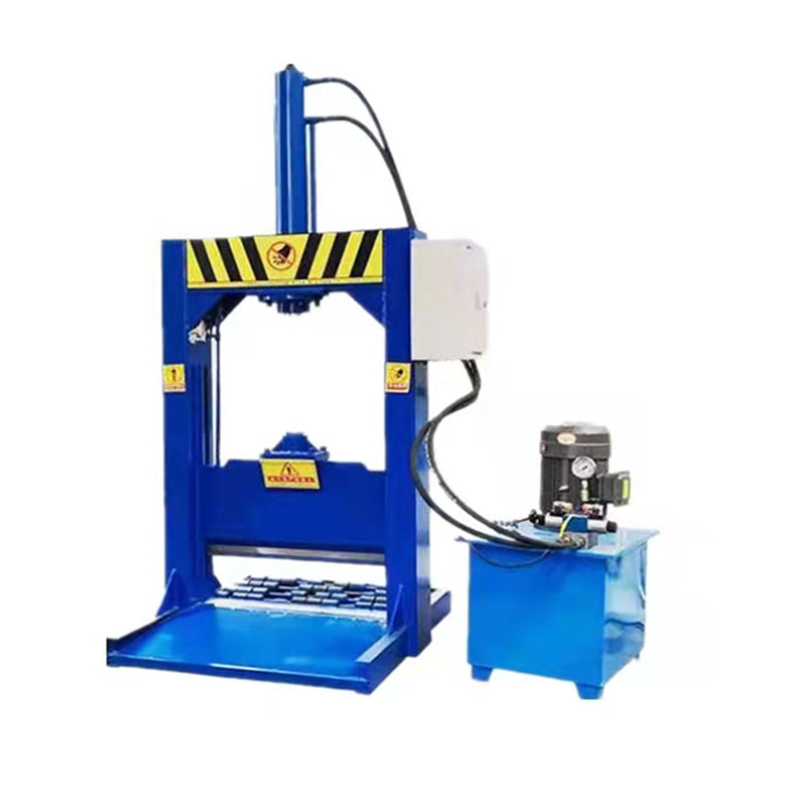 Custom Rubber cutting machine Manufacturers, SuppliersSuitable for cutting natural rubber, synthetic rubber, and various plastic materials. This machine is all steel plate welding, solid stru...View Product →
Rubber Calendering FAQ
What thickness tolerance can a rubber calender hold?
Typical commercial tolerances range from ±0.05 mm to ±0.15 mm, depending on roll arrangement, width, speed, and compound. A narrow Z-type calender at moderate speed can hold the tightest class, while a wide production line at high speed will normally stay near the wider end of that range.
Which rubber types can be calendered?
NR, SBR, CR, EPDM, and NBR are the most common calender compounds. Silicone and FKM can also be calendered, but they need a narrower processing window and careful temperature control. The deciding factor is compound behavior, not just polymer type.
What is the difference between frictioning and skim coating?
Frictioning uses a speed difference between rolls to force rubber into the spaces between textile yarns, creating mechanical adhesion. Skim coating lays a uniform rubber layer on the fabric surface without pressing it deeply into the weave. Many coated fabrics use frictioning first, then a skim coat on top.
Why does the compound stick to the calender rolls?
Sticking usually comes from excessive roll temperature, a compound that is too tacky, or a missing release agent. The practical fix is to lower the roll temperature, adjust the process aid level, or switch to a roll release agent approved for the compound.
How should a buyer choose between an L-type and a Z-type calender?
Choose an L-type for medium-width general sheeting, frictioning, and skim coating where cost matters most. Choose a Z-type when the sheet must be wide, the speed high, or the gauge tolerance tight, because the Z arrangement reduces roll deflection and keeps thickness more uniform.
Is a batch-off cooling unit necessary after every calender?
For most sheet products, yes. A batch-off unit applies a release agent, cools the sheet, and stacks it without stretching. This prevents sticking, distortion, and uneven shrinkage before vulcanization. Thin films and some calendered fabrics may only need wind-up, but even then controlled cooling is strongly recommended.

