
 English
 русский
 Español
 عربى
عربى

Content
- 1 Sulfur accelerators supplier
- 2 What Is Vulcanised Rubber
- 3 The History and Discovery of Vulcanization
- 4 The Science Behind Rubber Vulcanization
- 5 Why Sulfur Is Central to the Vulcanization Process
- 6 The Role of Accelerators in Modern Vulcanization
- 7 Vulcanizing Natural Rubber Versus Synthetic Rubber
- 8 Types of Vulcanization Methods Used in Industry
- 9 Vulcanization Equipment and Machinery
- 10 How Vulcanized Rubber Differs From Raw Rubber
- 11 Key Properties and Performance Data
- 12 Common Applications of Vulcanized Rubber
- 13 Vulcanization Temperature and Time Considerations
- 14 Quality Control and Testing Methods
- 15 Cost and Efficiency Factors in Vulcanization
- 16 Common Problems and How to Avoid Them
- 17 Sustainability and End of Life Considerations
- 18 Choosing the Right Vulcanised Rubber Compound
- 19 Frequently Asked Questions
- 19.1 Is vulcanised rubber the same as natural rubber
- 19.2 Can vulcanised rubber be recycled
- 19.3 Why does vulcanised rubber smell different from raw rubber
- 19.4 How long does the vulcanization process take
- 19.5 Does more sulfur always mean stronger rubber
- 19.6 Are accelerators required for every vulcanised rubber product
- 19.7 What happens if rubber is under-cured or over-cured
- 19.8 Does all rubber need sulfur to vulcanise
- 19.9 Why do some rubber parts feel harder than others even from the same base polymer
- 19.10 How can I tell if a rubber product is properly vulcanised
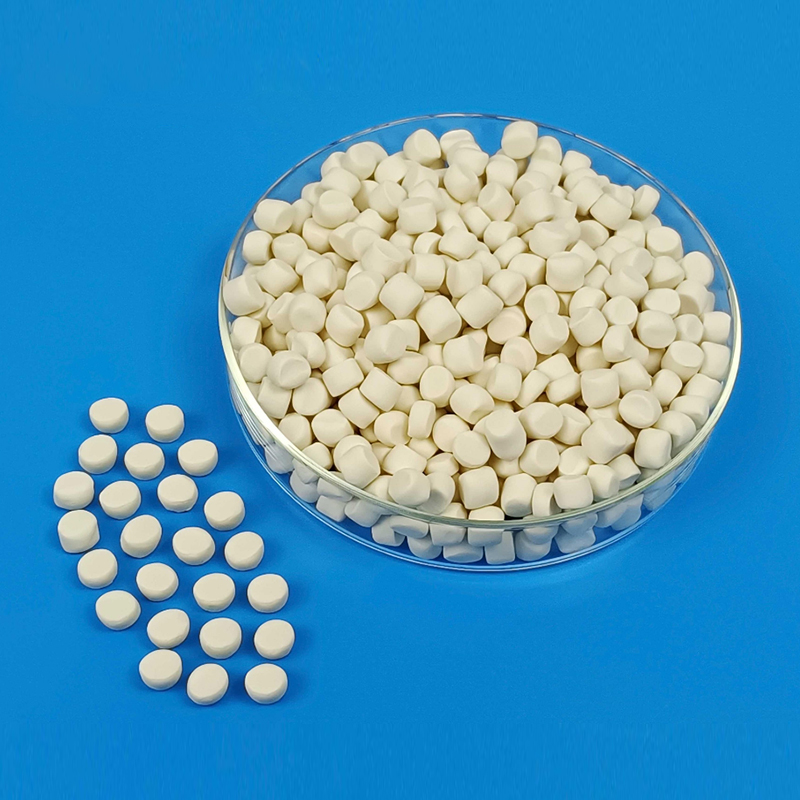
Sulfur accelerators supplier
What Is Vulcanised Rubber
Vulcanised rubber is natural or synthetic rubber that has been chemically treated with sulfur and heat so its polymer chains form permanent cross-links, turning a soft, sticky, temperature-sensitive material into a strong, elastic, and durable product. Before this treatment, raw rubber softens in warm weather, hardens and cracks in the cold, and loses its shape under repeated stress. After vulcanisation, the same material can stretch to several times its original length and snap back, resist heat, oil, and abrasion, and hold its structure for years. This single chemical step is the reason rubber moved from a novelty material into the backbone of tyres, seals, hoses, footwear, and thousands of industrial components used today.
In practical terms, vulcanisation is a curing reaction. A raw rubber compound, mixed with sulfur, accelerators, activators, and fillers, is placed under heat and often pressure. As the temperature rises, the sulfur atoms react with the rubber's polymer backbone and stitch neighbouring chains together with short sulfur bridges. Once this network of bridges is fully formed, the rubber cannot be melted and reshaped the way plastic can. It has permanently changed state, from a mouldable compound into a fixed, elastic solid.
The scale of this industry is significant. Global natural rubber consumption sits in the range of 14 to 15 million tonnes per year, and the overwhelming majority of that volume passes through some form of sulfur vulcanisation before it becomes a finished part (source: International Rubber Study Group production and consumption statistics). Synthetic rubber adds several million tonnes more to that figure, most of which is also sulfur cured. Very little rubber reaches a consumer or an engineer in its raw, unvulcanised state.
The History and Discovery of Vulcanization
Rubber was known to European traders long before it became a reliable engineering material. Early rubber goods imported from South America in the 1700s and early 1800s were interesting curiosities, but they were nearly useless in changing weather. Boots and coats made from raw rubber turned soft and foul smelling in summer heat, then stiffened into unusable blocks during winter cold. Manufacturers who tried to build a business around raw rubber repeatedly failed because the material simply could not hold its properties.
The Accidental Discovery of 1839
Charles Goodyear, an American inventor working with limited funds, spent years experimenting with rubber and various additives trying to solve the heat and cold problem. In 1839, while working with a mixture of rubber and sulfur, he accidentally dropped a sample onto a hot stove. Instead of melting like raw rubber, the sample charred slightly on the surface but remained flexible and did not turn sticky. He had, without fully understanding the chemistry, triggered a cross-linking reaction.
From Discovery to Industry
Goodyear patented the process in 1844. Around the same time in England, Thomas Hancock developed a similar process independently and secured a British patent shortly before Goodyear's international filings were finalised, which led to a long dispute over credit. The name vulcanisation itself was proposed by William Brockedon, a friend of Hancock, referencing Vulcan, the Roman god of fire, since heat was central to the reaction. Within a few decades, vulcanised rubber moved from a laboratory curiosity into large scale production for boots, hoses, waterproof fabric coatings, and eventually the pneumatic tyre industry that would define much of the twentieth century's demand for rubber.
From Trial and Error to Controlled Chemistry
Early vulcanisation relied on sulfur alone, cured for many hours at high temperature, with inconsistent results between batches. The introduction of organic accelerators in the early 1900s changed the industry dramatically, cutting cure times from hours to minutes and giving compounders far more control over the final hardness, strength, and ageing resistance of the finished rubber. This shift from slow, unpredictable curing to fast, precisely controlled curing is what allowed rubber manufacturing to scale into the mass production processes used today.
The Science Behind Rubber Vulcanization
Raw rubber is made of long, tangled polymer chains that can slide past one another. This is why unvulcanised rubber feels tacky and deforms permanently when stretched. Vulcanisation introduces sulfur bridges, known as cross-links, between neighbouring polymer chains. These bridges lock the chains into a three-dimensional network. When the rubber is stretched, the chains straighten out, but the sulfur cross-links pull them back into place once the force is removed.
What Changes at the Molecular Level
- Individual polymer chains become chemically linked rather than simply tangled together.
- The material shifts from a plastic, moldable state to an elastic, memory-retaining state.
- Solubility in common solvents drops sharply because the network can no longer be pulled apart.
- Resistance to oxidation and ozone cracking improves due to the more stable internal structure.
- Glass transition behaviour shifts, meaning the rubber stays flexible over a wider temperature window.
- Creep, the slow permanent stretching under constant load, is greatly reduced once cross-links are locked in place.
Types of Sulfur Cross-Links
Not all sulfur bridges are identical, and the type formed has a direct effect on performance. Monosulfidic bridges contain a single sulfur atom connecting two chains and are the most heat stable but also the most rigid. Disulfidic and polysulfidic bridges contain two or more sulfur atoms in a chain and give the rubber more flexibility and better fatigue resistance, though they are somewhat less heat resistant than monosulfidic links. Compounders adjust the accelerator to sulfur ratio specifically to control which type of bridge dominates, since a tyre sidewall that needs to flex millions of times has very different bridge requirements than a rigid battery case.
Cross-Link Density and Its Effect on Properties
The number of cross-links per unit volume of rubber, referred to as cross-link density, is one of the most important variables a compounder controls. Low cross-link density produces soft, highly extensible rubber with lower tensile strength. Higher cross-link density produces firmer rubber with higher modulus but reduced elongation. Beyond a certain point, adding more cross-links stops improving strength and instead makes the rubber brittle, which is why every formulation has an optimum cross-link density rather than simply maximising it.
Why Sulfur Is Central to the Vulcanization Process
Sulfur remains the most widely used curing agent in the rubber industry because it forms strong, flexible cross-links at a manageable cost. During heating, sulfur atoms attach themselves along the rubber's polymer backbone and bridge separate chains together. The amount of sulfur used directly controls how hard or soft the final product feels.
| Sulfur Content | Resulting Material | Typical Use |
|---|---|---|
| 0.5 to 2 percent | Soft, highly flexible rubber | Rubber bands, gaskets, tubing |
| 2 to 8 percent | Firm, wear-resistant rubber | Tyre treads, conveyor belts, footwear soles |
| 25 to 35 percent | Rigid, brittle material known as ebonite | Battery cases, pipe stems, hard mouldings |
Soluble Sulfur Versus Insoluble Sulfur
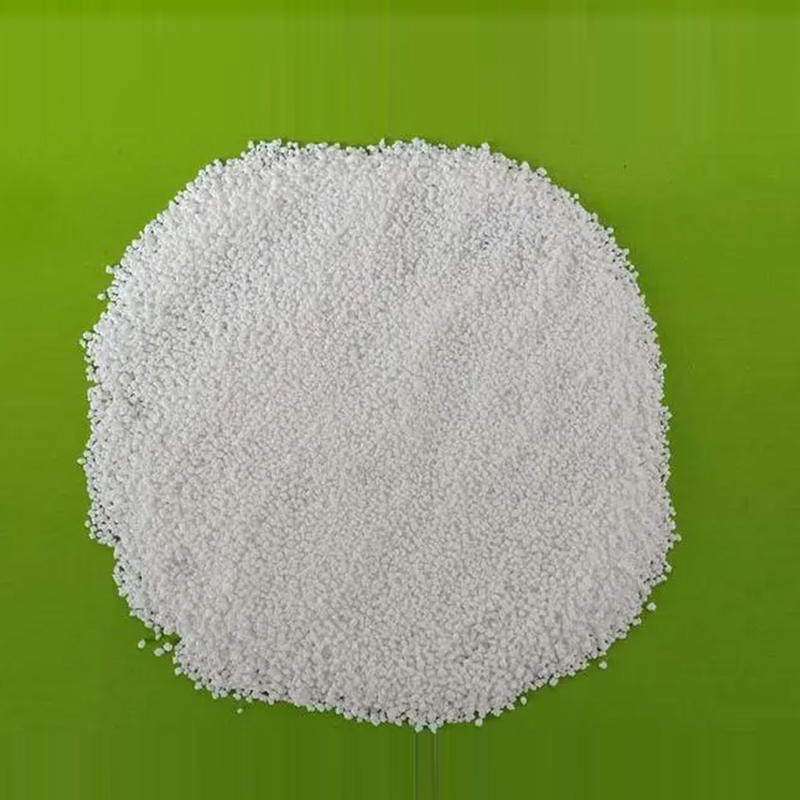
Beyond quantity, the form of sulfur also matters. Rubber compounders commonly choose between insoluble sulfur, which resists blooming to the surface of the finished part, and soluble sulfur, which reacts faster but can migrate and leave a dusty film if overdosed. Insoluble sulfur is generally preferred for thick sections, master batches that sit in storage before use, and products where surface appearance matters, such as visible seals or footwear. Soluble sulfur remains popular for simple, fast-turnaround products where storage time is short and cost efficiency is the priority.
Sulfur Donor Systems
Some formulations use sulfur donor chemicals instead of, or alongside, elemental sulfur. These compounds release sulfur gradually during the cure and tend to form shorter, more heat-stable monosulfidic bridges. Sulfur donor systems are common in products that will see prolonged exposure to high temperatures, such as under-bonnet automotive parts, because the resulting cross-links resist breaking down even after years of heat cycling.
The Role of Accelerators in Modern Vulcanization
Sulfur alone reacts slowly with rubber, and early vulcanisation runs could take several hours at high heat, which wasted energy and degraded the polymer. Accelerators are chemical additives that speed up the sulfur cross-linking reaction, shorten cure time, and allow lower curing temperatures without sacrificing strength. A typical modern rubber compound cures in minutes rather than hours because of these additives.
Common Accelerator Families
- Thiazoles, valued for a balanced cure speed and good ageing resistance.
- Sulfenamides, known for delayed action, which gives factories more time to shape the rubber before curing begins.
- Thiurams, which cure very quickly and are often used alongside small amounts of sulfur or as the sole curing agent in some formulations.
- Dithiocarbamates, prized for extremely fast reaction at lower temperatures, common in latex dipping processes.
- Guanidines, generally used as secondary accelerators to boost the activity of a primary accelerator rather than working alone.
Why Accelerator Choice Matters
Choosing an accelerator is rarely about speed alone. A sulfenamide accelerator might be chosen for a large tyre because its delayed onset gives the factory a safe processing window before the rubber begins to cure, preventing scorch during mixing and extrusion. A thiuram might be chosen for a thin dipped glove because its fast action suits a quick, continuous production line. The accelerator system, more than almost any other ingredient, determines how a factory schedules its equipment and how consistent the finished parts will be from one shift to the next.
Activators: The Supporting Chemistry
Accelerators are usually paired with activators such as zinc oxide and stearic acid. The zinc ions help the accelerator and sulfur combine into an active complex, which then reacts with the rubber chain far more efficiently than sulfur working alone. Without this activator system, even a fast accelerator would underperform, leaving the cured rubber soft, sticky, or inconsistent from batch to batch. Zinc oxide typically makes up around 3 to 5 percent of a standard rubber compound by weight, making it one of the more significant non-polymer ingredients in the recipe.
Accelerator Dosage and Scorch Safety
Every accelerator system has a scorch time, the window during mixing and shaping before curing begins in earnest. If a factory works too slowly and the compound scorches inside the mixer or extruder, the batch is ruined and cannot be reshaped. Compounders balance accelerator dosage against mixing speed, ambient temperature, and equipment residence time to keep enough safety margin while still curing efficiently once the rubber reaches the mould or oven.
Vulcanizing Natural Rubber Versus Synthetic Rubber
Not all rubber cures the same way. Natural rubber, harvested as latex from the Hevea brasiliensis tree, has a chemical backbone that reacts readily with sulfur, which is why classic sulfur vulcanisation was developed around it. Synthetic rubbers, produced from petroleum-derived monomers, vary widely in how they respond to sulfur curing.
Styrene Butadiene Rubber
Styrene butadiene rubber, one of the most common synthetic rubbers used in tyre treads, cures with sulfur in a broadly similar way to natural rubber, though it typically needs slightly different accelerator ratios to reach an equivalent cure state.
Nitrile Rubber
Nitrile rubber, chosen for its oil and fuel resistance in hoses and seals, also cures with sulfur systems but is frequently paired with specific accelerator blends to counteract the slower reactivity introduced by its acrylonitrile content.
Ethylene Propylene Diene Monomer Rubber
Ethylene propylene diene monomer rubber, widely used in automotive weather seals and roofing membranes because of its outstanding resistance to ozone and weathering, contains far fewer reactive sites along its backbone than natural rubber. It requires higher accelerator loadings and carefully selected sulfur donor systems to achieve a workable cure rate.
Silicone and Other Specialty Elastomers
Some specialty elastomers, including silicone rubber, do not use sulfur vulcanisation at all. Instead they rely on peroxide curing or platinum catalysed addition curing, which forms carbon to carbon cross-links rather than sulfur bridges. These alternative systems exist specifically because certain polymer backbones either resist sulfur reactions or need a cure suited to extreme temperature or medical grade purity requirements where sulfur residues are undesirable.
Types of Vulcanization Methods Used in Industry
Not every rubber product is cured the same way. The shape, thickness, and intended use of the part determine which vulcanisation method is chosen.
Hot Air Vulcanization
Parts are cured inside an oven using circulating hot air, typically between 140 and 220 degrees Celsius. This method suits extruded profiles and continuous rubber strips where even, all-around heating is needed. Hot air curing is relatively low cost to set up but can be slower than steam or press curing because air transfers heat less efficiently than steam or direct metal contact.
Steam Vulcanization
Steam under pressure provides fast, uniform heat transfer and is widely used for moulded goods such as seals, boots, and industrial hose. The moisture also helps prevent surface porosity in thicker sections. Autoclaves used for steam curing typically run between 2 and 6 bar of pressure, which raises the effective curing temperature well above what atmospheric steam alone could achieve.
Press or Compression Vulcanization
Heated metal moulds compress the rubber compound into shape while curing it simultaneously. This method dominates tyre manufacturing, conveyor belt production, and moulded rubber goods where precise dimensions matter. Because the mould itself is the heat source, press curing gives excellent dimensional accuracy and surface finish, though tooling costs are higher than oven or autoclave methods.
Cold Vulcanization
Instead of sulfur and heat, this method uses chemical agents such as sulfur monochloride at room temperature. It is mainly reserved for thin rubber sheeting, repair patches, and dipped goods where heating equipment is impractical. Cold curing is fast and requires no energy input for heating, but it generally produces a thinner, less uniform cross-link network than heat cured sulfur systems.
Microwave and Ultra High Frequency Curing
For continuous rubber profiles such as door seals and window channels, microwave pre-heating combined with hot air curing has become common in newer factories. Microwave energy heats the rubber compound from within rather than relying purely on surface heat transfer, which speeds up curing for thick continuous sections and reduces the length of oven line needed on the factory floor.
Injection Moulding Vulcanization
In injection moulding, the raw compound is heated and forced directly into a closed, heated mould cavity under high pressure, where it cures almost immediately. This method suits high volume, complex geometry parts such as automotive grommets and small precision seals, offering fast cycle times and minimal material waste compared with compression moulding.
Vulcanization Equipment and Machinery
The equipment used to vulcanise rubber has a direct effect on cycle time, energy cost, and product consistency.
Mixing Equipment
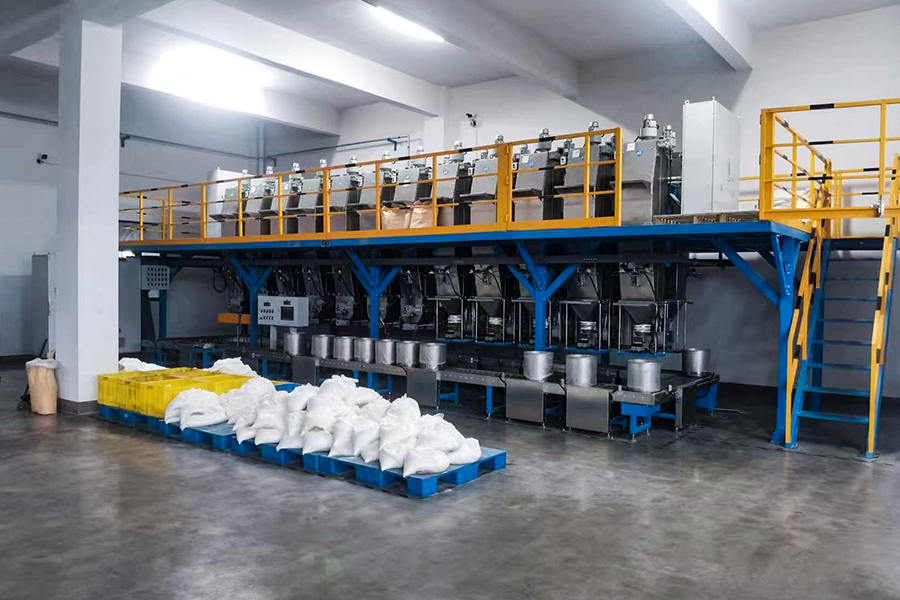
Before curing even begins, sulfur, accelerators, activators, and fillers must be blended evenly into the raw rubber using an internal mixer or a two roll mill. Poor mixing leads to inconsistent cure across a single part, since pockets of rubber with too little accelerator will under-cure while nearby pockets with too much will scorch early.
Curing Presses
Hydraulic curing presses apply both heat and pressure through electrically or steam heated platens. Modern presses are fitted with programmable controllers that track temperature and time precisely, and many now log data automatically for quality traceability across large production runs.
Autoclaves
Autoclaves are pressurised steam chambers large enough to cure batches of moulded or extruded parts at once. They are common in hose and cable manufacturing, where continuous lengths need consistent curing along their entire run.
Rheometers and Cure Monitoring Instruments
A moving die rheometer measures the torque of a rubber sample as it cures inside a small heated chamber, plotting a curve that shows scorch time, cure rate, and optimum cure point. This single piece of laboratory equipment guides almost every cure schedule decision made on the factory floor, since it reveals how a specific compound will behave before a single full-size part is produced.
How Vulcanized Rubber Differs From Raw Rubber
| Property | Raw Rubber | Vulcanised Rubber |
|---|---|---|
| Elasticity | Limited, does not fully recover shape | High, returns to original shape after stretching |
| Temperature stability | Soft in heat, brittle in cold | Stable across a wide temperature range |
| Solvent resistance | Dissolves or swells easily | Swells less, resists dissolving |
| Durability | Wears down quickly under friction | Resists abrasion and repeated flexing |
| Odour and tackiness | Sticky surface, strong raw smell | Dry, stable surface with reduced odour |
| Shape memory | Poor, stretches permanently under load | Strong, recovers even after long term compression |
Key Properties and Performance Data
Compounders describe cured rubber using a set of standard measurements that predict how a part will behave in service.
- Tensile strength shows how much stretching force the rubber can take before it tears, typically expressed in megapascals.
- Elongation at break measures how far the rubber stretches before failure, often several hundred percent of its original length for general purpose compounds.
- Hardness, measured on the Shore A scale, indicates how firm the surface feels, ranging from soft seals around 30 Shore A to stiff industrial rollers above 90 Shore A.
- Compression set describes how well the rubber springs back after being squeezed for a long period, a critical figure for gaskets and O-rings that stay compressed for years.
- Tear resistance measures how well the rubber resists a cut or nick growing into a full split under stress, important for products that see sharp edges or repeated flexing near an edge.
- Abrasion resistance predicts how much surface material is lost under repeated rubbing contact, a key figure for tyre tread and conveyor belt cover compounds.
- Heat ageing resistance tracks how much tensile strength and elongation are lost after extended exposure to elevated temperature, simulating years of service in a few days of laboratory testing.
How Formulation Choices Shift These Numbers
These figures shift depending on the sulfur level, accelerator type, filler content, and cure schedule, which is why two rubber parts that look identical can behave very differently in real-world conditions. A tyre tread compound loaded with carbon black and cured to a moderate cross-link density will show high abrasion resistance but moderate elongation, while a soft dipped glove compound cured with a fast accelerator and low sulfur content will show very high elongation but comparatively low tear strength. Selecting the right balance of these properties for a given application is the core skill of a rubber compounder.
Typical Property Ranges by Product Type
| Product Type | Typical Hardness (Shore A) | Typical Elongation at Break |
|---|---|---|
| Sealing O-rings | 60 to 80 | 150 to 300 percent |
| Tyre tread compound | 55 to 70 | 300 to 500 percent |
| Footwear soling | 45 to 65 | 400 to 600 percent |
| Industrial rollers | 80 to 95 | 100 to 250 percent |
Common Applications of Vulcanized Rubber
The properties gained through vulcanisation explain why this material shows up across so many industries.
Automotive and Transport
Tyres, engine mounts, weather seals, and vibration dampers all depend on the fatigue resistance and flexibility that vulcanisation provides. A passenger car tyre alone can flex millions of times over its service life without losing its shape, and a typical tyre carcass combines several different sulfur cured rubber compounds bonded to steel and textile reinforcement layers.
Industrial and Mechanical Parts
Conveyor belts, drive belts, hoses, and rollers rely on vulcanised rubber to handle constant friction, pressure, and temperature swings on factory floors. Mining conveyor belts, for example, must resist constant abrasive wear from ore and rock while remaining flexible enough to run continuously over rollers for years at a time.
Consumer Goods
Footwear soles, sporting goods, and household seals use vulcanised rubber for its grip, comfort, and resistance to repeated bending. Sports balls, exercise equipment grips, and elastic bands all rely on the same cross-linking chemistry, adjusted for very different hardness and elongation targets.
Construction and Infrastructure
Bridge bearings, expansion joints, and waterproof membranes use thick vulcanised rubber sections engineered for decades of outdoor exposure. These parts are formulated with extra attention to ozone and ultraviolet resistance, since they cannot be replaced as easily as a smaller consumer product.
Medical and Laboratory Equipment
Tubing, stoppers, and flexible seals used in medical and laboratory settings often rely on vulcanised rubber formulated for chemical inertness and consistent flexibility, since inconsistent hardness in a stopper or tube could compromise a sealed sample or a fluid line.
Marine and Offshore Applications
Fender systems on docks, hose couplings on offshore platforms, and seals on underwater equipment depend on vulcanised rubber that can withstand constant saltwater exposure, pressure cycling, and impact loading without losing its elasticity.
Vulcanization Temperature and Time Considerations
Cure temperature and time are directly linked. Higher temperatures shorten cure time but can risk reversion, a condition where the sulfur cross-links start breaking down from excess heat, leaving the rubber softer and weaker than intended. Typical sulfur cure temperatures fall between 140 and 190 degrees Celsius, with cure time ranging from a few minutes for thin dipped goods to over an hour for thick moulded blocks.
Reading a Cure Curve
Factories use a rheometer to plot how a compound cures over time, identifying the optimum cure point where cross-link density peaks before reversion sets in. Curing past this point wastes energy and can weaken the finished part, while curing before this point leaves the rubber under-cured and prone to permanent deformation. The resulting graph typically rises from a low starting torque, through a steep rise as cross-linking accelerates, and then either plateaus or, for compounds prone to reversion, dips slightly after the peak.
Adjusting Cure Schedules for Thick Sections
Thick rubber parts require special attention because heat takes time to travel from the surface to the centre. A cure schedule set purely for surface temperature can leave the geometric centre of a thick block significantly under-cured even after the surface appears fully cured. Engineers commonly use thermocouples embedded at the centre of thick prototype parts to confirm that the core reaches the required temperature for long enough before finalising a production cure schedule.
Quality Control and Testing Methods
Consistent vulcanisation depends on testing at every stage, not just a visual check of the finished part.
Physical Testing
Standard tensile testing pulls a dumbbell shaped rubber sample until it breaks, recording tensile strength and elongation. Hardness testing uses a durometer pressed against the rubber surface to record a Shore A or Shore D reading. Compression set testing squeezes a sample for a fixed time at a fixed temperature, then measures how much it fails to spring back once released.
Cure State Verification
Beyond the rheometer curve taken before production, factories often cut cross-sections from finished parts to check for uneven curing, voids, or porosity that can form if trapped air or moisture interferes with the cure. Swelling tests, where a small rubber sample is soaked in a solvent and its volume increase is measured, give an indirect but reliable indication of cross-link density.
Environmental and Ageing Simulation
Accelerated ageing chambers expose rubber samples to elevated heat, ozone, or ultraviolet light for a set period to predict how the material will perform after years of real-world exposure. A part that shows excessive cracking or a large drop in tensile strength after accelerated ageing is flagged before it ever reaches full scale production.
Cost and Efficiency Factors in Vulcanization
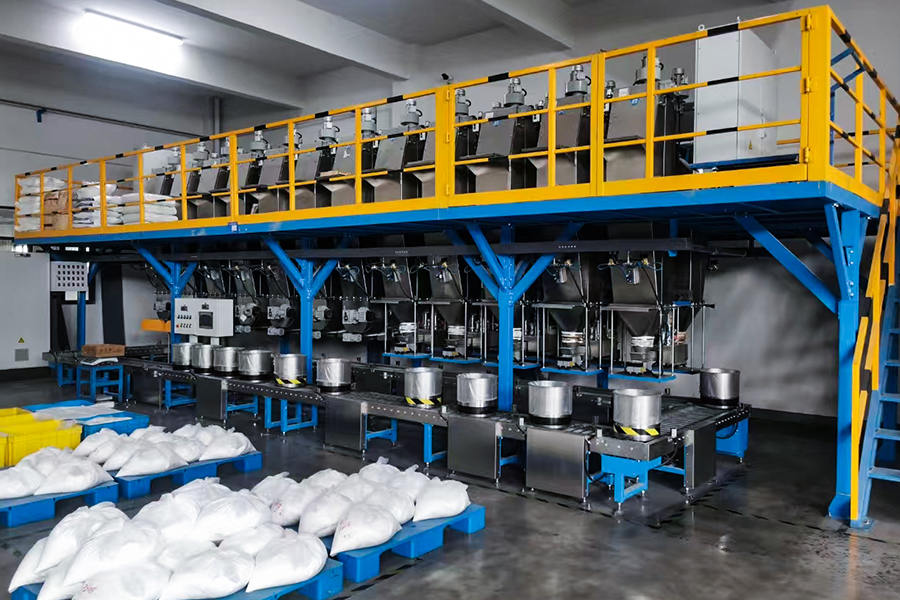
Vulcanisation is not just a chemistry decision, it is also an economic one. Cure time directly determines how many parts a press or oven line can produce per shift, so shaving even a few seconds off a high volume cure cycle can translate into a meaningful cost saving across a full year of production.
Energy Consumption
Heating large curing presses, autoclaves, or ovens consumes significant energy, particularly for thick industrial parts that require long cure times. Faster accelerator systems and optimised cure schedules reduce both the direct energy cost and the equipment wear associated with long, high temperature cycles.
Material Efficiency
Scorch during mixing or shaping wastes an entire batch of compounded rubber, since a partially cured mass generally cannot be reworked. Careful accelerator selection and process control reduce scrap rates, which matters more at scale than it might appear on a single small batch.
Tooling and Equipment Investment
Compression and injection moulding require precision metal tooling that represents a significant upfront cost, while hot air and autoclave curing need less specialised tooling but often run slower cycles. Manufacturers weigh production volume against tooling cost when choosing which vulcanisation method suits a new product line.
Common Problems and How to Avoid Them
Sulfur Bloom
Excess sulfur that has not reacted can migrate to the surface, leaving a chalky film. This is reduced by using insoluble sulfur grades and keeping sulfur loading within the level the compound can fully absorb during cure.
Scorching
Premature curing during mixing or storage, known as scorch, ruins the batch before it even reaches the mould. Delayed-action accelerators and controlled mixing temperatures help prevent this.
Reversion
Overheating during cure can break down cross-links after they form, softening the rubber. Careful control of cure temperature and time, guided by rheometer data, keeps this in check.
Uneven Cure in Thick Sections
Heat takes longer to reach the centre of thick rubber parts, which can leave the core under-cured while the surface is fully cured. Staged heating and adjusted mould design help even this out.
Porosity and Trapped Gas
Moisture or trapped air within the compound can expand during heating and form small voids inside the cured part, weakening it internally even though the surface looks acceptable. Proper mixing under vacuum or controlled venting during moulding reduces this risk.
Mould Fouling
Residue building up inside a curing mould over repeated cycles can cause surface defects and sticking on later parts. Regular mould cleaning schedules and the use of internal or external release agents help maintain consistent part quality across long production runs.
Sustainability and End of Life Considerations
Because sulfur cross-links are chemically permanent, vulcanised rubber cannot simply be remelted and reformed the way thermoplastics can. This makes end of life handling a genuine engineering and environmental challenge for an industry that produces tens of millions of tonnes of cured rubber goods every year.
Recycling Approaches
The most common recycling route grinds used rubber, most visibly old tyres, into crumb rubber. This material finds a second life in playground surfacing, running tracks, rubberised asphalt, and moulded matting, where the original cross-linked structure is simply broken into smaller particles rather than reversed at a chemical level.
Devulcanization
More advanced processes attempt actual devulcanisation, using heat, mechanical shear, microwaves, or chemical agents to selectively break sulfur cross-links while leaving the underlying polymer backbone largely intact. The resulting devulcanised rubber can be blended back into new compounds, though it typically cannot fully replace virgin rubber in high performance applications such as tyre tread without a measurable drop in properties.
Energy Recovery
Where mechanical recycling is not practical, used vulcanised rubber, again most commonly scrap tyres, is sometimes processed as a fuel source in cement kilns and other high temperature industrial processes, recovering energy value from material that would otherwise go to landfill.
Choosing the Right Vulcanised Rubber Compound
Selecting a compound for a new application involves weighing several variables against one another rather than optimising a single property in isolation.
- Operating temperature range the finished part will regularly experience in service.
- Exposure to oils, fuels, solvents, or ozone that could degrade an unsuitable rubber type over time.
- Required hardness and flexibility for the mechanical function the part must perform.
- Expected service life and how much property loss through ageing can be tolerated before replacement.
- Production volume, which influences whether compression moulding, injection moulding, or continuous extrusion curing makes more economic sense.
Engineers and compounders typically work through these factors together, often starting from a known base polymer such as natural rubber, styrene butadiene rubber, nitrile rubber, or ethylene propylene diene monomer rubber, then adjusting the sulfur level, accelerator package, and filler system until the cured properties match the application requirements identified above.
Frequently Asked Questions
Is vulcanised rubber the same as natural rubber
No. Natural rubber is the raw material harvested from rubber trees. Vulcanised rubber is that same raw rubber, or a synthetic equivalent, after it has been chemically treated with sulfur and heat to gain elasticity and durability.
Can vulcanised rubber be recycled
Once cured, the sulfur cross-links make the rubber difficult to remelt or reshape like plastic. Recycling typically involves grinding it into crumb rubber for use in flooring, playgrounds, and asphalt additives, or devulcanisation processes that partially break the cross-links for reuse.
Why does vulcanised rubber smell different from raw rubber
The sulfur reaction, along with the accelerators and other additives used during compounding, changes the surface chemistry of the material, which reduces the strong latex smell typical of raw, unprocessed rubber.
How long does the vulcanization process take
Cure time varies widely depending on part thickness, temperature, and the accelerator system used, ranging from under a minute for thin dipped latex goods to well over an hour for large moulded industrial blocks.
Does more sulfur always mean stronger rubber
Not necessarily. Low sulfur levels produce soft, highly elastic rubber, moderate levels produce tough, wear-resistant rubber, and very high sulfur levels produce a hard, brittle material called ebonite. The right amount depends entirely on the intended use of the finished part.
Are accelerators required for every vulcanised rubber product
Most modern compounds use accelerators because they shorten cure time, lower energy costs, and improve consistency. Some slow, specialty cures still rely on sulfur alone, but this is far less common in large scale manufacturing.
What happens if rubber is under-cured or over-cured
Under-cured rubber stays soft, tacky, and prone to permanent stretching, while over-cured rubber can become brittle or, in cases of reversion, unexpectedly soft due to cross-link breakdown. Both conditions shorten the service life of the finished part.
Does all rubber need sulfur to vulcanise
No. Some specialty elastomers such as silicone rubber cure through peroxide or platinum catalysed systems instead of sulfur, forming different types of cross-links suited to their particular polymer structure.
Why do some rubber parts feel harder than others even from the same base polymer
Hardness in the finished part comes primarily from the sulfur level, cross-link density, and filler loading used in the specific compound, not from the base polymer alone. Two products made from the same starting rubber can end up with very different hardness depending on how they are formulated and cured.
How can I tell if a rubber product is properly vulcanised
Properly vulcanised rubber should feel dry rather than tacky, return to its original shape quickly after being stretched or compressed, and show no lingering raw rubber smell. Inconsistent hardness across the same part or a surface that stays sticky under normal conditions can indicate an incomplete or uneven cure.

