
 English
 русский
 Español
 عربى
عربى

Content
- 1 What Is Vulcanization? A Direct Answer
- 2 The Chemistry Behind Vulcanization
- 3 How Vulcanization Changes Rubber Properties
- 4 Curing Systems Compared
- 5 Industrial Vulcanization Equipment and Methods
- 6 Process Parameters and the Cure Curve
- 7 Compounding and Preparation Before Vulcanization
- 8 Common Vulcanization Defects and How to Avoid Them
- 9 Frequently Asked Questions
- 10 Conclusion: Vulcanization Is the Heart of Rubber Manufacturing
What Is Vulcanization? A Direct Answer
Vulcanization is the chemical process that converts sticky, flowable raw rubber into a strong, elastic, durable product by creating crosslinks between polymer chains. For most general-purpose elastomers, sulfur is the crosslinking agent, and the reaction is driven by heat, time, and pressure. The process is irreversible: once rubber is vulcanized, it cannot be melted or reshaped.
The discovery is credited to Charles Goodyear in 1839, when he accidentally dropped sulfur-treated natural rubber onto a hot stove and noticed that the material hardened without becoming sticky again. That observation created the modern rubber industry. Today, every rubber product, from O-rings and hoses to shoe soles and conveyor belts, passes through a vulcanization step before it can perform its function.
Key facts to keep in mind:
- Sulfur dosage for flexible molded goods is typically 1.0-3.5 phr (parts per hundred rubber).
- Vulcanized natural rubber reaches tensile strengths of 20-30 MPa in gum compounds and higher with reinforcing fillers.
- Cure temperatures range from 140 to 200 °C depending on the polymer and the curing system.
- A properly vulcanized part recovers its original shape after deformation and no longer softens when heated.
The Chemistry Behind Vulcanization
How Sulfur Crosslinks Rubber Chains
Natural rubber and other diene polymers contain double bonds in their backbone. At curing temperature, these bonds open and react with sulfur to form sulfur bridges between neighboring chains. The bridges, whether monosulfide, disulfide, or polysulfide, lock the chains into a three-dimensional network. Before vulcanization, chains slide past one another under stress; after vulcanization, the network stretches and snaps back elastically. The number of bridges, known as crosslink density, sets the hardness, modulus, and resilience of the final part.
Accelerators and Activators Make Curing Practical
Sulfur alone reacts so slowly that direct heating gives uneven results. Practical compounds rely on accelerators (thiazoles, sulfenamides, thiurams, dithiocarbamates) and activators such as zinc oxide and stearic acid to speed up and control the reaction. A representative general-purpose cure package contains 1.5-2.5 phr sulfur, 0.5-1.5 phr accelerator, 3.0-5.0 phr zinc oxide, and 1.0-2.0 phr stearic acid. The accelerator-to-sulfur ratio determines the crosslink type: high-sulfur, low-accelerator systems form flexible polysulfidic bonds with excellent fatigue life, while low-sulfur, high-accelerator (EV) systems form heat-stable monosulfidic bonds with lower compression set.
Many plants simplify dosing and avoid weighing errors by buying pre-blended sulfur accelerator packages from a compounding supplier. Consistent dispersion of the cure package directly improves cure consistency from batch to batch.
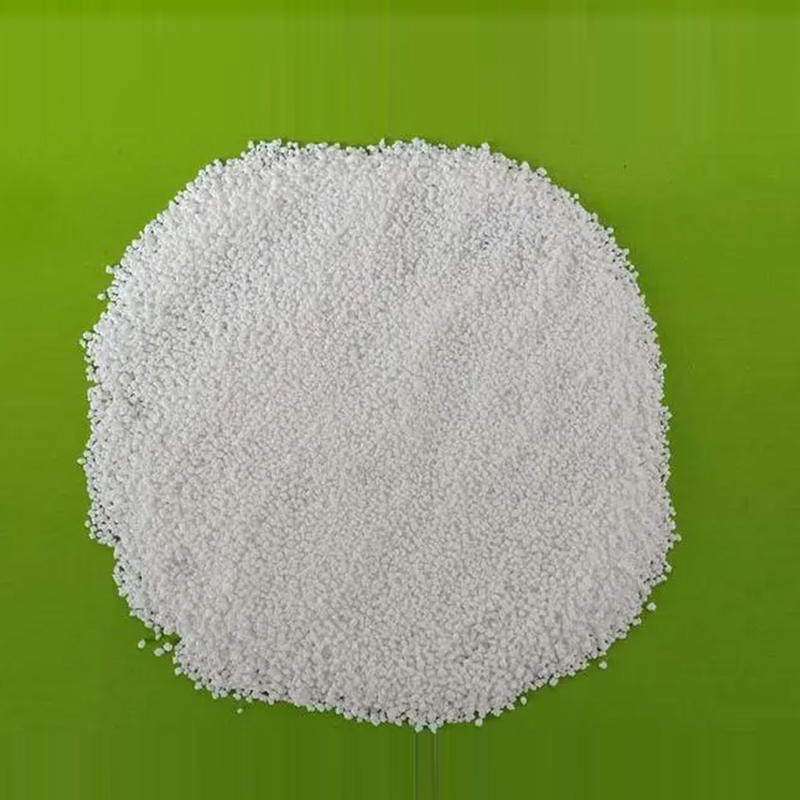 Custom Sulfur accelerators Manufacturers, SuppliersSulfur accelerator refers to a rubber vulcanization accelerator. During the rubber processing, sulfur itself reacts slowly with rubber, s...View Product →
| Sulfur content (phr) | Crosslink character | Hardness / flexibility | Typical applications |
|---|---|---|---|
| 1.0-2.0 | Low density, polysulfidic | Soft, highly flexible | Rubber bands, thin sheet |
| 2.0-3.5 | Medium density | Balanced modulus and elasticity | Seals, gaskets, hoses, molded goods |
| 5.0-15 | High density | Hard but slightly elastic | Rollers, battery cases, hard rubber |
| 25-50 | Very high density | Rigid ebonite | Ebonite, insulating parts |
How Vulcanization Changes Rubber Properties
Raw Rubber vs. Vulcanized Rubber
The difference is dramatic. Raw natural rubber is tacky, softens when warmed, hardens and cracks in cold weather, and flows permanently under sustained load. Vulcanized rubber stays elastic from roughly -40 to +100 °C for natural rubber, resists oils and solvents much better, and returns to its original shape after repeated deformation. The change in tensile strength alone is a five- to ten-fold improvement in most compounds.
| Property | Raw (uncured) rubber | Vulcanized rubber |
|---|---|---|
| Tensile strength | 1-3 MPa | 20-30 MPa (gum), 25-40 MPa (filled) |
| Elastic recovery | Poor, permanent flow | Excellent, near-full recovery |
| Behavior when heated | Softens, becomes tackier | Stable up to curing temperature |
| Cold behavior | Hardens and crystallizes | Remains flexible in service range |
| Solvent and oil resistance | Poor, high swelling | Much improved, depends on polymer |
Why Crosslink Density Is the Deciding Factor
Too few crosslinks and the part behaves like a weak, under-cured product. Too many and the network becomes so rigid that the rubber breaks rather than stretches. Effective compound design targets the crosslink density that matches the application: anti-vibration mounts require a different balance than a squeegee blade, and both differ from a printing roller. Understanding the characteristic properties of rubber materials makes it easier to see why the cure level is set so carefully for every application.
Curing Systems Compared
Not all vulcanization uses the same chemistry. The mechanical and thermal demands of the final part determine which system is selected.
| Curing system | Crosslink type | Heat resistance | Compression set | Reversion risk | Typical polymers |
|---|---|---|---|---|---|
| Conventional sulfur (2.0-3.5 phr) | Polysulfidic | Fair | Good | Moderate to high | NR, SBR, NBR |
| Semi-efficient (semi-EV) | Mixed poly/mono | Good | Good | Low to moderate | Seals, molded goods |
| Efficient (EV) | Mostly monosulfidic | Excellent | Excellent | Low | Heat-resistant seals, gaskets |
| Peroxide | Carbon-carbon | Excellent | Excellent | None | EPDM, silicone, FKM, HNBR |
| Metal oxide | Ionic | Moderate | Good | Low | Chloroprene (CR) |
How to Choose a Cure System
Natural rubber and SBR products meant for dynamic loading, such as tires, mounts, and shock absorbers, generally use conventional or semi-EV systems for fatigue resistance. Heat-resistant applications such as engine compartment seals favor EV or peroxide systems. Peroxide-cured EPDM and silicone offer the lowest compression set, but the peroxide type must match the polymer's heat history and the wall thickness of the part.
Industrial Vulcanization Equipment and Methods
Compression Molding in Heated Presses
The workhorse for molded goods is the hydraulic vulcanizing press. An operator places a preformed blank into a heated mold, closes the press, and holds pressure for the required cure time. Platen temperatures of 150-180 °C and clamping pressures of 15-25 MPa are typical. Vacuum presses take this a step further by evacuating the cavity before full clamping, preventing air entrapment, blisters, and unfilled corners on complex parts.
For technical parts with demanding density and surface requirements, a vacuum hot-pressing vulcanizing machine is the preferred production choice. Removing air before cure is especially valuable for thick sections and high-hardness compounds.
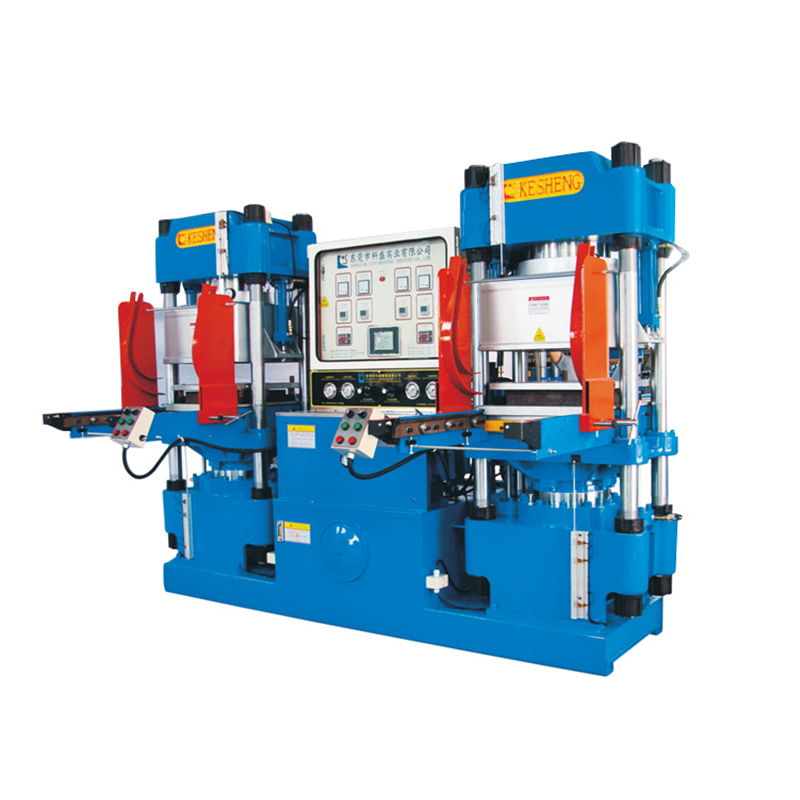 Custom Vacuum hot-pressing machine Manufacturers, SuppliersThis machine is a vulcanizing machine for various rubber and plastic products. It has the functions of timing mold locking, automatic pre...View Product →
Injection Molding for High-Volume Precision Parts
Injection molding plasticizes the rubber in a screw unit and injects it into a closed, heated mold, where curing takes place. Cycle times are shorter than compression molding because the compound reaches the cavity already heated. O-rings, connector seals, and small precision gaskets are commonly produced this way. The trade-off is higher tooling and machinery cost, so injection molding pays off when production volumes are large enough to amortize the investment.
Autoclaves and Belt Presses for Large-Area Products
Rollers, rubber-lined tanks, cable joints, and conveyor belts cannot fit inside a standard press. These products cure in autoclaves under pressurized steam or hot air, or on continuous belt presses and rotocures. The key advantage is uniform pressure over large surfaces, which is critical for adhesion between rubber and fabric or metal substrates.
Continuous Curing of Extruded Profiles
Automotive weather strips, seal profiles, hoses, and cords are cured continuously as they leave the extruder. The three principal methods are hot-air tunnels, microwave tunnels, and salt baths (LCM). Microwave curing heats the profile volumetrically, making it fast for thick cross-sections. Salt baths offer excellent heat transfer, but parts must be washed thoroughly afterward.
A rubber co-extrusion and microwave curing line combines the extruder, microwave tunnel, hot-air section, cooling bath, and haul-off in one controlled process, which is why it is the standard choice for high-output profile production.
 Custom Rubber co-extrusion and microwave curing production line Manufacturers, SIn the microwave continuous vulcanization production line of composite rubber, the research on environmental protection measures during t...View Product →
Process Parameters and the Cure Curve
Reading the Rheometer Curve
A moving-die rheometer records the state of cure over time at a fixed temperature. Three numbers matter in production: scorch time (ts2), the start of crosslinking; tc90, the time to reach 90 percent of full cure and the practical cure time; and the plateau or reversion slope. A stable plateau means the product is forgiving of small time variations; a steep reversion slope means tight temperature control is critical.
| Rubber | Typical mold temperature | Cure time for 2 mm slab | Key process concern |
|---|---|---|---|
| NR | 150-160 °C | 5-10 min | Reversion above 170 °C |
| SBR | 150-165 °C | 6-12 min | Slower cure, good scorch safety |
| EPDM | 160-180 °C | 8-15 min | Faster with peroxide |
| NBR | 150-170 °C | 5-12 min | Use EV for low compression set |
| CR (neoprene) | 150-165 °C | 6-12 min | Scorch-sensitive, metal oxide cure |
| Silicone (VMQ) | 160-180 °C | 3-10 min | Fast cure, thin sections |
Heat Transfer and Part Thickness
Rubber conducts heat poorly, roughly 0.15-0.25 W/(m·K), about one tenth of steel. In a compression mold, the center of a thick part reaches full cure well after the outer skin. Industry practice adds approximately 1-2 minutes of cure time per additional millimeter of wall thickness. That is why thick products use lower mold temperatures to avoid surface over-cure while the interior is still under-cured.
Compounding and Preparation Before Vulcanization
Vulcanization begins in the compounding room. If the cure package is uneven, the press cannot compensate. Three preparation steps have an outsized impact on final quality:
- Accurate weighing: a variation of just 0.1 phr in sulfur can shift tc90 by several percent, so digital scales and automated batching systems are recommended.
- Cool final mixing: sulfur and accelerators are added on a two-roll mill or in a final internal mixer pass, typically in a pressurized kneader, kept below the scorch temperature.
- Contaminant removal: many plants pass the compound through a hot feed rubber strainer fitted with a fine screen before preforming, removing undispersed agglomerates and foreign matter that cause flow lines and blowholes.
Preforming also deserves attention. Blanks of consistent weight and shape reduce cure variation because every cavity fills the same way, with the same heat history and the same pressure distribution.
Common Vulcanization Defects and How to Avoid Them
Even a well-designed compound can produce defective parts if vulcanization is not controlled. The defects below account for the majority of rejects in rubber molding and extrusion:
- Scorching: premature crosslinking in the mixer, preformer, or injection barrel. It shows up as rough surfaces, short moldings, or hard lumps. Prevention: lower process temperature, add scorch retarders, shorten dwell time.
- Under-cure: soft, weak parts with high compression set. Prevention: verify the actual mold temperature with a probe, extend cure time to tc90, and recheck the recipe if the problem repeats.
- Reversion: natural rubber loses strength and resiliency when held at high temperature too long. Prevention: lower mold temperature, switch to semi-EV or EV cure systems, or use a reversion-resistant polymer.
- Porosity and blisters: internal voids from trapped air, moisture, or volatile ingredients. Prevention: use a vacuum press, dry all compounding ingredients, and make preforms accurately.
- Flow marks and short shots: the cavity does not fill completely, often on thin edges. Prevention: increase material flow, raise injection or clamping pressure, improve preform shape, and speed up injection.
Frequently Asked Questions
Is Vulcanization the Same as Curing?
Yes. In the rubber industry, the words are used interchangeably. Strictly speaking, vulcanization originally meant sulfur crosslinking of diene rubbers, but the term now covers any crosslinking reaction that converts a rubber compound into an elastic product, including peroxide and metal oxide systems.
Can All Rubbers Be Vulcanized with Sulfur?
No. Diene rubbers with double bonds, such as natural rubber, SBR, NBR, EPDM, and butyl, respond well to sulfur curing. Rubbers without those double bonds, including silicone (VMQ), many fluororubber (FKM) grades, EPM, and some HNBR compounds, require peroxide or specialty curing systems.
What Temperature Is Needed for Vulcanization?
Industrial curing typically runs between 140 and 200 °C. Most molded goods cure at 150-180 °C. Higher temperatures shorten cycle time but increase scorch and reversion risk. Thick articles are cured at lower temperatures because rubber conducts heat slowly.
How Long Does Vulcanization Take?
A thin molded gasket may cure in 3-8 minutes at 160 °C. A thick bearing or roller can take 30-60 minutes or longer. Continuous microwave lines cure extruded profiles in 1-5 minutes, and autoclave curing of large rollers can run for several hours.
What Happens If Rubber Is Over-Vulcanized?
Over-curing increases hardness and reduces elongation. In natural rubber, prolonged heat can break polysulfidic crosslinks, causing reversion, where the surface becomes soft and tacky. Production cure time is therefore set at tc90, the time to reach 90 percent of full cure, rather than at the absolute maximum state of cure.
Can Vulcanized Rubber Be Recycled?
Vulcanized rubber is thermoset, so it cannot be re-melted and re-molded like a thermoplastic. It can be ground into crumb rubber for flooring, playground surfaces, and molded recycled products. Devulcanization processes exist but are not yet economical on a broad industrial scale.
Conclusion: Vulcanization Is the Heart of Rubber Manufacturing
Vulcanization is the step that turns a polymer compound into an engineering material with predictable strength, elasticity, and durability. The choice of cure system, molding or extrusion method, and process parameters determines both the quality of the part and the cost to produce it.
For production managers and process engineers, the most direct path to fewer rejects and lower cost per part is to control the cure curve on every batch, verify mold temperatures regularly, and keep the compound free of contamination. A well-designed cure package, measured on a rheometer and matched with the right press or continuous line, gives the same result batch after batch.
Suppliers that offer both the chemistry and the machinery, from accelerators to curing presses and microwave lines, simplify this integration considerably. Starting with a tested recipe and the right production equipment removes most of the guesswork from vulcanization.

